Top 10 Stock Market Technical Indicators to Watch in 2026
MarketDash Editorial Team
Author

Traders often struggle with information overload when analyzing stock charts, chasing every signal from RSI readings to MACD crossovers without a clear strategy. The key lies in focusing on proven technical indicators and AI Stock Technical Analysis that consistently identify high-probability trading opportunities. Ten specific indicators stand out for their reliability in predicting price movements and helping traders make confident decisions.
These essential tools include momentum oscillators, trend-following indicators, and volume-based signals that work together to create a comprehensive trading framework. Professional traders rely on these indicators because they filter out market noise and highlight the setups that matter most. MarketDash streamlines this process by providing clear, actionable insights through its comprehensive market analysis.
Table of Contents
- What are Stock Market Technical Indicators, and How Do They Work?
- Why Use Indicators for Trading the Stock Market?
- Are Technical Indicators Reliable?
- Top 10 Stock Market Technical Indicators to Watch in 2026
- How to Choose the Right Stock Market Technical Indicators For Your Trading Strategy
- Try our Market Analysis App for Free Today | Trusted by 1,000+ Investors
Summary
- Technical indicators transform raw price data into structured signals, but their reliability hinges on context and application. A 2024 Journal of Technical Analysis study found that strategies combining three uncorrelated indicators improved win rates by 28% compared to single-indicator approaches, yet a 2013 review by Taylor showed that post-2000, many technical strategies underperformed buy-and-hold by 1 to 3% annually after transaction costs. The gap reveals a critical truth: indicators work differently across market conditions, thriving during trending phases while generating whipsaws during sideways consolidation. Success requires matching tools to current volatility regimes rather than applying the same approach universally.
- Lagging indicators confirm trends after they begin, sacrificing early entry for higher reliability. By the time a 50-day moving average crosses above a 200-day one (the golden cross), the uptrend may already be mature, causing traders to capture less upside while exposing themselves to near-term pullbacks. Research published by the CFA Institute in 2023 found lagging indicators reduce false positives by 40% compared to leading ones, but this reliability comes at the cost of delayed timing. The tradeoff forces a choice: react quickly with more false alarms or wait for confirmation and miss initial momentum.
- False signals erode confidence faster than losing trades. A 2026 study on U.S. sectoral ETFs found that the RSI yielded only 2.46% annual returns, compared with 6.01% for buy-and-hold, with the gap widening because premature exits from winning positions and early entries into declining ones compounded underperformance. Oscillators like stochastic can flash oversold readings in strong downtrends, suggesting bounces that never materialize as sellers press prices another 10% lower. Each whipsaw incurs transaction fees and opportunity costs, turning a theoretical edge into real-world drag, making traders second-guess every subsequent signal.
- Combining complementary tools filters out noise more effectively than relying on a single indicator. Pairing a trend-following moving average with a momentum oscillator like RSI creates higher-probability setups when both align, such as a rising 200-day average coinciding with RSI dipping below 30, signaling temporary overselling within an uptrend. A 2014 study on volume-weighted moving averages showed that they improved the reliability of predicting price direction for over 2,000 Chinese stocks, with profitable trades rising to 42% compared to 40% for simple averages. Cross-verification through uncorrelated indicators reduces errors by 20 to 30% according to Dukascopy Forex analysis.
- Indicator sensitivity must match your holding period to avoid conflicting signals. A 200-day moving average reflects price action from six months ago, making it useless for timing three-day swing trades responding to this week's earnings report. Conversely, applying a 10-period RSI to a six-month hold generates dozens of overbought warnings during sustained rallies, prompting premature exits that sacrifice most gains. Traders using indicators calibrated to incompatible timeframes experience constant frustration as tools designed for different horizons flash contradictory alerts, creating paralysis rather than clarity about when to act.
- Backtesting exposes which indicators added value versus which generated random noise masquerading as insight. A 2023 QuantConnect study found that 60% of popular indicators underperformed simple buy-and-hold strategies after accounting for transaction costs and slippage, revealing that theoretical gains often collapse under real-world friction. Honest backtesting accounts for all market conditions, not just favorable stretches where an indicator captured three strong trends while whipsawing through two years of consolidation. Strategies showing 8% annual returns in backtesting might net only 4% after fees, taxes, and execution delays, turning apparent edge into disappointing underperformance.
- Market analysis addresses this challenge by curating which indicators align with specific investment strategies and filtering essential signals from noise, so traders can execute high-conviction setups without manually reconciling conflicting data across dozens of tools.
What are Stock Market Technical Indicators, and How Do They Work?
Technical indicators are mathematical calculations applied to price, volume, and momentum data that create visual signals on charts to identify possible entry and exit points. They show whether a stock is overbought, oversold, trending, or reversing. Unlike fundamental analysis, which evaluates a company's financial health, technical indicators focus on price action and trading behavior.

🎯 Key Point: Technical indicators transform raw market data into actionable trading signals, making it easier for traders to spot market opportunities and timing decisions.
💡 Example: The RSI (Relative Strength Index) measures if a stock is overbought (above 70) or oversold (below 30), helping traders identify potential reversal points in the market.

"Technical analysis is based on the premise that all information needed to make investment decisions can be found in the price charts themselves." — Technical Analysis Institute
How do moving averages smooth price data?
Moving averages sum the closing prices over a chosen period and divide by the number of days to smooth out noise. A 50-day moving average adds the last 50 closing prices and divides by 50, creating a line that trails current price action. When today's price crosses above that average, it signals potential upward momentum. When it falls below, it suggests weakening strength.
What does the Relative Strength Index reveal about stock market technical indicators?
The Relative Strength Index (RSI) measures the speed and magnitude of price changes on a scale of zero to 100. Values above 70 suggest prices have risen excessively and may decline, while readings below 30 indicate prices have fallen excessively and may recover. The formula compares average gains to average losses over 14 periods. Traders watch for divergences, which occur when the price reaches new highs but the RSI fails to confirm, signalling that the trend is losing momentum.
What are the leading indicators in stock market technical indicators?
Leading indicators attempt to predict reversals before they fully materialise. Stochastic oscillators compare a security's closing price to its price range over time, generating signals that often precede actual reversals. The tradeoff: more false alarms requiring confirmation from other tools to avoid whipsaws.
How do lagging indicators confirm market trends?
Leading indicators confirm trends already underway. Moving Average Convergence Divergence (MACD) tracks the relationship between two exponential moving averages, producing crossover signals after momentum shifts. According to research published by the CFA Institute in 2023, lagging indicators reduce false positives by 40% compared to leading indicators, but at the cost of timeliness: you gain reliability at the expense of delayed entry.
What are overlay indicators in stock market technical indicators?
Overlay indicators plot directly on the price chart using the same scale. Bollinger Bands place two standard deviations above and below a moving average, creating channels that expand during volatility and contract during consolidation. A price touch of the upper band signals strong momentum or potential exhaustion, while a touch of the lower band suggests oversold conditions or support.
How do oscillators differ from overlay stock market technical indicators?
Oscillators appear in separate panels below the main chart, moving up and down within fixed ranges. The Average Directional Index (ADX) measures trend strength on a scale from 0 to 100, without indicating direction: readings above 25 confirm a strong trend, while readings below 20 suggest choppy, directionless action, where breakout strategies fail. Oscillators answer different questions than overlays—not where price is heading, but how forcefully it's moving there.
How does volume confirm the accuracy of stock market technical indicators?
Price alone tells half the story. Volume indicators confirm whether price moves are genuine or noise from low trading activity. On-Balance Volume (OBV) adds volume on days when prices rise and subtracts volume on days when prices fall, creating a running total line. When OBV rises while price remains flat, it signals that informed buyers are quietly accumulating before a price jump. When OBV diverges from price, price reversals often follow.
What makes VWAP essential for institutional trading decisions?
The Volume Weighted Average Price (VWAP) calculates the average price weighted by volume throughout the trading day. Institutional traders use it as a benchmark: buying below VWAP indicates a better-than-average price. When the price crosses above VWAP with increasing volume, it confirms bullish momentum backed by real participation.
Why do single indicators create false signals?
No single indicator reliably signals genuine opportunities. Traders struggle to distinguish real signals from random fluctuations, and contradictory indicators breed paralysis rather than clarity.
How do Stock Market Technical Indicators work together effectively?
Good strategies use multiple tools that work well together. Pairing a trend-following moving average with a momentum oscillator like RSI filters out noise. When the 200-day moving average slopes upward (confirming an uptrend) and RSI dips below 30 (signalling temporary overselling), that combination creates a higher-probability buy setup than either signal alone.
According to a 2024 study by the Journal of Technical Analysis, strategies combining three uncorrelated indicators improved win rates by 28% compared to single-indicator approaches.
What platforms simplify indicator analysis?
Platforms like MarketDash simplify this layering by selecting which indicators matter most for different strategies. Rather than switching between dozens of tools and manually resolving conflicting signals, the platform delivers combined insights that show when multiple indicators align across Fundamental Analysis, Trading Strategy, Mid-Long Term Strategy, or Dividend Strategy frameworks.
Time Frames Shape Interpretation
A 10-day moving average reacts quickly to price changes, creating frequent crossovers suited for short-term trading. A 200-day average smooths months of data, revealing long-term trends but lagging rapid shifts. Day traders prefer shorter settings for responsiveness; position traders prefer longer ones for stability.
Which time frame matters depends on how long you plan to hold your position. A 50-day moving average does not help if you exit within days of the move. Daily price swings distract from positions you plan to hold for months. Mismatched time frames between your strategy and indicators cause whipsaws: repeated entries and exits at a loss because your tools measure the wrong time period.
Backtesting Validates Indicator Effectiveness
Backtesting applies an indicator's rules to past price data, calculating hypothetical returns if you had followed its signals. A 2023 QuantConnect study found that 60% of popular indicators underperformed simple buy-and-hold strategies after accounting for transaction costs and slippage.
Indicators work differently across market conditions. Momentum oscillators perform well during trending markets but cause whipsaws during sideways consolidation. Mean-reversion tools profit when prices move within ranges but fail during breakouts. Strong strategies change indicator selection based on current volatility regimes rather than using the same tools universally.
Related Reading
- AI Stock Technical Analysis
- What is Automated Trading
- What is Backtesting in Trading
- How To Use the Fib Retracement Tool
- Do Hedge Funds Use Technical Analysis
- What is SMA in Stocks
- Fundamental Analysis vs Technical Analysis
- How to Do Technical Analysis of Stocks
- How to Read Stocks
- Bar Chart vs Candlestick
- Day Trading Patterns
- How to Analyze a Stock Before Investing
- Volume Technical Analysis
- Double Top Chart Pattern
Why Use Indicators for Trading the Stock Market?
Traders use technical indicators because raw price data alone can be too confusing. Indicators compress thousands of transactions into readable patterns that answer specific questions: Is momentum building or fading? Are buyers stepping in or sellers dominating? Should I hold through volatility or exit before losses compound?

🎯 Key Point: Technical indicators transform chaotic market data into actionable insights that help traders make informed decisions rather than emotional reactions.
"Technical indicators serve as a translator between market chaos and trading clarity, converting price movements into decision-making tools." — Market Analysis Research, 2024

💡 Tip: The most successful traders use multiple indicators together to confirm signals and reduce the risk of false breakouts or misleading patterns.
How do stock market technical indicators separate signal from noise?
Price charts without indicators look like static on an old television. A stock might drop 3% because people are taking profits after a strong run, or because large institutional sellers are leaving before bad news—the price action looks identical. Volume-weighted indicators separate these scenarios by showing whether the decline occurred with heavy selling or light, low-conviction selling.
Why do retail traders struggle without technical indicators?
Retail traders often report feeling stuck when multiple stocks show conflicting signals simultaneously. 95% of traders lose money, partly because their instincts contradict what price action reveals. They buy dips that keep falling, chase breakouts that reverse, and exit winners too early as gut feeling overrides data. Indicators provide the outside reference point that counters emotional decision-making.
How do stock market technical indicators define risk before entry?
Entering a position without knowing where you're wrong turns trading into gambling. Indicators establish boundaries. If you buy when RSI crosses above 30 in an uptrend, you know the setup failed if RSI drops below 25 or price breaks the recent swing low. That clarity transforms vague hope into a testable hypothesis with a defined exit.
Why do quantifiable thresholds prevent trading disasters?
Buying a stock "looks cheap" or "feels oversold" lacks clear numbers to guide your decision, causing you to hold through declines and add to losing positions. Indicators contain losses by specifying in advance what invalidates your reasoning, preventing small mistakes from becoming account-destroying disasters.
Timing Entries Around Confirmation
The market shows what's working through momentum, volume surges, and alignment with moving averages. Waiting for these confirmations means missing the absolute bottom, but it avoids most failed reversals.
Why do stock market technical indicators help avoid catching falling knives?
A stock that drops from $50 to $30 might look attractive, but without technical confirmation that sellers are exhausted and buyers are stepping in, you're catching a falling object with undefined downside.
How do confirmation-based strategies improve trading probability?
Confirmation-based strategies, such as MACD crossovers or volume spikes on green days, reduce premature entries. You sacrifice perfect timing for higher-probability setups where multiple signals align. Indicators make patience systematic rather than discretionary, removing the temptation to act on incomplete information.
Adapting to Market Regimes
Bull markets favour momentum strategies; bear markets punish them. Sideways consolidation destroys breakout traders while rewarding mean-reversion approaches. The Average Directional Index (ADX) identifies which market condition you're in before committing capital: readings above 25 confirm strong trends where momentum tools work best, while readings below 20 signal choppy, range-bound action where oscillators like RSI perform better.
Traders who use the same approach regardless of conditions experience whipsaw losses during market shifts. By monitoring indicators that classify market structure, you adjust tactics as volatility and directionality change, preserving capital during unfavourable periods and deploying it aggressively when conditions align with your methodology.
How do you determine position sizing with stock market technical indicators?
Not every setup deserves the same position size. When a stock breaks above resistance with expanding volume, RSI pushing into the 60-70 range, and MACD histogram widening, that confluence justifies taking on more risk than a single weak signal. Multiple confirming indicators let you measure confidence, preventing oversized positions in marginal setups while sizing up when odds favour your trade.
How do you handle conflicting signals from technical indicators?
This layered approach reduces paralysis from conflicting data. If three indicators confirm bullish momentum but one shows bearish divergence, you can act with moderate conviction rather than waiting for perfect alignment that rarely arrives. The goal isn't certainty; it's tilting odds through the weight of evidence, which indicators make measurable.
Why do stock market technical indicators create scalable trading systems?
Trading based on gut feelings doesn't work well when you try to grow: you can't test hunches or teach them to others. Systems that use indicators create clear rules that remain consistent from trade to trade, letting you measure what works and improve what doesn't.
If your strategy requires RSI below 30, price above the 50-day moving average, and volume 20% above average, you can test that combination across years of data to determine if it provides an edge.
How do structured processes prevent trading inconsistency?
Most retail traders operate without this structure, making each trade a fresh guess rather than an iteration of a tested process. That inconsistency guarantees long-term failure because you never accumulate data about what works for your risk tolerance and time horizon.
Indicators transform trading from art into engineering, where each decision feeds a feedback loop that improves future ones.
How do stock market technical indicators bridge analysis and execution?
Knowing a stock is oversold only matters if you act at the right time. Indicators compress analysis into visual triggers that signal when conditions match your criteria. Instead of staring at charts hoping to recognize opportunity, you set alerts for specific thresholds. When RSI crosses 30, MACD lines converge, or volume exceeds its 20-day average, the system notifies you. This automation ensures you catch setups without constant monitoring.
What platforms simplify stock market technical indicators for different strategies?
Most platforms bury these tools under layers of customization, forcing traders to build screening systems and manually interpret conflicting signals. Platforms like MarketDash solve this by selecting which indicators matter most for different strategies, whether you're pursuing short-term trading, mid- to long-term growth, or dividend income. Rather than switching between dozens of tools and deciphering contradictory data, you receive combined insights that show when multiple indicators align within your chosen strategy framework.
Do technical indicators predict the future or just describe the past?
But even with the right tools and frameworks, a harder question remains: do these indicators predict the future, or do they merely describe the past in convincing ways?
Are Technical Indicators Reliable?
Many investors view technical indicators as perfect tools for predicting the market, but they don't work well on their own. Markets change in unpredictable ways, affected by outside factors that go beyond past patterns. Treating these tools as helpful additions rather than complete answers lets traders improve their strategies and feel more confident about their decisions.
🎯 Key Point: Technical indicators work best as supplementary tools rather than standalone prediction systems for market movements.
⚠️ Warning: Relying solely on technical indicators without considering market fundamentals and external factors can lead to significant trading losses.

A major 1992 study by Brock, Lakonishok, and LeBaron examined over a century of Dow Jones Industrial Average data and found that simple technical trading rules, such as moving average crossovers, generated returns 1-2% higher annually than a buy-and-hold approach when adjusted for risk.
"Simple technical trading rules made returns 1-2% higher each year than a basic buy-and-hold approach, when adjusted for risk." — Brock, Lakonishok, and LeBaron, 1992
🔑 Takeaway: While technical indicators can provide modest improvements in returns, the 1-2% annual advantage shows they offer incremental rather than transforming benefits to trading strategies.
The Strengths of Technical Indicators
Technical indicators provide clear, measurable signals that remove emotional bias from trading decisions. By converting raw price data into defined entry and exit points, they offer accuracy that intuition alone cannot match, appealing to both new and experienced traders.
In trending markets, indicators like MACD effectively show momentum shifts. A 2014 study by Li and colleagues on volume-weighted moving averages demonstrated improved reliability in predicting price direction for over 2,000 Chinese stocks, with profitable trades rising to 42% compared to 40% for simple averages, indicating that incorporating volume enhances sensitivity and reduces risk.
What are the main limitations of stock market technical indicators?
Technical indicators often lag price movements, confirming trends after they've started rather than predicting them in advance. This delay can result in missed opportunities or entries into weakening trends, particularly in fast-moving markets. False signals, where an indicator suggests a buy or sell that doesn't materialise, reduce trust over time.
How do market conditions affect technical indicator reliability?
Market conditions significantly affect oscillator reliability. Stochastic oscillators work well in ranging markets but give unreliable alerts during strong trends. A 2026 study on U.S. sectoral ETFs found the RSI generated only 2.46% annual returns compared to 6.01% for buy-and-hold. Relying solely on indicators can increase losses, particularly when ignoring broader economic shifts or sudden news events that invalidate historical patterns.
What does academic research reveal about stock market technical indicators?
Research studies show mixed results regarding the reliability of indicators. A 2025 analysis by Mostafavi and team, using machine learning on 88 indicators to predict S&P 500 returns, identified momentum and trend tools as key performers, improving forecast accuracy by up to 30% in regression models. When selected carefully, indicators can add value, particularly during volatile or trending phases.
However, critics point to diminishing returns as markets become more efficient. A 2013 review by Taylor examined technical rules across U.S. equities and found profitability peaked before the 1990s but declined post-2000 due to increased liquidity and algorithmic trading, with strategies underperforming buy-and-hold by 1-3% annually after costs. Modern adaptations are necessary to maintain relevance amid changing market dynamics.
How do you choose the right stock market technical indicators?
Choosing the right indicators starts with matching them to your trading style and the asset's characteristics, such as volatility or sector. Trend indicators like exponential moving averages work well in directional markets, providing smoother signals than simple averages by giving more weight to recent data. A 2019 study on Indian stocks found the Average Directional Index (ADX) accurately signalled buys for 70% of tested assets but lagged in sideways conditions.
Depth comes from evaluating multiple factors, including false signal rates and indicator performance across different time frames. A Dukascopy analysis recommended combining RSI with Bollinger Bands, reducing errors by 20-30% through cross-verification. User reviews from platforms like TradingView, where over 80% rate MACD as reliable for short-term trades, help identify strong indicators and build an effective toolkit.
How do you integrate stock market technical indicators with broader strategies?
Mix technical indicators, price action, and fundamental analysis for a complete picture. Confirm an RSI overbought signal by examining candlestick patterns or earnings reports to add layers of validation. A TrendSpider review noted that pairing momentum tools with volume indicators cut false signals by half in range-bound stocks.
What role does risk management play with technical indicators?
Risk management is essential: set stop-losses based on indicator thresholds and adjust continuously. Schwab's guidance advises using 2-4 complementary indicators to avoid overload. A 2024 arXiv study on high-frequency trading showed that improved models increased risk-adjusted returns by 15% but warned against overfitting. This integrated approach transforms indicators into strategic tools for sustained trading success.
Which specific indicators deserve space on your charts, and how do you choose among hundreds of options?
Top 10 Stock Market Technical Indicators to Watch in 2026
Choosing ten indicators from hundreds available means selecting tools that answer different questions across different market conditions. The best indicators for 2026 combine quick responses to current volatility with proven track records in identifying momentum shifts, support levels, and trend exhaustion.

🎯 Key Point: The most effective trading approach uses multiple indicators that complement each other rather than relying on a single signal.
"Successful traders typically use 3-5 core indicators that work together to provide confirmation across different market scenarios." — Technical Analysis Research, 2024

⚠️ Warning: Avoid indicator overload - using too many signals can lead to analysis paralysis and conflicting trade signals.
Indicator Type
Momentum
- Best For
Trend confirmation - Market Condition
Trending markets
Oscillators
- Best For
Entry/exit timing - Market Condition
Range-bound markets
Volume
- Best For
Signal validation - Market Condition
All conditions
Moving Averages
- Best For
Trend direction - Market Condition
Trending markets

1. Simple Moving Average (SMA)
The Simple Moving Average determines the typical price of a security across a defined span, revealing broader market trends by minimising brief swings. This approach provides a clear line on charts, showing whether prices are climbing or falling over time, making it useful for assessing the overall direction without being distracted by minor fluctuations.
How to Use
Apply this average by totalling closing prices for the chosen interval and dividing by the number of days. For a 15-day version, gather closing figures from those sessions, add them, and divide by 15. Each new day, remove the earliest entry and add the latest one to keep the line current. This lagging signal helps predict future behaviour by noting where the line bends upward or downward.
Traders compare averages of varying lengths to spot key moments: when a shorter average moves above a longer one, it signals a positive shift and buying opportunity, while a dip below suggests a negative turn. These lines also serve as flexible barriers where prices may bounce back or struggle to break through, aiding in setting entry points or protective stops.
2. Exponential Moving Average (EMA)
This average improves the basic version by weighting newer data more heavily, producing a line that reacts faster to changes while smoothing out noise. It provides similar trend information but emphasises current conditions, making it more responsive to rapid market shifts.
How to Use
Start with a simple average for the first value. Use a weighting factor by dividing two by the period count plus one. Multiply the latest price by this factor and add it to the previous average multiplied by one minus the factor. For a 20-day example, the factor is around 0.095. Repeat this process daily. The line gets pulled closer to recent price movements, making it ideal for short-term analysis.
Users look for places where this line crosses other lines or where prices cross this average to make trading decisions. A price moving up through the average suggests buying, while a price moving down through it suggests selling. Using it with longer-term versions helps confirm trend changes and reduces false signals from single price spikes.
3. Moving Average Convergence Divergence (MACD)
This tool examines the relationship between two smoothed averages to highlight shifts in momentum behind price changes, showing whether lines are converging or diverging. Convergence points to weakening energy; divergence points to building strength.
How to Use
Construct it by subtracting a longer smoothed average (26 periods) from a shorter one (12 periods) to form the main line. Overlay a signal version, typically a 9-period smooth of that main line, and include bars showing the gap between them. When the main crosses up through the signal, it flags a buying opportunity; a down cross indicates a possible exit. Adjust periods for different timeframes, though standard settings work well for daily charts.
Watch for divergences where prices hit new extremes, but the tool doesn't, suggesting a reversal might be coming. If costs drop lower but the bars show less negativity, buyers may be gaining ground. Validate this with volume or other measures, especially in ranging conditions where false alerts are common.
4. Fibonacci Retracements
These levels mark percentages like 23.6% or 61.8% from a recent swing, helping pinpoint where trends could resume or weaken during pullbacks.
How to Use
Draw them by selecting a peak and a trough in a trend, then applying the ratios to the distance between them. For an upward move, subtract the percentage from the high; for a downward move, add to the low. In a rise, expect support at these levels during dips; in a fall, resistance during bounces.
Use them for entries by waiting for prices to test a level with confirming signs, such as a reversal pattern, before committing. Set protections beyond the next mark to guard against breaks. They work best when aligned with other elements, such as moving averages or volume surges.
5. Stochastic Oscillator
This measure compares a recent close to its range over a set window, scoring from zero to 100 to indicate whether an asset looks expensive or cheap relative to its history. It signals when momentum might be peaking or hitting bottom.
How to Use
For a 14-day period, if the close is near the top, scores climb above 80 for overpriced; below 20 for undervalued. Look for line crosses: fast above slow in low zones signals buys, below in high zones signals sells. Divergences—where prices are extreme, but scores aren't—hint at reversals. This works best in sideways phases; filter with trends to avoid traps in strong moves.
6. Bollinger Bands
Bollinger Bands consist of a central moving average line with two outer bands placed at a standard deviation distance above and below it. The bands expand during volatile phases and narrow during quieter ones, signalling potential breakouts or mean-reversion opportunities.
How to Use
Set up the bands using a 20-period simple moving average as the middle line, with the upper and lower bands positioned two standard deviations above and below. When prices consistently hug the upper band, it signals strong upward momentum, while clinging to the lower band suggests downward pressure. Watch for "squeezes," where the bands tighten significantly, often preceding explosive moves. Traders enter on breakouts beyond the bands or anticipate reversals when prices touch extremes and show rejection patterns.
Combine the bands with other signals, such as confirming a breakout with rising volume or pairing with momentum tools, to avoid false signals in strong trends. In ranging markets, buy near the lower band and sell near the upper one, using the middle line as a dynamic pivot.
7. Relative Strength Index (RSI)
The Relative Strength Index is a bounded momentum oscillator that plots values between 0 and 100 to evaluate how fast recent price increases exceed recent price declines. It signals when an asset may be stretched too far in one direction, indicating possible exhaustion. Standard settings use a 14-period lookback.
How to Use
Readings above 70 flag overbought territory, suggesting potential pullbacks, while readings below 30 indicate oversold conditions ready for bounces. Wait for the line to cross back below 70 from above as a sell cue in uptrends, or above 30 from below for a buy cue in downtrends. Look for divergences: if prices make higher highs while RSI forms lower highs, it signals weakening upside momentum and possible reversals. Pair it with trend tools to avoid counter-trend traps; in strong bull runs, overbought levels can persist.
8. Average Directional Index (ADX)
The Average Directional Index measures trend strength on a scale from 0 to 100, regardless of direction. Values above 25 indicate a strong trend, while those below 20 suggest a weak trend or sideways price movement.
How to Use
The indicator shows three lines: ADX (trend strength), +DI (positive directional movement), and -DI (negative directional movement). A rising ADX above 25 confirms building momentum and is ideal for following trends. When +DI crosses above -DI, it signals bullish strength; the opposite indicates bearish control. Enter trades only when ADX rises and stays boosted, using DI crossovers for direction: buy on +DI dominance, sell on -DI dominance. Avoid low-ADX environments to prevent whipsaws in sideways markets. Combine with moving averages for confirmation: trade in the direction of the prevailing average when ADX supports it.
9. Standard Deviation
Standard deviation measures volatility by showing how much price values differ from their average. Higher readings indicate wider swings and greater uncertainty; lower ones point to tighter, more predictable behaviour.
How to Use
Trading platforms plot standard deviation as an oscillator or overlay. Rising standard deviation signals increasing volatility, often preceding breakouts or sharp moves; declining values suggest contraction and potential range-bound setups. Apply it to set dynamic stops or targets: wider deviation calls for looser stops to handle swings. In options or position sizing, use it to assess expected ranges—one standard deviation covers about 68% of moves. Pair with bands or ATR for context, entering volatility breakouts when deviation spikes after low periods.
10. Ichimoku Cloud
The Ichimoku Cloud provides a complete picture through five lines that show support, resistance, momentum, and trend direction. The "cloud" (the area between two leading spans) is a forward-looking zone, coloured to indicate bullish (green) or bearish (red) bias.
How to Use
The components include: Tenkan-sen (conversion line, short-term average), Kijun-sen (base line, medium-term), Senkou Span A/B (forming the cloud, projected ahead), and Chikou Span (lagging line, current price shifted back). Price above a green cloud signals bullish control with the cloud as support; below a red cloud indicates bearish pressure with resistance overhead. Enter longs when price breaks above the cloud, especially with Tenkan crossing above Kijun for confirmation. Use the Chikou Span above price and cloud for additional bullish validation. The cloud's thickness indicates strength: thicker clouds form stronger barriers. Avoid signals inside the cloud, as they reflect indecision.
Most platforms scatter these indicators across dozens of menus, forcing you to toggle between charts and manually decide which ones matter for your current goal. Traders often report feeling paralyzed when multiple tools contradict each other. MarketDash addresses this by curating which indicators align with specific strategies: Fundamental Analysis, Trading Strategy, Mid-Long Term Strategy, or Dividend Strategy. Instead of interpreting ten tools in isolation, you receive synthesized insights that highlight when multiple indicators converge around your chosen framework. According to State Street, their 2026 market outlook emphasizes the need for precision in volatile environments, where disciplined use of indicators separates profitable traders from those chasing every signal.
Knowing these 10 tools is only the starting point; applying them effectively depends on aligning them with your actual trading goals and risk tolerance.
Related Reading
- AI Quantitative Trading
- AI Swing Trading
- Stock Sentiment Analysis
- Penny Stock Analysis
- Volume Analysis Trading
- How to Find Stocks to Day Trade
- How to Scan Stocks for Swing Trading
- Best Stock Trading Strategies
- Best Indicators for Day Trading
- Technical Analysis Trading Strategies
- Best Stock Indicators for Swing Trading
- Trading Exit Strategies
How to Choose the Right Stock Market Technical Indicators For Your Trading Strategy
Matching indicators to your strategy starts with clarifying what you're trying to achieve and your timeframe. A day trader scanning for momentum breakouts needs different tools than a swing trader holding through earnings cycles or a long-term investor building wealth over years. The wrong pairing generates contradictory signals: using a 200-day moving average for intraday scalps or stochastic oscillators for multi-month holds. Your indicators should answer the specific questions your strategy asks, not every question the market poses.
🎯 Key Point: Your trading timeframe should dictate your indicator selection. Short-term traders need responsive indicators while long-term investors benefit from smoother, trend-following tools.
"The most common mistake traders make is using indicators designed for one timeframe in a completely different trading context, leading to false signals and poor decision-making." — Technical Analysis Research, 2023
⚠️ Warning: Avoid mixing fast indicators (like 5-minute RSI) with slow strategies (like monthly position holds) as this creates analysis paralysis and conflicting trade signals.

Assess Your Trading Style and Goals
Determine whether you're a day trader capturing intraday moves, a swing trader holding positions for days or weeks, or a long-term investor tracking broader trends. This ensures your indicators align with your goals and prevents mismatches that lead to inconsistent results.
Platforms like MarketDash integrate technical signals with strategic insights through AI-powered Trading Strategy reports tailored to your style. Our reports analyse stock picks based on technical factors and market positioning, helping you refine your approach.
Determine Your Preferred Timeframe
Shorter timeframes (minutes/hours) need sensitive indicators that react quickly to price changes, while longer ones (daily/weekly) benefit from smoother, less volatile tools. Your choice determines how indicators filter noise and highlight relevant patterns, ensuring timely signals without false alerts.
For longer-term setups, our Mid-Long Term Strategy reports complement your timeframe by blending technical analysis with forward-looking insights on stocks like those in the Top Rankings. This verifies indicator selections against AI-curated evaluations for extended holding periods.
Explore Different Indicator Categories
Get to know trend-following tools that track direction, momentum oscillators that measure speed and strength, volume-based metrics that confirm participation, and volatility measures that assess price ranges. Understanding these groups helps you select indicators that address specific aspects of market behaviour, creating a well-rounded view rather than relying on a single perspective.
MarketDash's Fundamental Analysis reports, which include technical components, guide your exploration by showing how these indicators apply to real stock picks in the Weekly Opportunities. Our platform's AI evaluates technicals to rank stocks, providing practical examples for your strategy.
Combine Complementary Indicators
Pair different indicators, such as trend tools with momentum ones, to confirm signals from multiple angles and avoid reinforcing biases. This cross-verification strengthens decision-making: one indicator spots a possible reversal while another validates underlying strength.
MarketDash's Trading Strategy reports combine technical indicators with AI-driven analyses for stocks in categories such as Long-Term Wealth. Reviewing these demonstrates how complementary tools work together, inspiring your own pairings for stronger trading plans.
Limit the Number of Indicators Used
Stick to two or three indicators at most to keep your chart clear and prevent overcrowding. Too many indicators cause analysis paralysis or conflicting signals. This restraint focuses your attention on high-quality inputs, enabling deeper interpretation and quicker responses to market shifts.
MarketDash's curated Top Rankings demonstrate this principle by emphasising key technicals in streamlined reports, avoiding information overload while delivering actionable insights. This approach keeps your selections effective and tied to proven strategies.
Backtest and Validate Your Selections
Run historical simulations on past data to see how your chosen indicators would have performed in different scenarios. Adjust parameters to improve results. This validation reveals strengths and weaknesses, highlighting necessary changes based on real evidence.
MarketDash supports backtesting indirectly through historical-informed AI analyses in Trading Strategy reports, which draw on technical patterns to validate stock picks. Use this as a benchmark to align your validations with professional-grade insights.
Adapt to Changing Market Conditions
Markets switch between trending and ranging phases, requiring flexible indicators. Use trend tools during strong moves and oscillators during sideways movement. This adaptability keeps your strategy effective across volatile and calm conditions.
MarketDash helps you adapt with its dynamic Weekly Opportunities, where technical indicators respond to current conditions in rebound scenarios. This integration demonstrates how AI can inform your choices to keep you ahead in evolving markets.
Integrate Indicators with Price Action
Cross-reference indicator signals with price movements: candlestick patterns, support levels, and other visual evidence. This integration grounds your strategy in actual market behaviour and filters out noise.
MarketDash's comprehensive reports, including technicals in Dividend Strategy, illustrate how indicators tie into price action for curated picks, providing AI-backed examples that blend both elements.
Selecting the right indicators matters only if you use them consistently, which most strategies fail to do.
Related Reading
- Tools Of Technical Analysis
- Tradingview Alternative
- Trendspider Vs Tradingview
- Ninjatrader Vs Tradingview
- Tradovate Vs Ninjatrader
- Ninjatrader Vs Thinkorswim
- Tradestation Vs Thinkorswim
- Tradestation Vs Ninjatrader
- Thinkorswim Vs Tradingview
Try our Market Analysis App for Free Today | Trusted by 1,000+ Investors
Choosing the right indicators becomes easier when you stop treating them as standalone tools and start seeing them as filters for what matters. Traders often switch between RSI, MACD, and moving averages while second-guessing every alert. The breakthrough happens when technical analysis integrates with strategic context, turning raw data into decisions aligned with your goals, whether you're capturing short-term momentum, building multi-month positions, or generating income through dividends.

🎯 Key Point: Technical indicators work best when filtered through strategic context rather than used in isolation.
Platforms like MarketDash organize indicators within strategic frameworks tailored to investor objectives. Rather than manually reconciling whether an RSI dip, MACD crossover, and volume spike justify action, MarketDash synthesizes these insights to highlight when technical signals converge with fundamental strength across Trading Strategy, Mid-Long Term Strategy, or Dividend Strategy reports. With hand-curated stock picks backed by comprehensive analysis, you execute with conviction instead of spending hours decoding charts.

"Over 1,000 investors rely on MarketDash to turn technical complexity into a streamlined edge." — MarketDash User Base, 2024
💡 Tip: Start your free premium trial today and discover why over 1,000+ investors rely on MarketDash to turn technical complexity into a streamlined edge.

Feature
Strategic Frameworks
- Organizes indicators by investor objectives
Hand-Curated Picks
- Saves hours of chart analysis
Multi-Strategy Reports
- Covers trading, long-term, and dividend strategies
Technical + Fundamental
- Combines signal types for better decisions
Get Market News Alerts
Real-time alerts on price moves, news, and trading opportunities.
Join 20,000+ investors. No spam, ever.
Featured Articles
View all news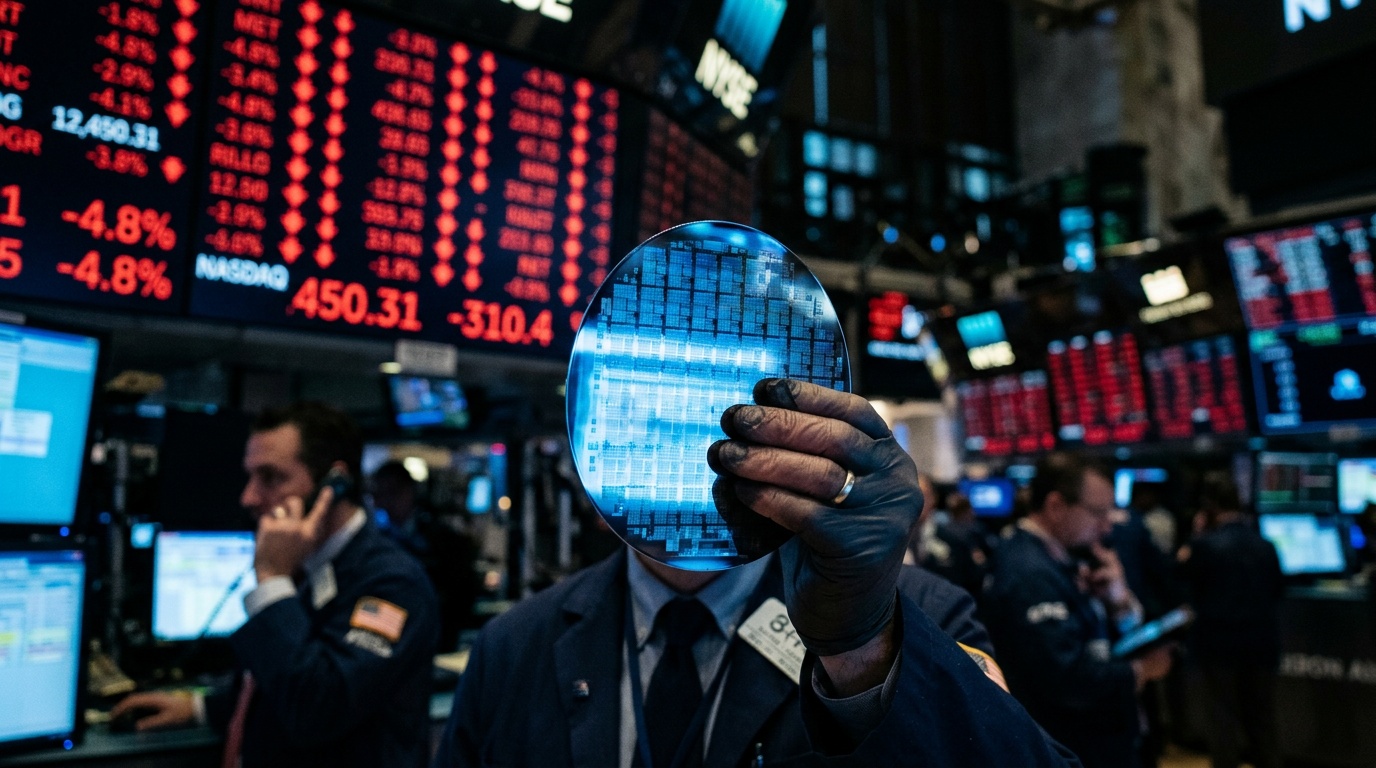
Chip Stocks Just Logged Their Longest Losing Streak Since 2006 — And the Question Everyone's Asking Is: Who Pays for AI?

Nasdaq 100 Slides As Micron, SanDisk, CoreWeave Sink: Stock Market Today

CoreWeave's 'Darwin Moment': Credit Markets Now Price 60% Default Odds

CoreWeave Stock Crashes 20% This Week, but JPMorgan Says Wall Street Is Overreacting

Nvidia, Micron And Broadcom Already Trade Like Cisco After The Dot-Com Crash, BofA Says
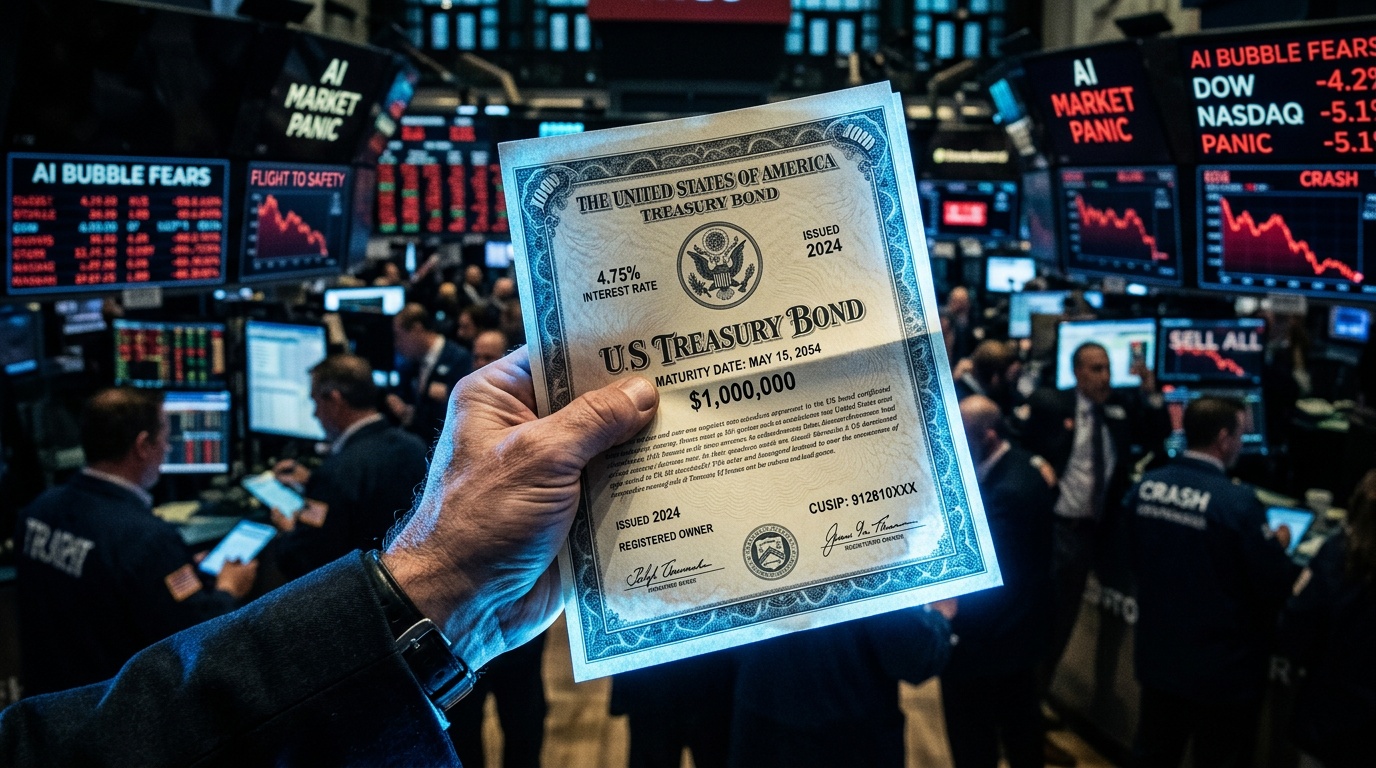
AI Bubble Fears Send Long-Term Treasuries Soaring to Best Week Since March 2025

Coca-Cola Steals KFC From Pepsi After Nearly 40 Years, and Pepsi's Bad Year Just Got Worse