Do Hedge Funds Use Technical Analysis?
MarketDash Editorial Team
Author
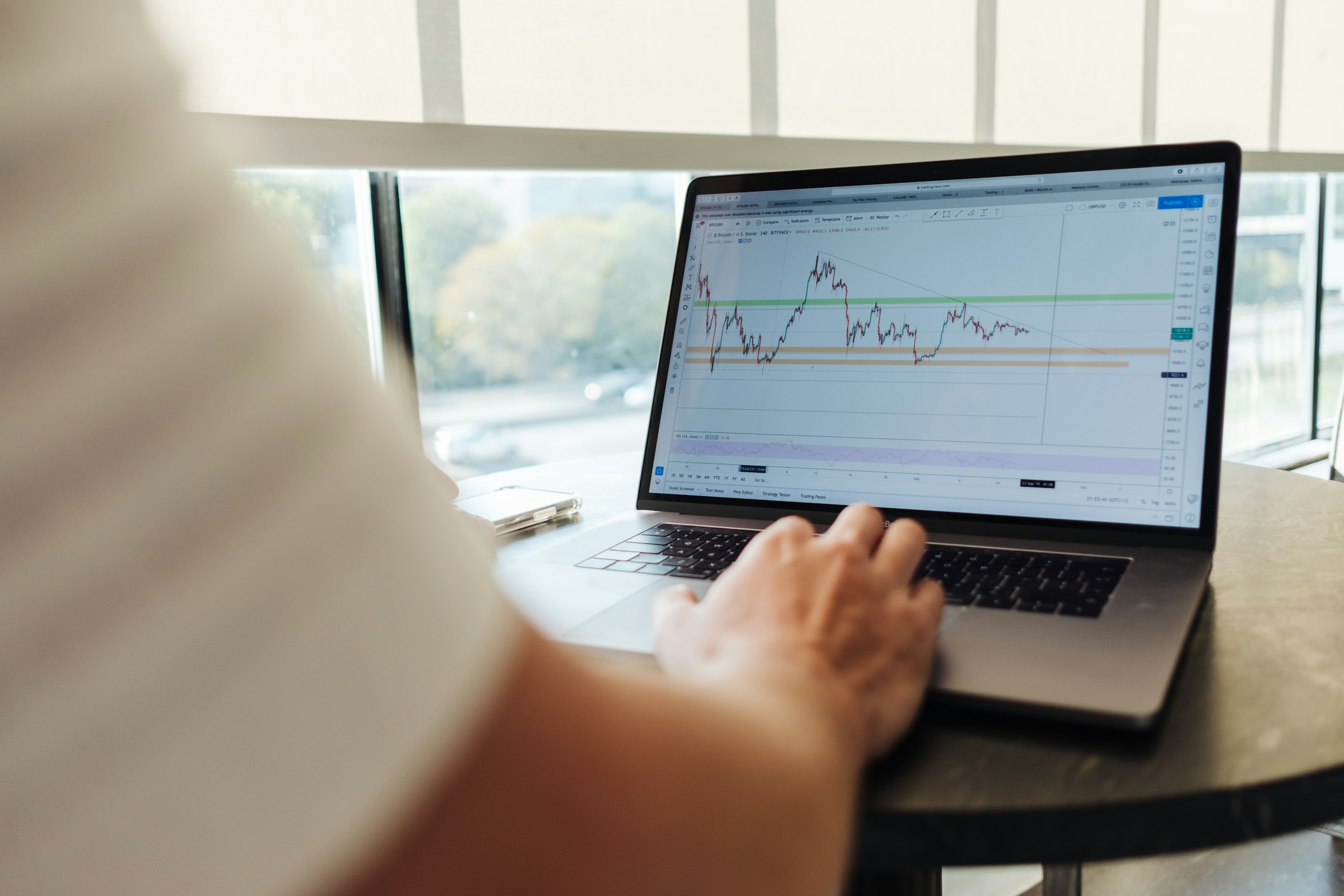
Institutional investors often rely on a mix of chart patterns, price movements, and AI Stock Technical Analysis to drive multi-million-dollar decisions. Their strategies, which include quantitative models and pattern recognition, uncover market-trend insights that can inform individual approaches. Professional techniques, when adapted appropriately, provide fresh perspectives on tracking market momentum and identifying critical price levels.
Although hedge funds closely guard their proprietary systems, advanced analytical tools have become more accessible to retail traders. These methods can help refine entry and exit strategies while shedding light on the complexities behind price movements. MarketDash offers market analysis that translates intricate institutional strategies into practical insights for everyday trading.
Summary
- Hedge funds incorporate technical analysis into their investment processes at a significant rate, with approximately 70% using it as a component of their decision-making framework. The distinction lies in application: institutions treat technical signals as timing mechanisms rather than standalone thesis generators, layering them alongside fundamental research and quantitative models to improve entry and exit precision while managing risk across multi-billion dollar portfolios.
- Technical analysis proves most effective during high-sentiment market periods when emotional trading creates larger mispricings. Research from the University of Cambridge examining hedge fund behavior found that funds using technical analysis delivered higher returns, lower risk, and better market timing in these environments. Conversely, during low-sentiment periods when rational analysis dominates, the same technical signals lose potency as markets become more efficient and mispricings shrink.
- The challenge of conflicting technical indicators paralyzes both retail and institutional traders when multiple signals contradict each other. According to Financial Regulation Courses, 85% of investment analysts struggle to interpret conflicting technical signals in volatile markets. The solution professionals employ involves filtering down to core tools (price, volume, support/resistance, momentum, trend) rather than layering exotic indicators that add analytical noise rather than clarity.
- Market efficiency continuously erodes technical analysis alpha as widespread adoption makes inefficiencies disappear faster. Financial Regulation Courses data shows that 70% of hedge funds report that technical analysis alone is insufficient for making investment decisions. This crowding effect intensifies competition in popular strategies such as momentum and breakout trades, forcing funds to diversify beyond purely technical reliance by incorporating fundamental overlays, sentiment analysis, and alternative datasets to maintain their edge.
- Strategy-specific usage varies dramatically across hedge fund types, with 30-40% of all hedge funds incorporating technical analysis according to Hedge Fund Alpha research. Quantitative funds embed technical concepts directly into algorithms for momentum and mean-reversion models. Discretionary funds use technicals selectively for timing currency or commodity trades. High-frequency trading firms operate entirely in technical territory, parsing order-book dynamics at machine speed, where fundamental analysis adds no value.
- Market analysis addresses this integration challenge by synthesizing technical signals with fundamental metrics and market positioning data, replicating how hedge funds layer multiple analytical frameworks without requiring investors to manually track conflicting indicators across dozens of positions.
What is Technical Analysis, and How Does It Work?

Technical analysis is the practice of studying price movements and trading volume to predict where a stock might go next. Instead of looking at earnings reports or balance sheets, analysts focus on the chart itself. They look for patterns that suggest momentum, exhaustion, or reversal. The idea is simple: the price shows everything the market knows at that time, and human behavior is predictable enough that past events provide hints about the future.
This method rests on three main beliefs. First, all available information is reflected in the price. News, feelings, and insider knowledge are factored in before they become obvious. Second, prices often move in trends rather than fluctuating randomly. Once momentum starts, it usually continues until something interrupts it.
Third, patterns repeat because fear and greed cause similar reactions over many years. A panic sell-off in 2008 looks very similar to one in 2020, once you set aside the headlines and focus on how traders behave under pressure. Our market analysis tools help traders make these predictions effectively.
In contrast, fundamental analysis looks at a company's value. It checks revenue growth, profit margins, competitive advantages, and management quality to determine intrinsic value: the difference between price and what the business should be valued at based on its fundamentals. In comparison, technical analysis completely ignores these aspects; it doesn't consider whether a company is making money or facing financial issues. The only question is: what does the chart show about supply and demand right now?
How do professionals use technical analysis?
Many professionals use both. Fundamentals help you decide what to buy. Technicals help you decide when to buy it. You might love a stock's long-term story. But if the chart shows weakening momentum and a breakdown below support, waiting for a better entry point helps you avoid catching a falling knife.
Price charts form the foundation of technical analysis. Candlestick charts show the open, high, low, and close for each period. They reveal battles between buyers and sellers during the day. Bar charts give similar information, but use less visual weight.
Line charts smooth everything into a single closing price trend. This is useful for identifying the overall direction without excessive noise.
What patterns can emerge from price charts?
Patterns emerge from price charts, offering key insights for traders. A head-and-shoulders formation signals a possible reversal after an uptrend. Double tops indicate exhaustion at resistance levels, while triangles indicate consolidation before a breakout. Cup-and-handle patterns indicate a continuation after a pause.
Recognizing these shapes helps traders anticipate future movements, though no pattern guarantees outcomes. Support and resistance levels highlight important psychological zones in trading. Support is where buying pressure has usually stopped price declines. On the other hand, resistance is the level at which selling pressure limits price rallies.
These levels are not exact lines but rather areas where traders think others will take action. If the price breaks above resistance with strong volume, that level often becomes new support. The logic is simple: when enough traders see a level as important, their actions make it even more significant.
How do trendlines help in technical analysis?
Trendlines connect a series of highs or lows to show direction. An uptrend line drawn under rising lows shows where buyers have consistently stepped in. If that line is broken, the trend may be getting weaker. Trendlines aren't magic, but they help show structure in what otherwise seems chaotic.
Moving averages smooth out price data to find underlying trends. A 50-day moving average shows the average closing price over the last 50 days. When the price is above it, the trend is usually considered healthy. On the other hand, if the price drops below, the momentum may be changing. Traders watch for crossovers between short-term and long-term moving averages as possible entry or exit signals.
What do oscillators measure in technical analysis?
Oscillators measure momentum and overbought or oversold conditions. The Relative Strength Index (RSI) ranges from 0 to 100. A reading above 70 indicates overbought conditions, suggesting a pullback may occur. On the other hand, a reading below 30 points to oversold conditions, where a bounce could occur.
The MACD (Moving Average Convergence Divergence) tracks the relationship between two moving averages and shows changes in momentum before they are clear in price.
Volume confirms what price movements indicate. Rising prices with increasing volume suggest conviction, while rising prices with falling volume may mean exhaustion. A breakout above resistance is more important when accompanied by a surge in volume, signaling real interest rather than just a false move. Volume is the key factor that distinguishes a successful pattern from a failed one.
What is the importance of identifying the trend?
Identifying the trend is very important. Is the stock in an uptrend, a downtrend, or moving sideways? This understanding shapes the whole trading strategy.
In an uptrend, traders look for pullbacks to support as buying opportunities. In a downtrend, they watch for rallies into resistance as possible shorts. When trading in a sideways range, the focus is on bouncing between support and resistance until a breakout happens.
Once the trend is established, the next step is to identify signals that confirm it or indicate a potential change. For instance, a bullish engulfing candlestick at support during an uptrend might lead to a buy. On the other hand, if the price makes new highs but the RSI shows lower highs, it could mean weakening momentum.
To manage risk, traders set stop-loss orders below key support levels to limit downside if their expectations are wrong. Targets are typically set at the next resistance level or based on the pattern's measured move.
How do time frames impact trading strategies?
Time frames matter in trading. Day traders use one-minute or five-minute charts to identify short-term moves. On the other hand, swing traders focus on daily or weekly charts and hold positions for days or weeks. Position traders may use monthly charts to spot longer trends.
Although the basic trading ideas remain the same, the noise level varies significantly across time frames. For instance, a five-minute chart shows every move, while a monthly chart shows only the big changes.
The trading process is a cycle. Traders watch, wait for a setup that fits their needs, execute the trade, and manage their risk.
While technical analysis can’t predict the future, it helps make probabilistic bets with clear risks, giving a slight advantage in many trades. Understanding different market analysis techniques can enhance your trading strategies, and using our tools can make this easier.
How does technical analysis help with timing?
Technical analysis is great at timing. While someone might see a stock as undervalued, buying it during a downtrend often means the stock will lose value before it improves. By waiting for a technical signal, like a breakout or a bullish crossover, traders can improve their entry points and reduce drawdown.
For short-term traders, timing is very important. Fundamental analysis does not provide the guidance needed to decide whether to buy today or wait three days. Understanding this can enhance your market analysis and lead to better trading decisions.
What does technical analysis capture about market psychology?
Technical analysis shows how people feel about the market right now. Panic, euphoria, and indecision all show up in price changes and trading volume before they appear in quarterly reports. For example, when a stock drops suddenly with strong volume, you don’t have to wait for the earnings call to see that people's feelings have changed. The chart has already shared this information.
Technical analysis does not work alone. A perfect chart setup can fall apart if surprising news comes out. Earnings misses, regulatory changes, and geopolitical shocks are not shown in past price patterns. Traders always work with probabilities, not certainties. Even the best breakout can fail, and results are only known after the fact.
What are the criticisms and limitations of technical analysis?
Critics argue it is self-fulfilling. If enough traders watch the same support level, their combined buying can cause the price to bounce back, rather than reflecting the underlying market reality.
This point has some truth, but it does not make the tool useless. If the crowd reacts predictably to certain signals, one can profit from that predictability, whether or not the pattern has any real meaning.
Another limitation is that it ignores value. A stock might look good technically, while the business behind it is deteriorating. Traders might ride the momentum higher, but if the actual fundamentals eventually catch up, the drop can be brutal. Technical analysis alone doesn't show whether you are buying a great company at a low price or a disaster waiting to happen.
How can more indicators lead to analysis paralysis?
The real challenge lies in being overwhelmed by indicators. Traders often add on RSI, MACD, Bollinger Bands, Fibonacci retracements, and many other tools onto one chart, hoping that having more signals will lead to more certainty. Instead, they receive mixed messages that can lead to analysis paralysis.
One indicator suggests buying, while another suggests selling, leaving traders questioning every decision. Precision doesn't come from just adding more data; it comes from knowing which signals are most important in a certain situation, filtering out the noise, and acting on what’s left.
Platforms like market analysis help clear this confusion by combining technical signals with fundamentals and market positioning.
This way, traders aren't trying to solve a puzzle made up of dozens of conflicting indicators. They gain insights without feeling overloaded, which shows how professionals use technicals as one part of a larger decision-making process, not the only factor.
Do hedge funds trust technical patterns in their decisions?
This leads to an important question that often goes unasked until investors have lost money on what seemed like a perfect setup: Do the institutions that move billions every day truly trust these technical patterns, or is something else influencing their decisions?
Related Reading
- AI Stock Technical Analysis
- What is Automated Trading
- What is Backtesting in Trading
- How To Use the Fib Retracement Tool
- What is SMA in Stocks
- Fundamental Analysis vs Technical Analysis
- How to Do Technical Analysis of Stocks
- How to Read Stocks
- Bar Chart vs Candlestick
- Day Trading Patterns
- Moving Average Crossover Strategy
- How to Analyze a Stock Before Investing
- Volume Technical Analysis
- Double Top Chart Pattern
- Quantitative Stock Analysis
Do Hedge Funds Use Technical Analysis?

Yes. Hedge funds use technical analysis, but they rarely rely on it as their sole decision-making tool. According to Hedge Fund Alpha, 70% of hedge funds incorporate technical analysis into their investment processes. The difference between how institutions and retail investors use it comes down to context.
Hedge funds see technical signals as just one piece of the puzzle. They combine fundamental research, quantitative models, and macroeconomic analysis rather than relying entirely on chart patterns. To better understand your investment strategy, considering a detailed market analysis can be beneficial.
The gap between what people think and what really happens is big here. Many investors believe that advanced institutions dismiss technical analysis, thinking it is just noise for retail investors: something only day traders care about.
This assumption overlooks how professionals actually operate. They don’t ignore price movements. They just choose not to let it control their thinking.
How do hedge funds use technical analysis?
Price reflects current market sentiment. Fundamentals show what a company might be worth in three years. The gap between current sentiment and future value creates opportunities; however, success depends on how well you can read both.
A hedge fund may find an undervalued stock through thorough fundamental research and then wait for technical confirmation before making a move. They might be looking for a breakout above a key resistance level or waiting for momentum indicators to turn positive. The fundamental thesis gives conviction, while the technical signal provides timing.
Timing is very important, often more than most retail investors realize. Buying a strong company during a downturn can lead to long months of losses before the market reflects the analysis. Even if the analysis is right, a bad entry can harm both performance and emotional strength. Institutions managing billions cannot afford these problems.
They need entries that align with momentum, exits that account for weakening technicals, and risk management that responds to real market movements, not just what they hope will happen.
Volume and order flow add another important layer to the analysis. When a stock breaks out with heavy volume, it shows real interest rather than a misleading move. On the other hand, if the price rises while volume declines, smart money might be exiting while retail investors are buying.
Hedge funds closely monitor these dynamics because they reveal who is buying and who is selling. This information isn't found in earnings reports. It exists on the tape.
What strategies do hedge funds use for technical analysis?
Quantitative funds embed technical concepts directly into their algorithms. Momentum strategies, mean reversion models, and trend-following systems all rely on technical principles, even if they never draw a single trendline.
These funds analyze thousands of stocks simultaneously, looking for statistical patterns that recur across markets and time frames. The mathematics involved is complex, but the fundamentals remain: prices move in predictable patterns that can be systematically exploited.
Discretionary funds use technical analysis more selectively. For example, a global macro manager might use chart patterns to time currency trades or commodity positions, especially when fundamental reasons are unclear.
An equity long-short fund might use moving averages to manage position sizing, aggressively adding to winners that show technical strength while trimming positions for losers that breach support. This analysis remains flexible, adapting to changing market conditions rather than adhering to strict rules.
How does market sentiment affect technical analysis?
High-frequency trading firms operate exclusively through technical analysis. They do not focus on reading balance sheets; instead, they look at order book dynamics, identify liquidity imbalances, and capitalize on micro-patterns that exist for only a few milliseconds.
This method represents technical analysis at machine speed, without human emotion, and delivers a level of precision that regular traders cannot match. Market conditions significantly affect how well technical signals perform. During periods of high sentiment, when emotions drive prices and biases lead to larger mispricings, technical analysis becomes more effective.
Groups of people tend to follow momentum, which amplifies fear and greed. Patterns become more trustworthy as enough people respond to the same signals, creating self-reinforcing market moves.
Research from the University of Cambridge on hedge fund behavior found that funds using technical analysis achieved higher returns, lower risk, and better market timing in high-sentiment environments.
The edge came from understanding crowd psychology through price movements and preparing for expected reactions. When excitement pushes a stock into overbought areas, and momentum starts to fade, skilled traders see the signs and act before the crowd shifts.
What happens during low-sentiment periods?
Low-sentiment periods tell a different story. Markets become more efficient, and mispricings shrink. Technical signals lose strength when logical analysis takes over emotional reactions.
The same patterns that worked during exciting times often fail when calm investors focus on fundamentals. Hedge funds adjust their strategies accordingly, reducing their reliance on technical indicators when conditions are unfavorable.
No serious fund relies on technical analysis alone; it is important to combine different approaches. Fundamental research helps determine what to trade, while quantitative models determine how much to invest based on risk and expected return. Technical analysis is key to determining when to enter and exit trades. This layered approach helps remove weak ideas and boosts the execution of strong ones.
How do hedge funds integrate fundamental and technical analysis?
A common pattern emerges: analysts build a fundamental case for a stock by determining its fair value and identifying potential catalysts. Portfolio managers then review the technical indicators to assess whether the setup is favorable. If the chart shows momentum is deteriorating, they hold off on making a move. On the other hand, if it shows early signs of accumulation or a breakout forming, they take action. The fundamental thesis explains the why, while the technical setup tells you the when.
This difference highlights a common mistake many retail investors make. Technical analysis can seem weak when used alone, leading to bets on patterns without a solid grasp of the underlying business or market structure. However, when it is layered correctly as one signal within a larger framework that includes valuation, competitive positioning, and market timing, it becomes much more useful.
Market analysis platforms adopt this institutional approach by combining technical indicators with fundamental metrics and market sentiment. This mix gives individual investors the multidimensional view that professionals rely on, without requiring them to learn every analytical method separately.
What do hedge funds ignore in technical analysis?
Institutions skip most of what retail traders worry about. Exotic indicators, complex oscillator combinations, and fancy pattern recognition systems almost never show up in professional work. Their focus is simple: price, volume, support and resistance, momentum, and trend. These core elements capture what matters without adding extra noise.
They also ignore the short-term noise that most retail traders focus on, as shown in this article. For example, a five-minute chart might show a dozen false breakouts that don't mean anything by the end of the day. Hedge funds, which look at longer time frames, focus more on daily or weekly patterns than on day-to-day fluctuations. The signal-to-noise ratio gets much better when you look at the bigger picture.
The biggest difference is discipline. Retail traders often ignore their technical signals when their emotions take over. They might hold losing positions past stop-loss levels, hoping for a turnaround, or sell winning positions too early because they fear pullbacks.
On the other hand, institutions create systems that enforce rules, helping to remove emotional decision-making. The technical signal triggers the trade, while risk parameters decide when to exit. Human judgment remains part of the process, but it operates within limits that prevent costly mistakes.
What is the main takeaway about hedge funds and technical analysis?
The real question isn't whether hedge funds use technical analysis; it's how they integrate it without letting it take over their thinking. This balance is important for creating strategies that can handle pressure.
How Does Technical Analysis Fit Into Hedge Fund Trading Strategies?

Hedge funds use technical analysis in their trading strategies to time entries and exits. It is not a standalone method for generating ideas. Fundamental research helps find mispriced securities, while quantitative models predict expected returns and determine position sizes based on risk. Technical analysis answers the tactical question: Is this the right time to act?
This order of operations is important, as even the best investment idea can lose money if entry occurs when momentum is falling or if exit occurs before the movement is complete.
The way technical analysis is used varies by strategy type, but the basic idea remains the same. Technical signals help filter execution decisions, dynamically manage position sizes, and trigger risk controls when price action moves against the idea. According to Hedge Fund Alpha, approximately 30-40% of hedge funds use technical analysis, particularly in strategies that rely on timing and momentum to generate returns. Funds that do not use it at all typically operate in private markets, deep-value situations, or credit strategies where price charts are not very helpful.
On the other hand, most funds find some form of technical analysis useful, even if they would never say they are following the charts.
What is trend following in hedge funds?
Trend following captures extended price moves by entering when momentum confirms direction and exiting when that momentum breaks. Funds using this approach don't predict where prices will go; they react to what is already happening.
By riding established trends, they wait until technical indicators signal exhaustion.
This strategy works across asset classes because trends last longer than most people think. For example, a commodity entering an uptrend might rise for months as supply tightens and demand builds.
Similarly, a currency pair breaking through multi-year resistance can trend for quarters as capital flows shift. Hedge funds that use trend following systems spot these moves early through breakouts, moving average crossovers, or momentum acceleration metrics. They then increase their positions as confirmation builds.
How do hedge funds manage risk?
Risk management is critical to a hedge fund's strategy. Stops are set below recent swing lows in uptrends and above recent highs in downtrends. Position sizing adjusts based on how much the price moves, allocating more capital to smooth, directional moves and less to choppy markets.
This technical framework removes the guesswork from exits, helping avoid common mistakes made by most discretionary traders. When a trend breaks, the system exits automatically. There is no waiting for reversals and no averaging down into losses.
What are momentum strategies?
Momentum strategies bet that securities that are performing well will continue to perform well in the near future. Hedge funds look for stocks reaching new highs with higher trading volume, currencies moving through resistance levels, or sectors taking the lead. The idea is simple: winners keep winning until something disrupts this trend.
Technical analysis gives the entry signal. A stock might have strong fundamentals, but momentum traders wait for evidence that other market participants recognize that value as well. A breakout above a consolidation range, along with a surge in volume, shows that buying is increasing. Funds invest not just because the chart looks good, but because price action shows changing supply-demand patterns that fundamental analysis alone can't explain.
How do hedge funds know when momentum fades?
The challenge is figuring out when momentum fades. Relative strength indicators help identify when a stock's performance lags behind its sector or the broader market. When price and momentum indicators diverge, it signals that momentum is weakening.
Professionals who use momentum strategies do not hold onto positions when they start to reverse. They exit at the first sign of a decline, recognizing they will never reach the highest point, but they focus on protecting their capital from expected mean reversion.
What are mean reversion strategies?
Mean-reversion strategies capitalize on temporary dislocations by buying assets that have declined too much, too quickly, and selling those that have risen above normal levels.
Technical indicators help find these extremes using standard deviation bands, relative strength measures, or volatility-adjusted price levels.
Hedge funds use this strategy in stable markets, where prices move around a steady average. For example, a stock that trades within a specific range for several months creates favorable conditions.
When the price hits the lower band on low volume, mean reversion traders buy, hoping for a bounce back toward the middle. On the other hand, when the price hits the upper band and signs of exhaustion appear, they might go short or take profits.
What is the risk in mean reversion?
The risk is in confusing a trend with a temporary extreme. For example, a stock that falls below its support level may appear oversold. However, if the company’s situation has worsened, mean reversion could turn into a value trap.
This is why sophisticated funds mix technical oversold signals with fundamental analysis. They look for assets that are technically down but fundamentally healthy. The technical signal gives the best timing, while the fundamental check helps avoid the risk of catching falling knives.
How does statistical arbitrage work?
Statistical arbitrage finds pairs or groups of securities that historically move together but have temporarily moved apart. When the gap between them widens beyond the normal range, funds bet on them reuniting by buying the underperformer and selling the outperformer.
Technical analysis examines these relationships using methods such as tracking correlations, analyzing spreads, and calculating z-scores. These tools measure the extent to which current prices differ from historical norms.
For example, a fund might watch two energy stocks that usually trade together. When one stock falls two standard deviations below its mean, the technical signal initiates a pair trade, betting that the relationship will return to normal.
What is the role of speed and scale in trading?
Success in trading largely depends on speed and scale. The profit margins are small, often just a few basis points. Therefore, funds require low-latency execution and large position sizes to deliver meaningful returns.
The technical framework must be able to process thousands of potential pairs simultaneously, enabling faster identification of opportunities than competitors. In this environment, technical analysis is performed exclusively by algorithms, relying on automated execution rather than human interpretation.
How does high-frequency trading utilize technical analysis?
High-frequency trading operates on milliseconds, exploiting micro-inefficiencies in how orders are placed and how liquid assets are traded.
These funds do not review balance sheets or read earnings reports; instead, they study order-book dynamics and identify patterns in how other traders place and cancel their orders.
Technical analysis in this situation focuses on ultra-short-term price action, large volume changes, and bid-ask spread behavior. Algorithms detect when large orders enter the market, helping traders anticipate price movements. They also spot liquidity imbalances when there are more buyers than sellers, leading to quick price changes that create arbitrage opportunities.
How does pattern recognition work in trading?
Most retail investors think of technical analysis as drawing trendlines on daily charts. But for high-frequency funds, it means pattern recognition in data streams that occur in microseconds, identifying repeating sequences in how markets process information.
The ideas are similar to traditional technical analysis, but they occur so quickly that humans can't react fast enough.
Pattern recognition spots recurring chart formations that have historically led to predictable price changes. Hedge funds use this approach carefully, focusing on setups with a high probability of success rather than chasing every possible pattern.
What is the importance of context in technical analysis?
A cup-and-handle formation in a leading stock might signal that the stock will keep going up as it takes a break after making gains. A head-and-shoulders pattern that comes after a long climb can warn of a possible change in direction.
Funds don’t trade these patterns without thinking. They conduct volume analysis to ensure the broader market supports the expected move and confirm that fundamentals align with the technical setup.
The true advantage lies in combining pattern recognition with context. A bullish pattern in a stock with declining earnings may not work out, but the same pattern in a stock that is showing accelerating revenue growth and expanding margins has a better chance of success. Technical analysis identifies the setup, and fundamental analysis assesses whether it is worth acting on.
How do retail investors compare with institutional investors?
Many individual investors attempt to replicate large institutions' methods by adding numerous indicators to their charts. They believe that having more data will help them make better decisions; however, this often creates conflicting signals that can prevent action. For example, a technical indicator might signal a buy, while a momentum oscillator might suggest waiting. At the same time, the volume pattern might show distribution.
This leaves investors stuck in analysis and not able to take decisive action. Platforms like market analysis solve this issue by combining technical signals, fundamental metrics, and market positioning into a single, clear view. This method mirrors how hedge funds use these tools, without the cognitive overload of managing multiple analytical frameworks simultaneously.
What tools trigger billion-dollar trades?
Understanding which strategies use technical analysis does not explain the specific tools that give the signals needed to start billion-dollar trades.
Related Reading
- AI Quantitative Trading
- AI Swing Trading
- Stock Sentiment Analysis
- Penny Stock Analysis
- Volume Analysis Trading
- How to Find Stocks to Day Trade
- How to Scan Stocks for Swing Trading
- Best Stock Trading Strategies
- Best Indicators for Day Trading
- Technical Analysis Trading Strategies
- Best Stock Indicators for Swing Trading
- Trading Exit Strategies
Key Tools Hedge Funds Use For Technical Analysis

Hedge funds use a few tools to understand price behavior without complicating matters. The most important tools show momentum shifts, volatility expansion, and supply-demand imbalances using simple visuals or math. According to Visualping's research on investment tools, experts use eight primary technical analysis tools to generate clear signals and execute trades quickly.
Each tool has a specific role in the decision-making process, from spotting entry points to confirming when to exit. Funds use these tools together effectively, rather than adding every available indicator to a single chart.
What are line charts, and how do they work?
Line charts simplify price movement by connecting closing values over time. Funds use them to remove daily fluctuations when assessing whether an asset maintains directional consistency over weeks or months.
A clear upward slope in a line chart shows sustained accumulation, while a downward line indicates persistent distribution. This simplicity is helpful when portfolio managers need to check many positions quickly during morning reviews.
In practice, line charts are best for identifying large trends that inform investment decisions, rather than pinpointing exact entry points. For example, a fund monitoring currency pairs might combine several line charts to compare relative strength across regions, identifying which currencies are gaining strength relative to others.
The visual clarity of line charts allows teams to reach an agreement more quickly than when discussing the details of candlestick charts. When the market is volatile, and charts become messy with wicks and gaps, switching to a line chart helps regain focus on whether the main trend is still in place or has truly changed.
How do candlestick charts function?
Candlestick charts show four important data points, open, high, low, and close, in a single image. This helps assess the strength of buying or selling pressure during each period. The body of the candlestick shows the difference between the opening and closing prices, while the wicks show the full range of price movement.
Color-coding quickly indicates whether buyers or sellers were in control during the session. Hedge funds study these patterns to identify signs that trends may change or persist before they execute trades.
A doji candlestick occurs when the opening and closing prices are very close. This indicates that traders are uncertain about the market. When this pattern appears after a long price increase, it can signal that upward momentum may be waning.
An engulfing pattern occurs when a large candle completely covers the previous session's range. This indicates a shift in control between buyers and sellers.
Funds do not trade based on these patterns without caution; they check volume data to ensure the pattern reflects real trading interest rather than noise from low trading activity. For example, a bullish engulfing candle with three times the usual volume is taken seriously, while the same pattern with low volume is often ignored.
What role do moving averages play?
Short-term traders working on hourly or four-hour timeframes rely heavily on candlestick analysis. Each bar shows important psychological changes over short time periods, but the key is to avoid overinterpreting them. Retail traders often notice patterns everywhere, while professionals wait for setups that align with the broader picture. In this method, the candlestick formation confirms what volume and momentum indicators already suggest.
Moving averages smooth price data by calculating the average over a specified period, filtering out daily fluctuations to show the underlying trend. Funds typically use simple moving averages (SMA) for clear trend identification, whereas they prefer exponential moving averages (EMA) when they want recent price action to carry more weight.
The 50-day and 200-day moving averages are widely watched benchmarks: when the price is above both, the asset is in a confirmed uptrend; when it drops below both, the trend has likely changed. Learn more about this in the Moving Average guide.
Crossover strategies create mechanical signals that remove emotion from execution. A short-term moving average crossing above a longer-term one triggers long positions, while the opposite crossover signals exits or shorts. These systems work well because many market participants watch the same levels, creating a self-reinforcing effect. The 50-day crossing above the 200-day, known as a golden cross, often precedes big rallies, as this signal attracts momentum buyers who jump in, expecting the trend to continue.
What are the limitations of moving averages?
The main problem with moving averages is lag. They respond to price changes only after they occur, which can lead to late entries into trends and exits after reversals have begun.
Funds accept this tradeoff because the smoothing effect helps avoid reacting to every small pullback during a healthy trend. The aim is not to catch the exact tops and bottoms, but to stay in the right position for the bulk of the move while avoiding the whipsaws that can often affect more sensitive indicators.
How is the relative strength index used?
The relative strength index measures the speed of price changes on a scale from zero to 100. It calculates the ratio of recent gains to recent losses over a standard 14-period window.
Readings above 70 indicate overbought conditions, suggesting a price drop may occur soon. On the other hand, readings below 30 indicate oversold conditions, where a price increase could occur.
Hedge funds use RSI not as a standalone signal but as a filter that increases confidence in other technical setups.
What strategies utilize mean-reversion and divergences?
Mean-reversion strategies rely heavily on RSI extremes. When a stock drops into oversold territory due to panic selling but its fundamentals remain strong, funds often initiate long positions, hoping for a recovery. The RSI reading indicates that selling pressure has reached exhaustion, increasing the likelihood of a short-term bounce.
On the other hand, when the RSI goes over 70 during a momentum surge, funds may tighten their stops or reduce their position size. This awareness helps them see that the move might be overextended.
Divergences between price and RSI act as powerful warnings. If a stock reaches a new high while the RSI does not confirm its own new high, it indicates weakening momentum beneath the surface. Such a negative divergence often precedes reversals.
Professionals monitor these mismatches because they signal declining participation before it becomes clear in price movements. The challenge is exercising patience; divergences can last for weeks during strong trends, and leaving too early can mean missing the final part of the move.
What are Bollinger Bands and how do they work?
Bollinger Bands create a volatility envelope around a moving average by adding and subtracting a multiple of the standard deviation. Usually, this involves using two standard deviations above and below a 20-period simple moving average. The bands widen during volatile periods and narrow during calm periods. This helps hedge funds identify potential breakouts from consolidation and assess mean-reversion opportunities when prices deviate significantly.
A Bollinger Band squeeze occurs when the bands narrow, indicating declining volatility and a significant move is likely. Funds get ready for breakouts in either direction by placing orders above and below the squeeze zone to catch the initial move. The breakout direction is less important than recognizing that volatility expansion is imminent.
Once the move begins, the bands quickly widen, and momentum strategies capitalize on the expansion until the price returns to the middle band or shows signs of losing strength.
How do mean-reversion traders use Bollinger Bands?
Mean-reversion traders take a different approach. They believe that when the price hits the outer bands, it shows a temporary extreme. For example, if a stock rises to the upper band while volume declines, it indicates the price move is losing strength. As a result, traders often open short positions or take profits, expecting the price to move back toward the middle band.
This strategy works well in range-bound markets, but it can fail during strong trends, where the price may remain at the upper band for an extended period. The key is to confirm the market regime before applying this strategy. Understanding the current market analysis helps traders better gauge when to implement mean-reversion strategies.
What is the Moving Average Convergence Divergence?
The Moving Average Convergence Divergence (MACD) indicator tracks the relationship between two exponential moving averages, usually the 12-period and 26-period EMAs. It shows the difference in the MACD line. A nine-period EMA of the MACD line is called the signal line. Histogram bars highlight the gap between the MACD and signal lines, making momentum changes easier to spot.
Hedge funds use MACD crossovers to confirm trend changes, while divergences can help identify weakening momentum before reversals occur.
When do bullish and bearish signals occur with MACD?
A bullish signal happens when the MACD line crosses above the signal line. This shows growing upward momentum. Funds may decide to increase allocations or open new positions, especially if the crossover occurs above the zero line. This suggests that the asset is already in a strong uptrend.
On the other hand, bearish crossovers indicate the opposite, signaling a possible downward trend. The histogram's changes also provide additional insights: increasing histogram bars indicate that momentum is strengthening, while decreasing bars suggest the current movement may be losing strength.
How do MACD divergences provide warnings?
MACD divergences provide early warnings similar to those from RSI. When the price makes new lows while the MACD shows higher lows, it means that selling pressure is decreasing even if the price hasn't changed direction yet. Funds monitor these setups when oversold, preparing before others do.
The indicator's dual nature, which shows both trend direction and momentum strength, makes it useful across various market conditions. Platforms like market analysis combine MACD signals with fundamental screens and market positioning data, mirroring how professionals use technical indicators alongside other decision-making tools, without the burden of manually tracking multiple charts and conflicting signals across different positions.
How reliable are these tools in irrational markets?
The real test isn't just whether these tools work on their own; it's whether they remain effective when markets act irrationally, sending mixed signals.
Limitations Of Technical Analysis Faced By Hedge Funds and How to Overcome Them

Technical analysis provides hedge funds with powerful tools for understanding price movements, but it also has flaws that can erode those advantages in complex, high-stakes situations. According to Financial Regulation Courses, 85% of investment analysts struggle with conflicting technical signals during unstable market times. These issues are not foolproof, as they are shaped by market evolution and analytical errors. Careful navigation is needed to maintain performance.
The way forward involves smart changes that hedge funds are increasingly using to address these problems. This includes combining different methods and using advanced tools to achieve better results.
A key limitation is that technical analysis relies on past price patterns to predict future movements. Markets are always changing because of new economic conditions, regulatory changes, or unexpected events. This means that what happened yesterday might not happen the same way tomorrow. For example, sudden geopolitical events or policy changes can render past patterns obsolete, leading to missed opportunities or unnecessary losses when trends break unexpectedly.
What challenges do hedge funds face with technical analysis?
Hedge funds face amplified risks because large positions can trigger outsized impacts when assumptions fail. To reduce this risk, funds use forward-looking inputs, including macroeconomic indicators, alternative data streams, and technical signals.
Careful backtesting across different situations and scenario analysis helps confirm the strategy's effectiveness and reduces blind faith in simply repeating the same approach. This method promotes more adaptable decision-making processes.
Overfitting occurs when models become overly tailored to specific historical data, capturing noise rather than real signals. In hedge fund quantitative setups, overly complex models designed for past data perform well in simulations but struggle in real-time trading because they can't adapt well.
Live conditions introduce slippage, changing liquidity, and hidden factors, making these over-optimized models weak and prone to underperforming or even failing.
How do funds manage overfitting?
Funds fight against overfitting by using out-of-sample testing, walk-forward optimization, and ensemble methods that mix multiple simpler models. Cross-validation techniques and regularization improve robustness, ensuring that strategies perform well after training and deliver more consistent results across different situations.
The wide use of technical and quantitative methods helps the market run more efficiently, removing inefficiencies that once created alpha. As more people use the same patterns, these unusual occurrences vanish more quickly, making it less profitable to rely on previously reliable signals. For hedge funds with large capital, this crowding effect makes competition tougher and erodes advantages in popular strategies, such as momentum or breakout trades.
What approaches do hedge funds take beyond technical analysis?
Research from Financial Regulation Courses shows that 70% of hedge funds believe that relying solely on technical analysis is insufficient for making sound investment decisions.
To address this problem, funds should diversify, rather than relying solely on technical analysis. They add fundamental overlays, sentiment analysis, or alternative datasets to their strategies. By using dynamic allocation, they can focus on less crowded opportunities. They also continually refine their methods, using proprietary indicators or machine learning to identify new inefficiencies before others do.
How do personal biases affect technical analysis?
Technical analysis often involves judgment calls in reading charts or using indicators. This can lead to different interpretations among team members or over time. For example, what one analyst sees as a clear reversal might appear to another as continuation noise, introducing bias and inconsistency. In hedge fund environments, where choices affect large portfolios, this subjectivity can increase mistakes, especially under stress or in unclear market conditions.
Confirmation bias exacerbates the problem because traders often favor signals that align with their existing beliefs. Funds address this by enforcing systematic rules, using algorithmic execution, and applying peer-review processes. These standardized rules, along with quantitative scoring of setups, help reduce personal bias and encourage objectivity. Ultimately, this leads to more consistent and justifiable trading decisions.
What is the issue with lagging technical indicators?
Technical indicators inherently lag price movements because they are based on historical data. By the time a moving average crossover confirms a trend change, the initial move has already happened. This delay costs funds in both entry efficiency and profit potential, especially in fast-moving markets where seconds count. The gap between signal generation and execution widens when manual review processes slow decision-making.
How can hedge funds reduce execution lag?
Hedge funds minimize lag through automated execution systems that trigger trades as soon as certain conditions are met. By mixing faster indicators with slower confirmation tools, they create layered signals that combine responsiveness with reliability. This high-frequency infrastructure reduces the delay between signal detection and order placement, helping funds capture more of each market move before it fades.
Most individual investors overlay numerous indicators on charts, believing that more data will help them make better decisions. However, this can create conflicting signals that stop them from taking action. For example, one indicator might recommend buying, while another advises waiting, and yet another indicates that selling is underway. In this situation, investors often end up stuck in analysis rather than taking action.
Platforms like market analysis help address this problem by combining technical signals with fundamental data, insider activity, and hedge fund tracking into organized reports on short- to medium-term opportunities. This combined intelligence helps avoid overfitting and historical biases by providing forward-looking, data-rich suggestions that reflect how professionals use technical indicators in their larger decision-making processes.
What are the challenges of false breakouts?
False breakouts occur when the price quickly moves through a key technical level and then reverses, which can confuse traders who jump in during the initial move. These whipsaws can drain capital through small, repeated losses and erode traders' confidence in the technical setup. In volatile markets where prices move up and down, false signals can increase when prices swing around support and resistance without a clear direction.
Funds reduce whipsaw damage by requiring confirmation of volume before reacting to breakouts. A move past resistance with decreasing volume often shows a lack of confidence and is likely to fail.
Also, funds widen stop-loss settings during periods of high volatility, reducing the risk per trade and helping avoid being shaken out by regular price movements. Moreover, position sizing is reduced under uncertain conditions, which limits the total amount at risk from potential false signals.
How do changing market conditions affect technical strategies?
Technical models trained on trending markets often fail when market conditions shift to mean reversion or the opposite. A momentum strategy that performed well in a rising market can lose money during sideways movement.
Likewise, mean-reversion tactics that worked in stable conditions may struggle when a real trend starts. The technical framework itself does not show that the underlying market structure has changed.
To address these challenges, advanced funds develop regime-detection systems that identify current market conditions based on volatility, correlation patterns, and price behavior across different timeframes. When the market shifts, the system automatically adjusts its strategies to the new environment.
This layer of analysis above technical analysis helps avoid using the wrong tools in the wrong conditions, thereby protecting capital during changes that can harm single-strategy approaches.
How can hedge funds implement solutions effectively?
Understanding these limitations is important. However, it matters only if hedge funds can use solutions that perform well when their own capital is at risk.
Related Reading
- Stock Market Technical Indicators
- Tools Of Technical Analysis
- Tradingview Alternative
- Trendspider Vs Tradingview
- Ninjatrader Vs Tradingview
- Tradovate Vs Ninjatrader
- Ninjatrader Vs Thinkorswim
- Tradestation Vs Thinkorswim
- Tradestation Vs Ninjatrader
- Thinkorswim Vs Tradingview
Try our Market Analysis App for Free Today | Trusted by 1,000+ Investors
The gap between knowing what hedge funds do and actually applying it comes down to access. Institutions combine technical signals with fundamental research, regime detection, and risk controls. They don’t rely solely on charts; instead, they integrate them into multidimensional frameworks that adapt to changing conditions. The question is whether you can copy that method without creating your own quantitative team or spending hours sorting through conflicting indicators from multiple positions.
MarketDash market analysis delivers the same integrated analysis professionals use. It combines AI-powered stock grading with real-time valuation scans, insider alerts, and company comparison tools. Instead of getting lost in data streams and manually layering technical indicators on top of fundamental screens, you get curated intelligence that combines both to deliver actionable insights. Whether you focus on short-term momentum plays, comprehensive sector rankings, or long-term wealth building, the platform keeps your strategy sharper and your research faster by automating the hard synthesis work hedge funds typically handle internally.
Ready to trade with institutional-level insight backing your decisions? Start your free trial with MarketDash today, and see how precision analysis transforms the way you invest.
Get Market News Alerts
Real-time alerts on price moves, news, and trading opportunities.
Join 20,000+ investors. No spam, ever.
Featured Articles
View all news
Nasdaq 100 Notches Record as Brazil's EWZ Jumps 13%: Markets Today

Nasdaq 100 Hits Record High, But 55 of Its 101 Stocks Are Still Below Their 50-Day Average

Brazil's Election Shocker Sends XP Inc. to Best Day Ever, Tops Russell 1000

Nvidia Made The AI Trade Crowded. These 3 ETFs Are Playing What Comes Next

Trump Ditches 'AI' For 'Super Intelligence' And Elon Musk Is Already On Board

JPMorgan's October Picks Point to 3 ETF Trades: Value, AI Power, Health Care

Iran's Oil Minister Quits Over $2 Billion Allegations as Rial Craters and Bessent Vows Pressure 'Will Not Stop'