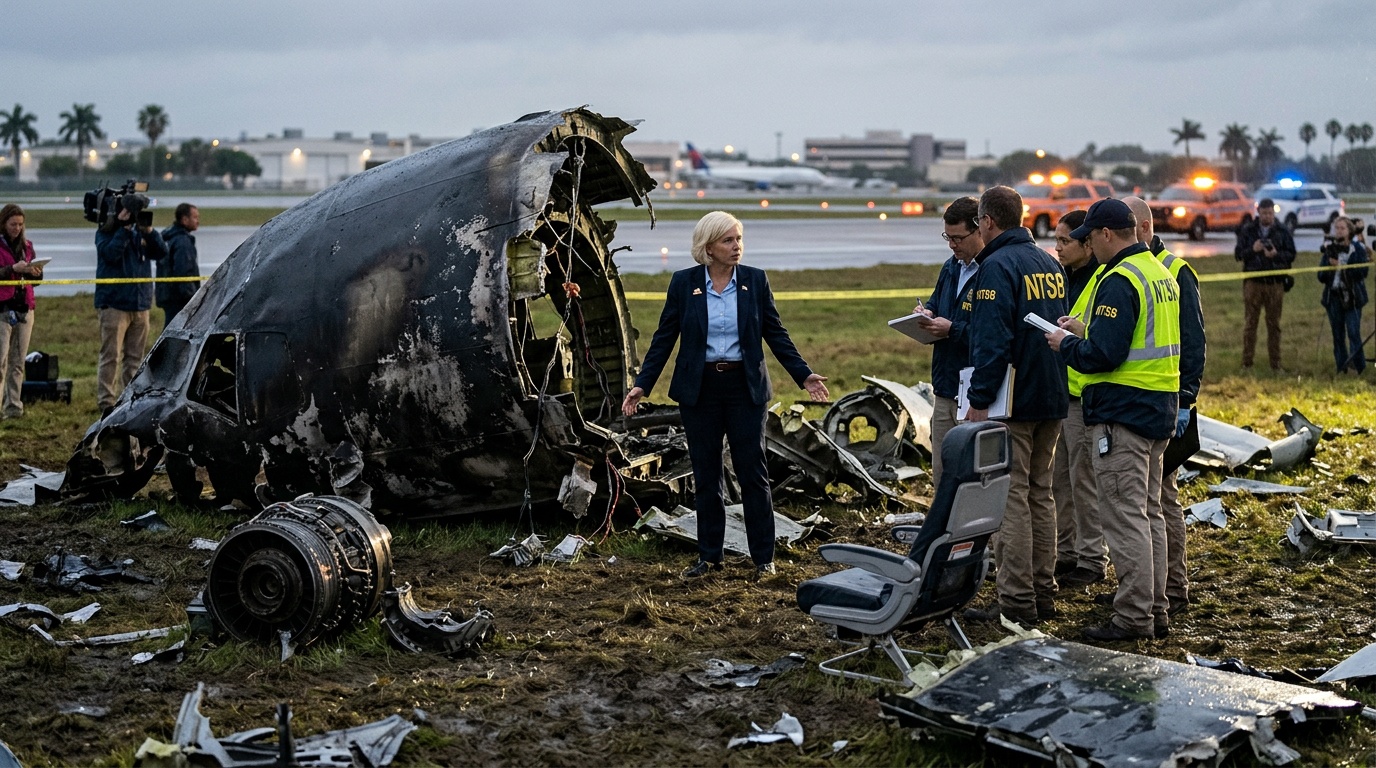
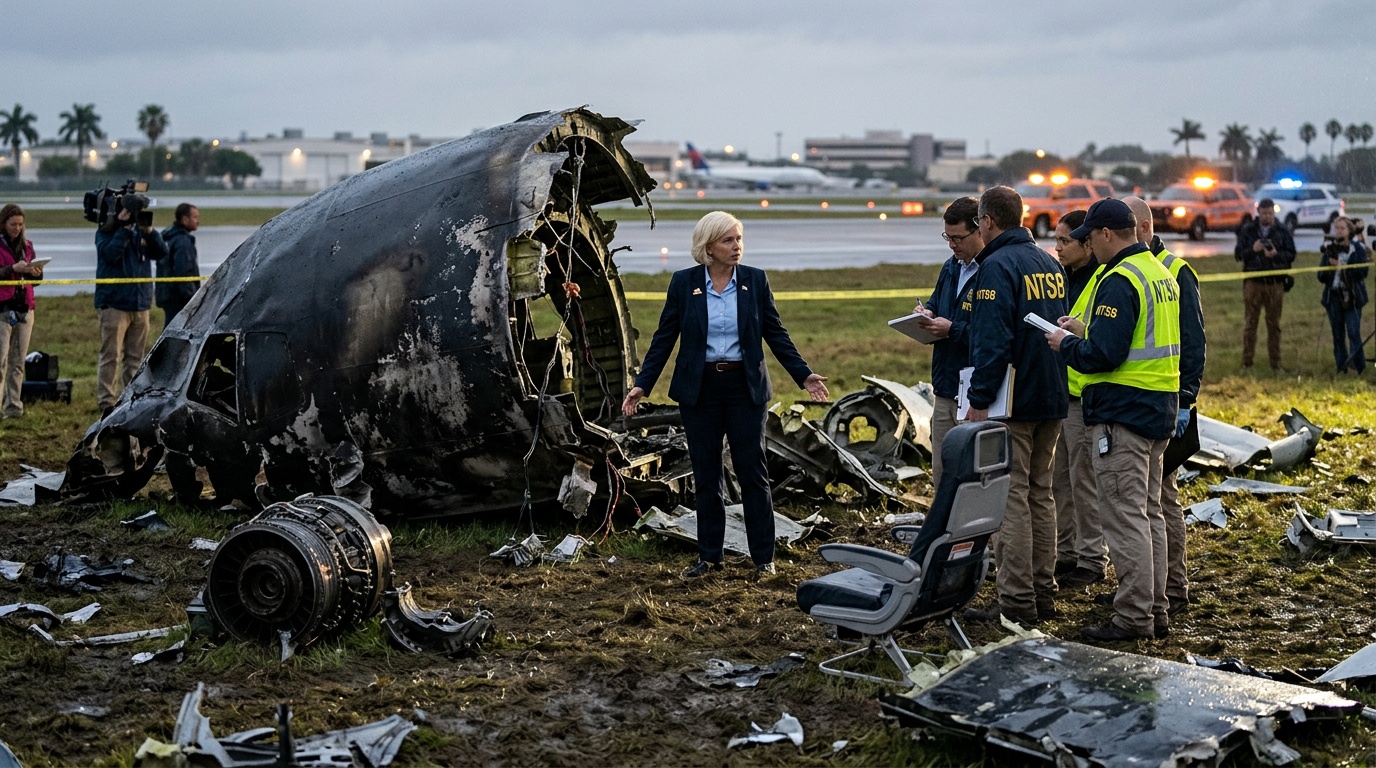
If you've ever watched a plane land and thought, "that was a bit close," Monday's press briefing from the National Transportation Safety Board might make you think twice. The NTSB chair, Jennifer Homendy, gave a grim update on the Amazon Prime Air cargo plane that crashed in Miami, and her description of the scene was chilling: "utter devastation."
The incident happened on Sunday at 1:53 p.m. Eastern Daylight Time at Miami International Airport. The plane, a Boeing 767 operated by 21Air LLC for Amazon, was arriving from San Juan, Puerto Rico, with two crew members on board. It was the aircraft's third flight, Homendy said. But instead of stopping on the runway, the plane kept going, traveling about 1,300 feet past the paved surface. It struck navigational aids, then plowed into a white Ford van belonging to a cleaning company that had seven occupants, and also hit a Toyota Corolla.
Homendy didn't sugarcoat the aftermath. "Fuel everywhere," she said, adding that the agency's immediate focus is on recovering victims. But beyond the tragic human toll, there's a lot of investigating to do, and the NTSB is casting a wide net.
Who's Responsible? The NTSB Wants to Know
The NTSB's investigation will look into the "operations and human performance" of the flight, as well as the "history of the accident flight." That means digging into the crew's experience and training. But it also means scrutinizing 21Air LLC, the Miami-based airline that operated the flight for Amazon. Homendy said the agency will probe 21Air's policies and procedures, and specifically its relationship with Amazon.
"We're going to want to see what that relationship is, who does what," Homendy said. "What safety provisions might be in any sort of contracts or any sort of policies." In other words, when an e-commerce giant hires a cargo airline, who's actually responsible for making sure the planes are safe? Is it the airline, the FAA, or the company whose logo is on the side of the plane? These are the kinds of questions the NTSB wants to answer.
The investigation will also look at the Federal Aviation Administration's oversight and Air Traffic Control, as well as the aircraft and its components. Homendy said the NTSB will be in Miami "for at least a week" and will not determine probable cause on the scene. "We are here to document the scene and to collect the perishable evidence," she said.
Boeing, Amazon, and 21Air Respond
Boeing, the plane's manufacturer, offered its "deepest condolences to the families and loved ones of those who lost their lives in the accident." A spokesperson said Boeing is supporting the NTSB's investigation. They also provided some details about the aircraft: it was a 767-300, first delivered as a passenger airplane in 1994, and later converted to a freighter by a third party.
Amazon didn't immediately respond to requests for comment. But 21Air's CEO, Keith Winters, issued a statement saying the company was "devastated" by the incident and is supporting authorities as the investigation continues.
A Troubling Pattern for Boeing
This crash comes at a difficult time for Boeing, which has been under scrutiny for safety issues. The company previously paid $3.1 million in fines related to safety breaches and for undermining the independence of FAA safety personnel when determining aircraft airworthiness. And in 2025, a Boeing 787 Dreamliner crashed minutes after takeoff in India's Ahmedabad, killing 260 people.
While the NTSB investigation will take time, the questions are already mounting. How did a cargo plane end up 1,300 feet past the runway? What role did training, maintenance, or oversight play? And what does this mean for the growing world of e-commerce air cargo, where Amazon is a major player? For now, the focus is on the victims and their families, but the search for answers is just beginning.