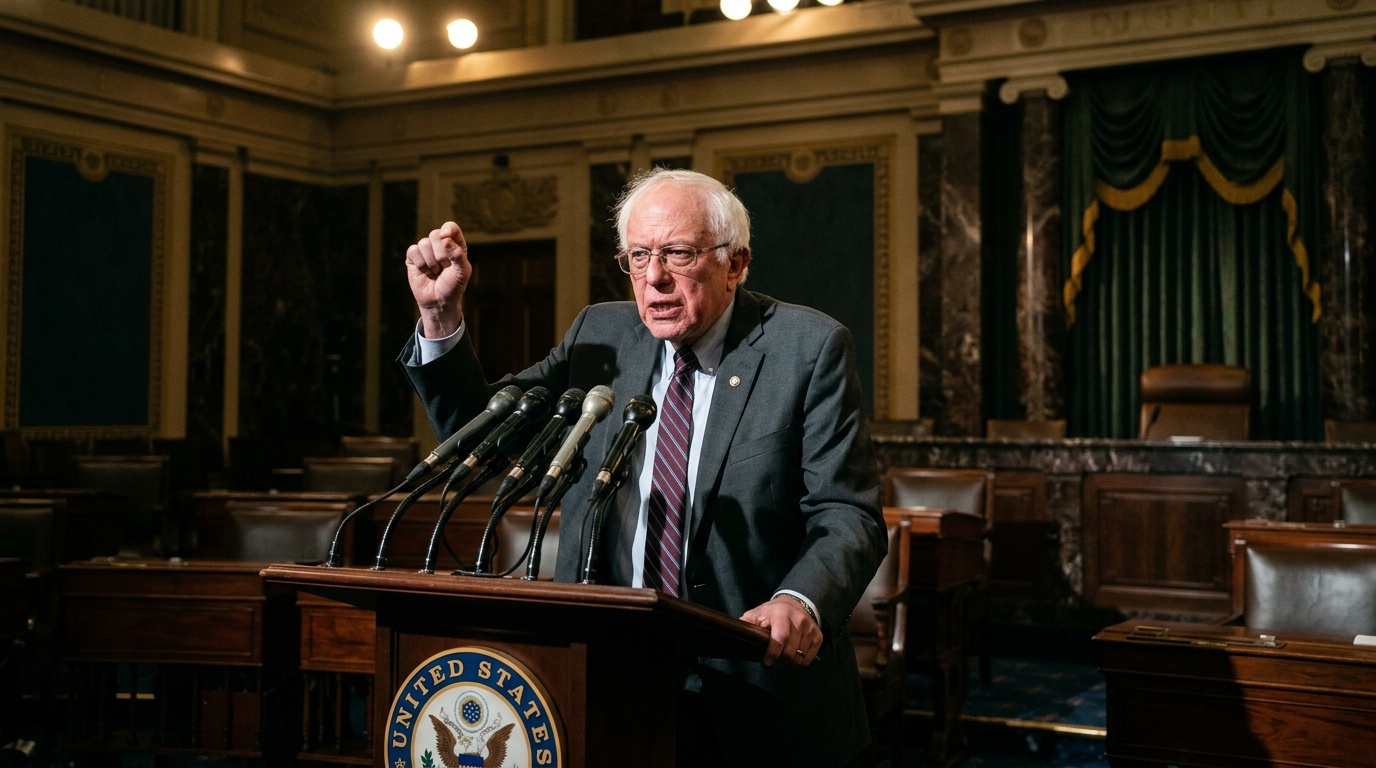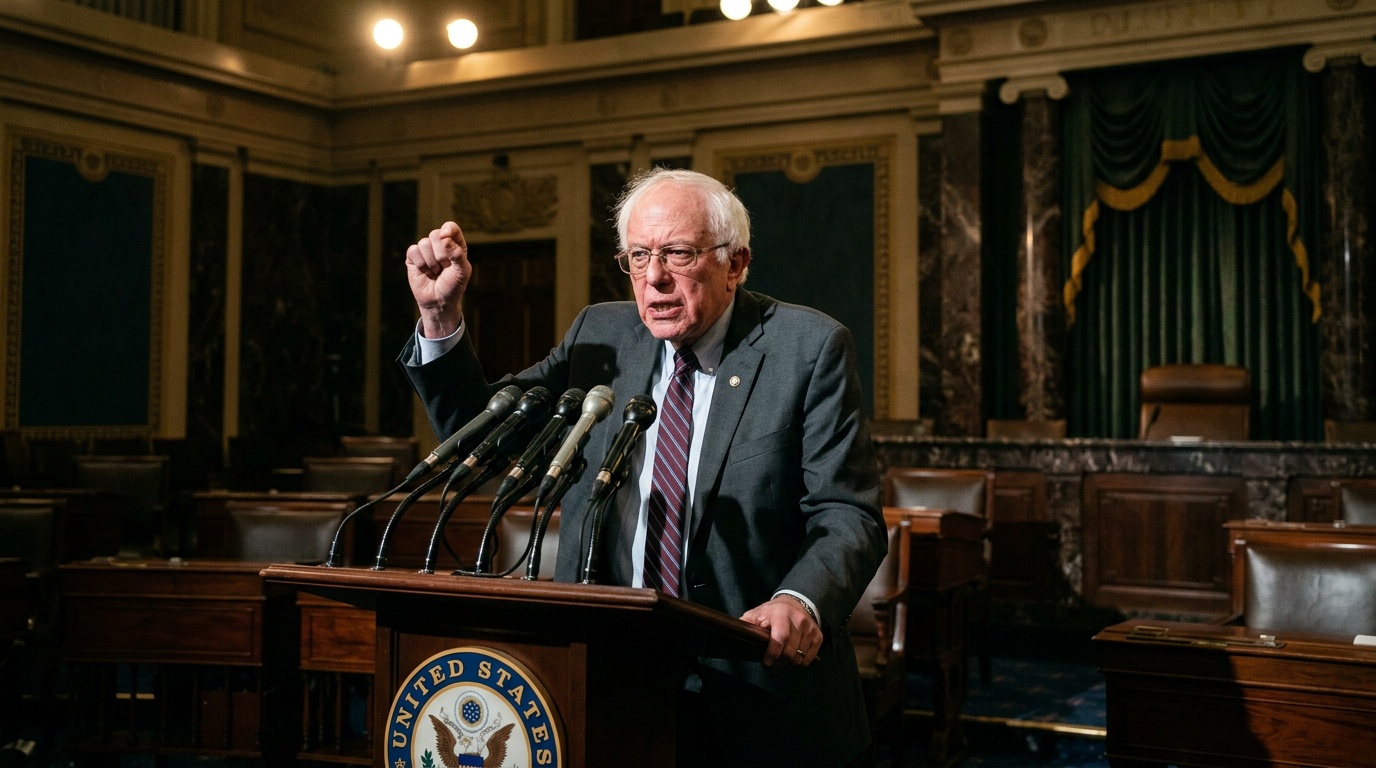
Sen. Bernie Sanders (I-Vt.) isn't letting up on Big Tech. On Monday, he took to X to warn that a tiny group of billionaires shouldn't be the ones deciding how AI shapes our world. "The most pressing issue of our time is oligarchy & the power of Big Tech billionaires over AI," he wrote. "We can't allow a handful of greedy people to play God & determine the future of humanity—our economy, environment, democracy, privacy & more—without public input." His closing message was blunt: "CONGRESS MUST ACT."
The social media blast comes just days after Sanders and Rep. Greg Casar (D-Texas) unveiled the Ban Artificial Superintelligence Act, one of the most aggressive AI proposals to hit Congress yet. The bill would permanently ban the development and deployment of superintelligent AI, while hitting pause on advanced AI development until a federal regulator can establish safety standards. It also calls for international agreements to keep superintelligence from being built anywhere on the globe.
Unsurprisingly, the proposal has drawn fire from investors and tech policy folks. Bill Ackman, the founder of Pershing Square, argues that halting U.S. development could let geopolitical rivals get to superintelligence first. It's a classic race-to-the-bottom concern: if we don't build it, someone else will.
But Sanders isn't stopping at the ban. He's also been pushing for a national data-center moratorium, which he later turned into legislation with Rep. Alexandria Ocasio-Cortez (D-N.Y.). Initially, the idea met resistance from Democrats, but now similar calls are getting bipartisan support. Texas Gov. Greg Abbott (R) has halted new data-center approvals while reviewing their water and power needs, and Pennsylvania Gov. Josh Shapiro (D) now requires local approval for new projects. The momentum is real.
Back in June, Sanders floated another idea: giving the public ownership stakes in major AI labs, with the government getting a say in deployment decisions. That's not as outlandish as it sounds—Anthropic and OpenAI have both floated similar concepts. It's a nod to the idea that if AI is going to reshape society, the public should have a seat at the table, not just a handful of shareholders.
The debate over AI regulation is heating up across the industry. Last week, Nvidia Corp (NVDA) CEO Jensen Huang told regulators to focus on real-world risks, saying, "Don't regulate hypothetical theoretical harm, regulate actual and pragmatic harm." Meanwhile, Microsoft Corp (MSFT) co-founder Bill Gates has said he'd support a credible global plan to slow AI advances, though he admitted such a plan is unlikely to happen.
So where does this leave us? Sanders is clearly trying to shift the conversation from "how do we regulate AI?" to "who gets to decide?" His argument is that the people building these systems shouldn't be the only ones setting the rules. Whether you agree with his approach or think it's too heavy-handed, the question he's raising is one that's hard to ignore: in a world where AI could change everything, should a handful of billionaires be the ones holding the keys?
Disclaimer: This content was partially produced with the help of AI tools and was reviewed and published by MarketDash editors.