Here's a fun thought experiment: imagine oil prices surge past $100 a barrel because the President announces a blockade of one of the world's most critical shipping lanes. Now imagine most Wall Street analysts just... shrug. According to Jim Cramer, that's exactly what's happening.
The CNBC host took to social media platform X on Monday to call out what he sees as a bizarre disconnect. "Very few analysts seem to care that oil has gone above $100," Cramer said. "They have cordoned off oil as a factor." He labeled this mindset "Panglossian"—a fancy word for naively optimistic, borrowed from Voltaire's eternally cheerful character.
Cramer's point is that analysts are acting like this is just another blip. He acknowledges the U.S. likely won't face immediate supply shortages, but he finds the logic puzzling. He says these analysts want to "buy the dip ahead of a blockade as if the market will rally when the blockade takes effect." In other words, they're treating a major geopolitical escalation as a temporary buying opportunity, betting things will get better once the blockade actually starts. That's a bold assumption.
He's not the only one sounding the alarm. Investor and Echelon Wealth Partners co-founder Peter Schiff is also waving red flags, suggesting crude could rocket to $150 a barrel in the coming days. "The talks designed to open the Strait of Hormuz will result in the strait being closed tighter than ever," Schiff warned. It's the classic case of diplomatic efforts making things worse, not better.
On the other side of the blockade, Iranian parliament speaker Mohammad Bagher Ghalibaf issued a stark warning to Americans. He said a U.S. blockade of Iranian ports would send oil prices so high that ordinary people would be "nostalgic for $4–$5 gas." That's a vivid way of saying: you think prices are bad now? Just wait.
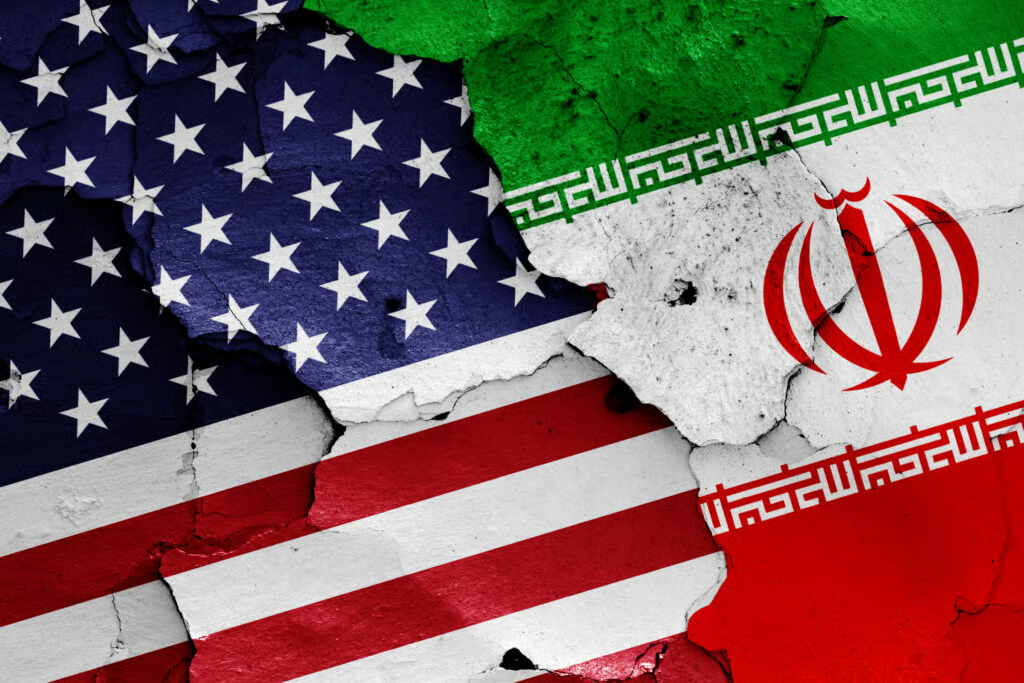
This all comes as U.S.-Iran talks, facilitated by Pakistan in Islamabad, have officially fallen apart. Vice President JD Vance stated that his delegation pushed for the Iranians not to pursue nuclear weapons, but clearly, no deal was reached. So the diplomatic door is closed, and the blockade plan is moving forward.
Where does that leave us with the numbers? As of this writing, West Texas Intermediate (WTI) oil was sitting at $104.6 a barrel. Brent Crude, the global benchmark, was up 7.92% to $102.7. According to the American Automobile Association (AAA), the national average price for a gallon of gas in the U.S. hit $4.125 on Monday. And as usual, Californians are feeling the most pain at the pump, paying a whopping $5.893 per gallon.
So, to recap: oil is over $100, a major shipping chokepoint is about to be blocked, talks have failed, and prominent investors are warning of much higher prices ahead. Yet, according to Cramer, many analysts are acting like it's business as usual. Whether that's savvy contrarian thinking or dangerous complacency might be the real question for markets this week.