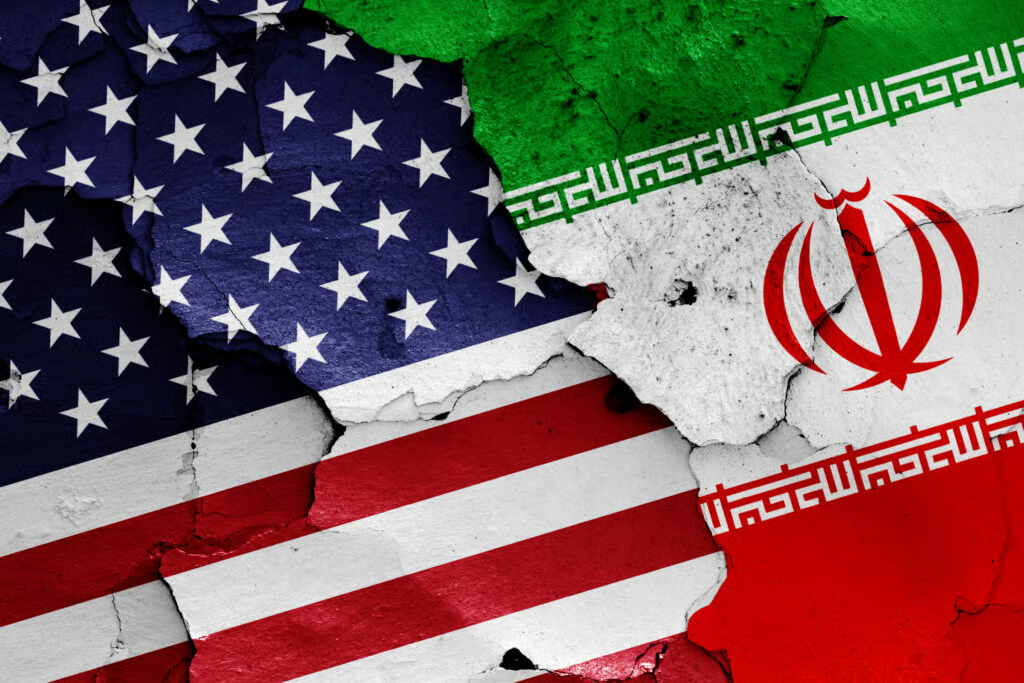
So, here's how a geopolitical standoff in the Middle East starts to sound like a high-stakes game of chicken on the high seas. Iran has basically said: if you mess with our ports, nobody's ports in the region are safe. An Iranian military spokesperson, quoted by state media, called any U.S. restrictions on ships in international waters "piracy." That's not the kind of language you use when you're hoping for a quiet resolution.
The Revolutionary Guards added that any military vessels entering the strait would be seen as violating the ceasefire. This all came as two tankers linked to Iran, the Aurora and New Future, carrying oil products and diesel, slipped through the Strait of Hormuz just before the U.S. blockade was supposed to kick in. According to data from LSEG, they made it through in what looks like a last-minute dash—timing is everything, right?
U.S. Navy To Enforce Strait Blockade
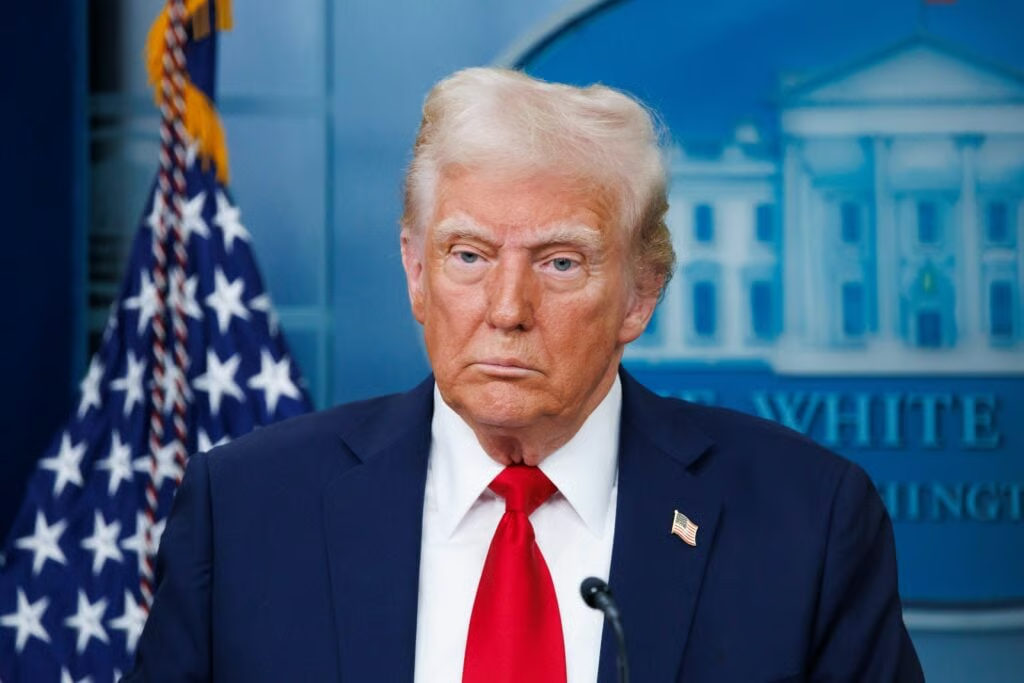
This Iranian warning is a direct response to President Donald Trump's announcement that the U.S. Navy would start stopping vessels trying to enter or exit the Strait of Hormuz. Trump also said the U.S. would move to remove mines he claimed Iran laid in the strait and warned against any illegal toll collection. Because nothing says "tense maritime situation" like accusations of mining and piracy.
The U.S. military's Central Command (CENTCOM) made it official: the blockade begins at 10 a.m. ET (1400 GMT) on Monday, and it'll be enforced equally on all vessels going in or out of Iranian ports and coastal waters, including those in the Arabian Gulf and Gulf of Oman. So, it's not just a targeted thing—it's a broad restriction that could snag a lot of traffic.
Oil Tops $100 On Hormuz Risk Fears
And of course, the markets are reacting. Oil prices have jumped back above $100 a barrel because, well, the Strait of Hormuz is kind of a big deal for global oil shipments. At the time of writing, Brent crude was trading 6.84% higher at $101.70 per barrel. When you threaten a chokepoint for about a fifth of the world's oil, traders tend to get a bit nervous.
Economist Mohamed A. El-Erian pointed out on social media platform X that this is escalating global risks, with a potential "blockade of the blockade" scenario. He noted that Iran, right in the middle of this, could take a significant hit to its oil export revenues and lose income from those informal "tolls" it's been charging some vessels to pass through. So, for Iran, it's not just about security—it's about cash flow, too.
In short, we've got threats, counter-threats, tankers racing against the clock, and oil prices spiking. It's a classic mix of geopolitics and market jitters, and everyone's watching to see who blinks first.