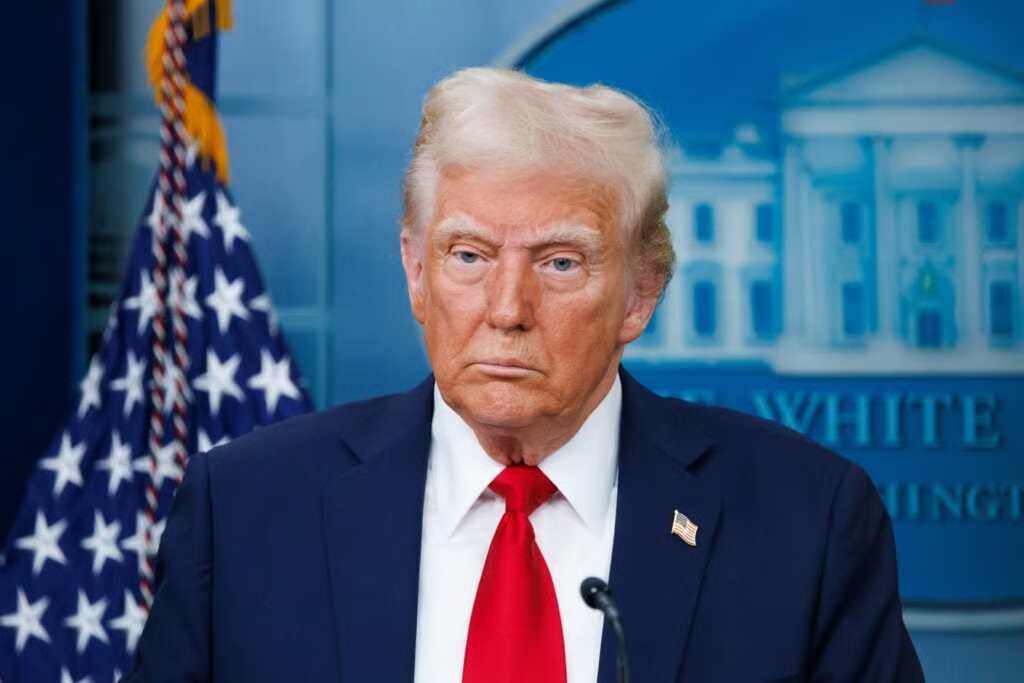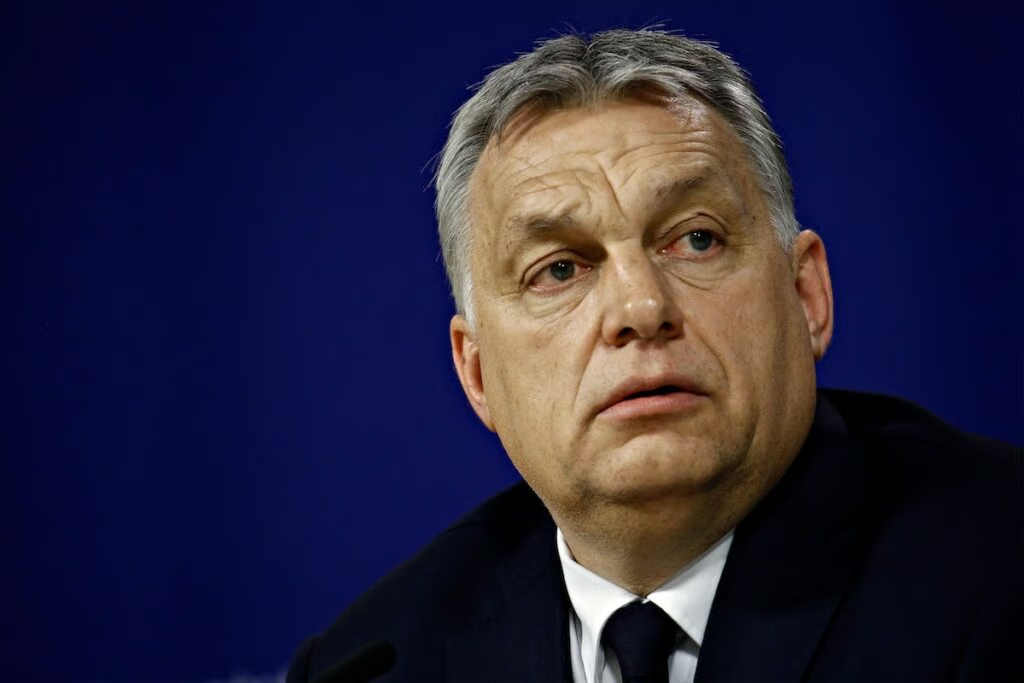
Here's a thing about markets: they're pretty good at pricing in bad news. So when International Monetary Fund Managing Director Kristalina Georgieva says the economic impact of the U.S.-Iran war is already "baked" into global forecasts, she's basically telling us what we already know—but with the authority of someone who runs the IMF.
Georgieva made the comments on CBS News' "Face the Nation" on Sunday, citing disruptions to energy flows and infrastructure damage across the Middle East. "We are going to see some drag of this crisis over the year," she said, "but if we have peace, of course, conditions are likely to improve faster."
That's the diplomatic way of saying: this conflict is already costing the global economy, and it'll keep costing us until it stops.
Meanwhile, in the real world where tankers actually sail through narrow straits, oil prices are telling a more immediate story. The conflict has disrupted shipping routes, damaged energy infrastructure in the Gulf, and raised concerns about attacks on key gas facilities. Markets initially rallied after reports of a temporary ceasefire, with oil prices easing and stocks rising. But then the truce collapsed, tensions escalated around the Strait of Hormuz—that critical chokepoint where a huge chunk of the world's oil passes through—and everything reversed.
Oil and fuel markets surged sharply. Crude oil rose to 104.42, up 7.85 (that's 8.13%) as of early Monday morning. Brent crude climbed to 102.73, up 7.53 (7.91%). Natural gas edged higher to 2.679, gaining 0.031 (1.17%).
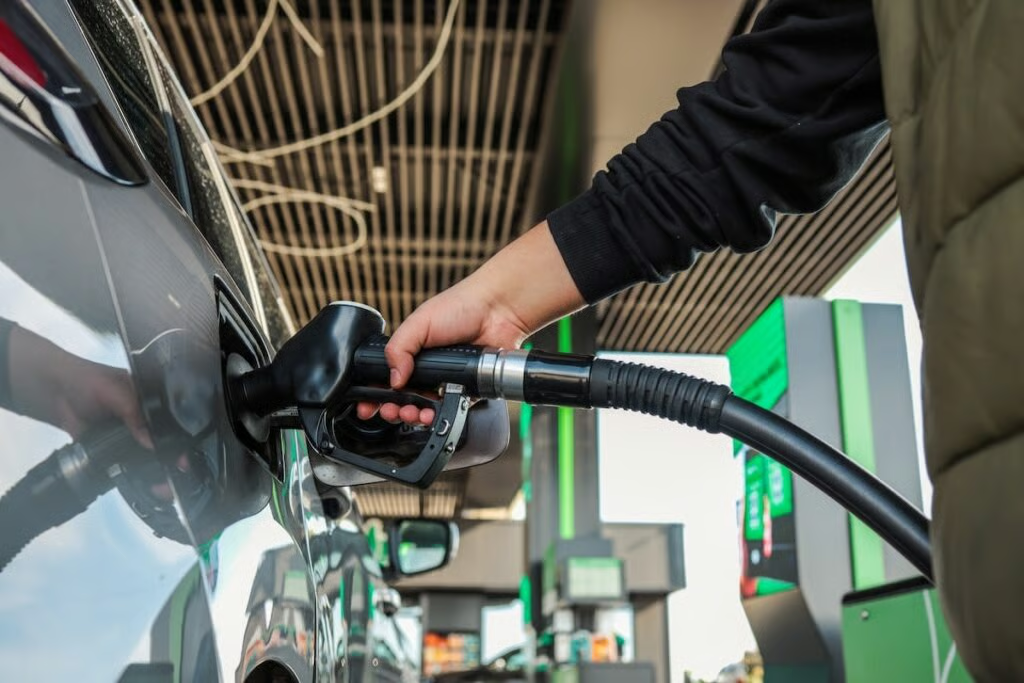
But the really interesting moves were in refined products. RBOB gasoline rose to 3.1712, up 0.1339 (4.41%), and ultra-low sulfur diesel jumped to 4.1006, up 0.339 (9.01%). Diesel up 9% in a day—that's the kind of move that makes trucking companies and shipping lines very nervous, very quickly.
So when Georgieva says the impact is "baked in," she's talking about the macroeconomic forecasts—the GDP growth numbers, the inflation projections, the stuff that shows up in IMF reports. But in the markets, "baked in" doesn't mean "done moving." It just means traders have already adjusted their expectations for ongoing disruption. And as long as tankers are avoiding the Strait of Hormuz and refineries are worrying about attacks, those expectations will keep getting repriced, sometimes violently.
The takeaway here is simple: the war is already hurting the global economy, and it'll keep hurting until it ends. The markets know this. They've priced it in. But "priced in" doesn't mean stable—it just means volatile at a higher level.