Hungary's Political Earthquake: Orbán Out, Pro-Europe Magyar In After 16 Years
MarketDash
Hungarian voters deliver a stunning blow to Viktor Orbán, electing pro-European challenger Péter Magyar in a high-turnout election that reshapes EU politics and the global far-right landscape.
Get Market Alerts
Weekly insights + SMS alerts
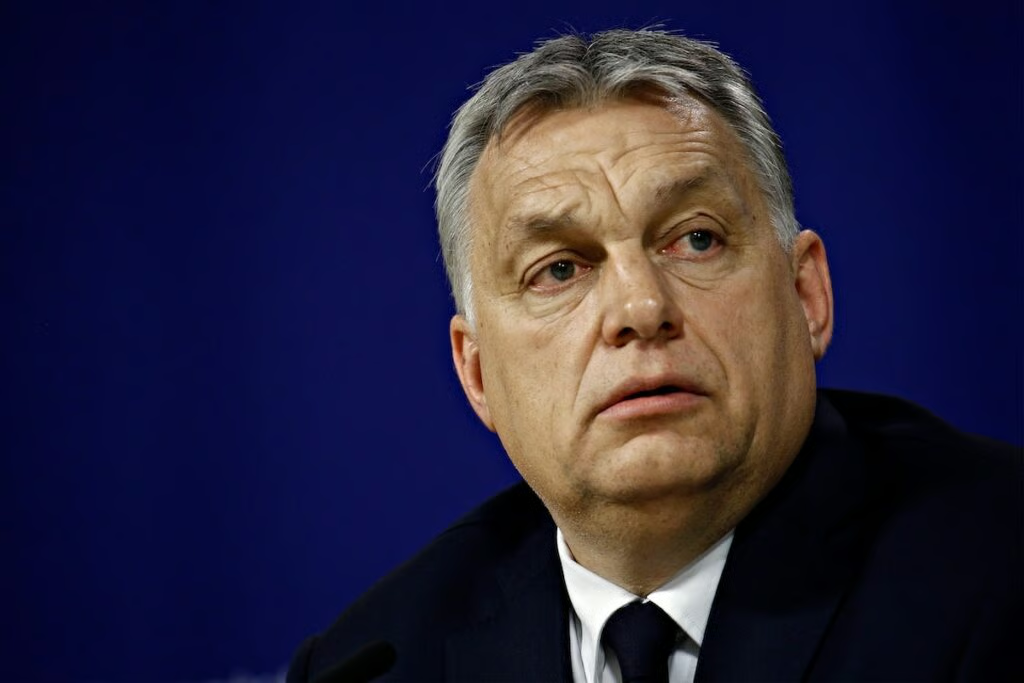
Well, that's one way to end a political era. Hungarian voters on Sunday decided they'd had enough of Prime Minister Viktor Orbán after 16 years in charge, handing a pretty stunning victory to pro-European challenger Péter Magyar. This isn't just a change of government—it's the kind of political earthquake that's going to rattle windows from Brussels to Moscow to Washington.
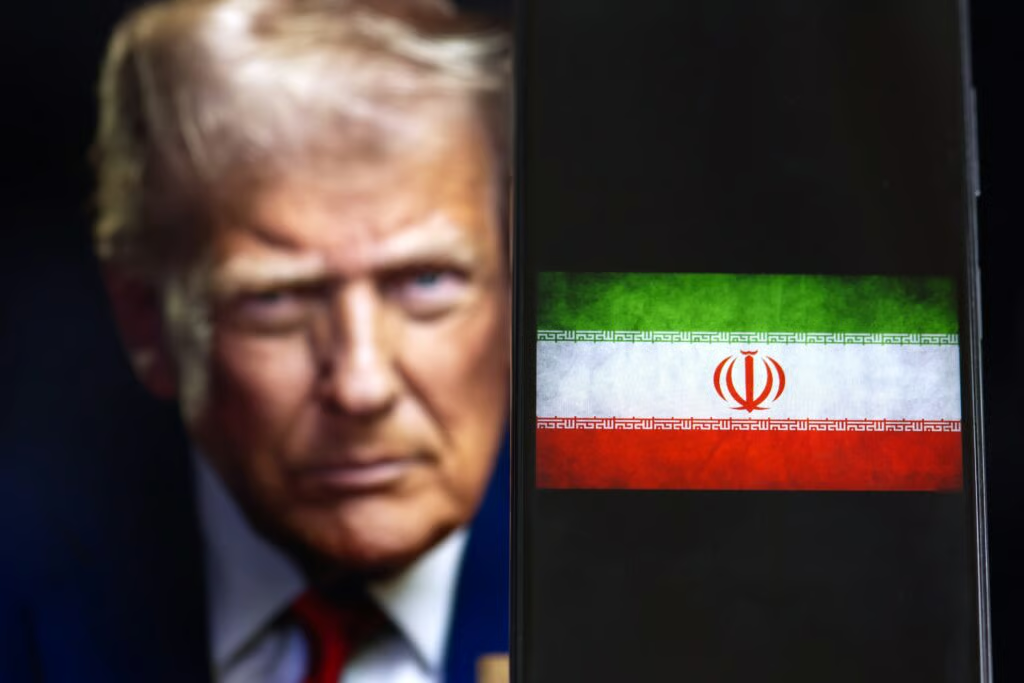
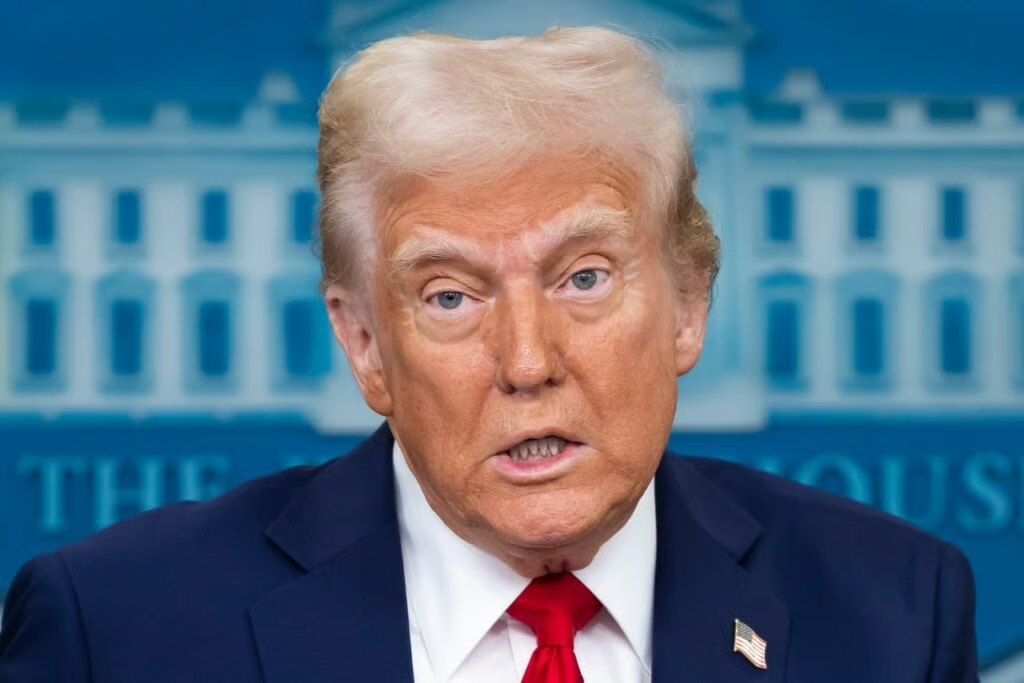
Think about it this way: Orbán wasn't just Hungary's leader. He was the EU's longest-serving head of government, one of its most persistent antagonists, and a guy who managed to be buddies with both U.S. President Donald Trump and Russian President Vladimir Putin at the same time. That's a diplomatic tightrope act that just came crashing down.
The Numbers Tell the Story
With more than 93% of ballots counted, Magyar's Tisza party was sitting at about 53% to Orbán's Fidesz at 37%. That's not a narrow win—that's a decisive shift. Magyar's team looked set to win 94 of Hungary's 106 districts in a contest where nearly 80% of eligible voters showed up. When you get turnout that high, you know people are paying attention.
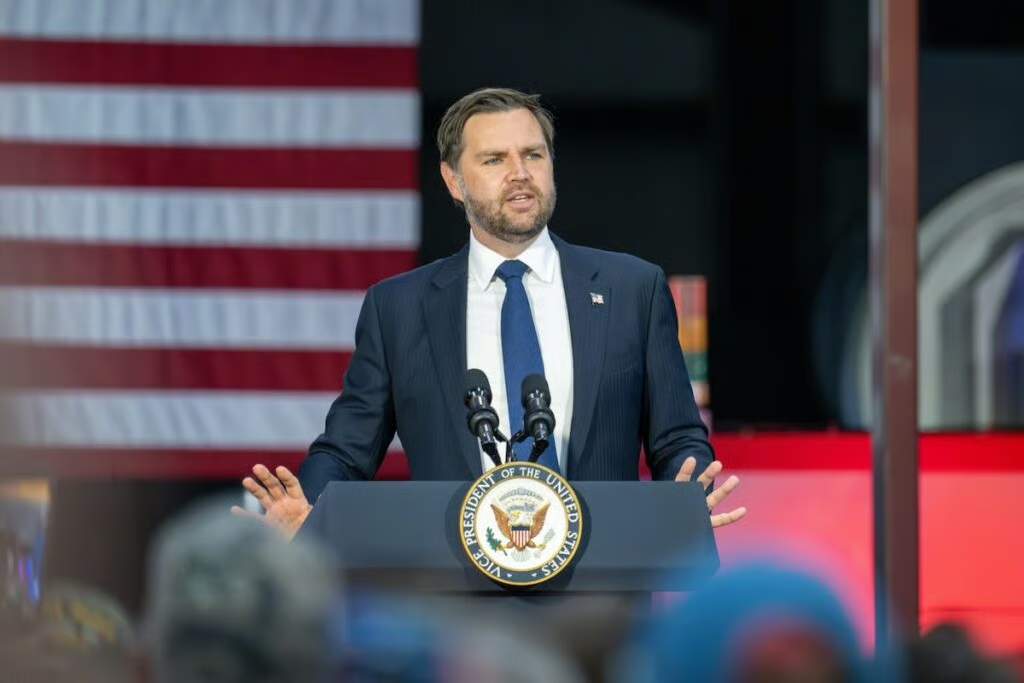
Orbán himself called it a "painful" defeat. The timing adds another layer: this loss came just days after U.S. Vice President JD Vance visited Hungary trying to help Orbán over the finish line. So Washington was watching closely, along with Brussels and Moscow. Everyone had skin in this game.
Magyar is an interesting character—a former Orbán insider who built his campaign around fighting corruption, improving health care, and fixing public transport. His big promise? Repairing Hungary's ties with the European Union and NATO after years of what we'll politely call "creative tension" under Orbán.
What Orbán's Fall Means for the Big Picture
Orbán had traveled quite the ideological journey—from anti-Soviet liberal to Russia-friendly nationalist admired by the global far right. He repeatedly frustrated EU efforts to support Ukraine after Russia's full-scale invasion, cultivated those close ties with Putin, and resisted ending Hungary's dependence on Russian energy imports. For the Trump-aligned "Make America Great Again" movement, Orbán and Fidesz were often held up as models of anti-globalist conservative rule. Critics, meanwhile, accused him of systematically eroding liberal democracy, media freedom, and the rule of law.
So this isn't just about Hungary changing prime ministers. It's about a symbolic figure for a certain brand of politics taking a significant hit. When someone who's been in power for 16 years, who built relationships across the geopolitical spectrum, suddenly loses, it sends a message.
And What About the Markets?
Here's where things get interesting for investors. Top U.S.-listed Europe ETFs saw little to no movement on Friday, before the election results were in. The market hadn't priced in this outcome, or maybe it was just waiting to see what happened.
ETF Name
YTD Returns (%)
Total Assets ($MM)
Closing Price (Friday)
iShares MSCI Norway ETF (ENOR)
28.20
109.76
$37.07
Global X MSCI Norway ETF (NORW)
26.91
154.83
$38.34
iShares MSCI Poland ETF (EPOL)
11.75
581.52
$39.29
VanEck Oil Refiners ETF (CRAK)
26.46
132.13
$47.46
ALPS Emerging Sector Dividend Dogs ETF (EDOG)
7.11
27.31
$25.86
The table shows some strong year-to-date performers among Europe-focused funds, but Friday's closing prices don't reflect the political shift that happened over the weekend. The real question is what happens when markets open on Monday. Will investors see Magyar's pro-Europe stance as a positive for regional stability and EU cohesion? Or will they focus on the uncertainty that comes with any major political transition?
For now, Hungary has voted for change. After 16 years of Orbán's particular brand of politics, the country has chosen a different direction—one that looks more toward Brussels than toward Moscow or the populist movements that admired Orbán's rule. How this plays out for Hungary's economy, its place in Europe, and the broader geopolitical landscape is the next chapter waiting to be written.