





Here's a classic market move: when geopolitics gets messy, stocks go down and oil goes up. Late Sunday, that script played out in dramatic fashion. U.S. stock futures tumbled and oil prices surged after escalating tensions between Washington and Tehran raised the very real prospect of a major disruption to the world's energy supply lines.
Markets Tumble, Oil Soars as Trump Threatens Strait of Hormuz Blockade
MarketDash
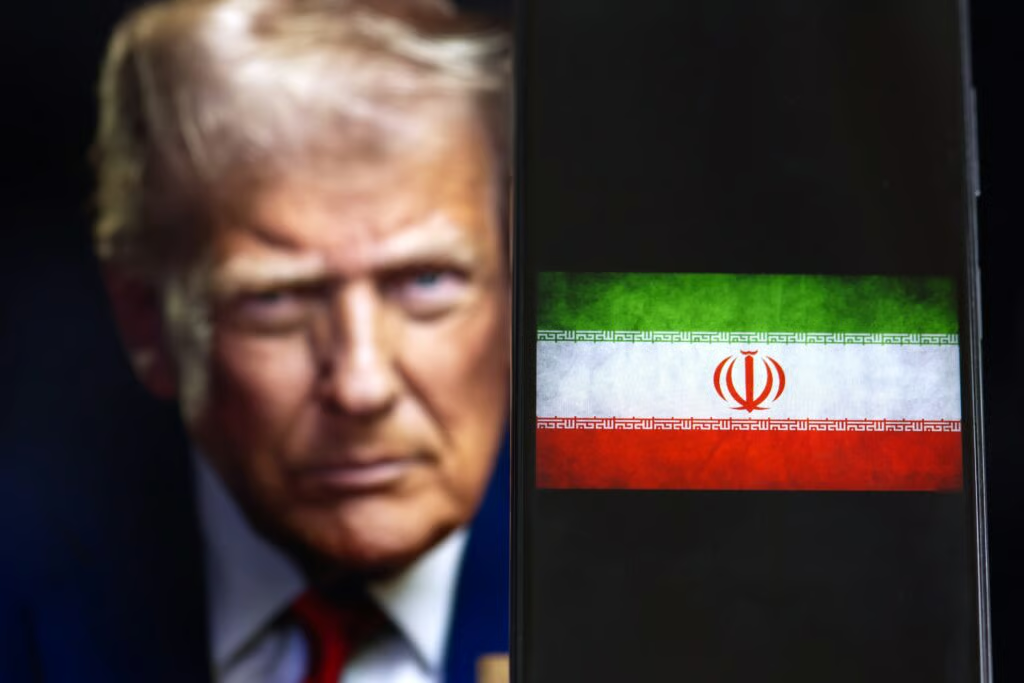
Stock futures plunged and oil prices spiked above $100 after President Trump threatened a naval blockade of the critical Strait of Hormuz, following the collapse of U.S.-Iran talks.
Get Market Alerts
Weekly insights + SMS alerts
Markets Slide As Oil Prices Surge On Supply Fears
Let's start with the numbers, because they tell the story of fear pretty clearly. As of 8:31 p.m. EDT, Dow futures had fallen 479.00 points, or 1.00%, to 47,650.00. The broader S&P 500 futures declined 67.25 points, or 0.98%, to 6,788.00. Tech took a slightly bigger hit, with Nasdaq 100 futures slipping 280.50 points, or 1.11%.
But the real action was in the oil patch. When traders worry about supply, they buy crude. And they were buying in a big way. WTI crude, the U.S. benchmark, rocketed up 8.29% to $104.58 per barrel. Its global counterpart, Brent crude, wasn't far behind, gaining 7.97% to $102.79 per barrel. It wasn't just crude either. The products moved too. RBOB gasoline futures climbed 4.84% to $3.1844 per gallon, and ULSD heating oil futures advanced a hefty 8.89% to $4.0959 per gallon. Even natural gas got in on the act, rising 1.81% to $2.696 per MMBtu.
In times of stress, money often runs to the dollar, and that's what happened here too. The U.S. dollar index was at 99.043, up 0.35%. And the worry wasn't confined to U.S. markets. Asian markets opened lower, with Japan's Nikkei 225 falling 0.68% to 56,536.64 and South Korea's KOSPI declining 1.30% to 5,782.72.
Trump Escalates Pressure With Blockade Threat
So, what sparked all this? A very direct threat from the White House. Earlier on Sunday, President Donald Trump said that the U.S. Navy would begin efforts to block ships entering or leaving the Strait of Hormuz.
"Effective immediately, the United States Navy… will begin the process of blockading any and all ships" transiting the strait, Trump said on Truth Social.
The U.S. Central Command later provided more detail, confirming it will begin blocking all maritime traffic to and from Iranian ports starting at 10 a.m. ET on Monday. It added a small but important clarification: vessels traveling to or from non-Iranian ports will not be affected. So, it's a blockade aimed specifically at Iran, not a total shutdown of the strait. But in the delicate ecosystem of global shipping, that's still a massive deal.
Failed Talks Add To Uncertainty
This escalation didn't come out of nowhere. It followed the collapse of diplomatic efforts to end the ongoing conflict. High-level talks in Pakistan failed to produce an agreement.
Vice President JD Vance laid the blame on Iran, saying negotiations broke down over Tehran's unwillingness to commit to abandoning nuclear weapons development.
Not surprisingly, Iran saw it differently. Iranian Foreign Minister Abbas Araghchi accused Washington of shifting demands at the last minute. "Good will begets good will. Enmity begets enmity," he wrote on X. With talks dead and threats flying, it remains unclear whether Trump will resume airstrikes on Iran, adding another layer of uncertainty for markets to digest.
Strait Of Hormuz Disruption Raises Global Alarm
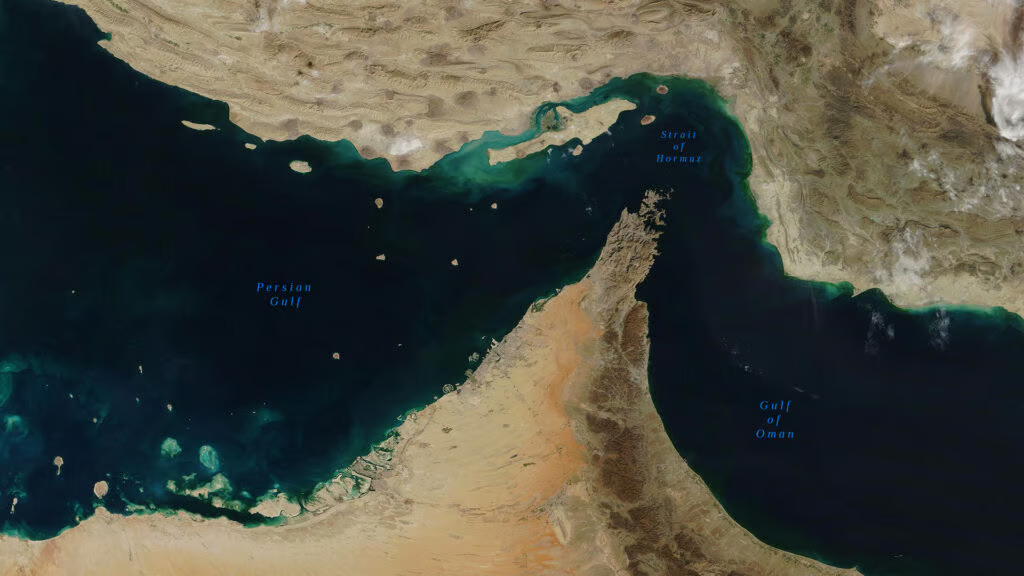
Why does a threat about a narrow strip of water send oil prices soaring nearly 10% in a single session? Because the Strait of Hormuz isn't just any waterway. It's arguably the most important oil chokepoint on the planet, handling roughly one-fifth of global oil flows. Any meaningful disruption there is a direct threat to the energy that powers the global economy.
The threat alone is already having an effect. Tanker traffic has declined sharply amid the security concerns. According to reports, three supertankers—each capable of carrying up to two million barrels of oil—completed the transit on Saturday. But that's a trickle compared to normal times. Before the war, more than 100 vessels passed through the strait daily. The dramatic drop highlights how skittish ship owners and oil traders are becoming. When the world's oil faucet might get turned off, even for a short time, everyone starts filling up their bathtubs. In market terms, that means buying oil futures, which is exactly what we saw Sunday night.
More News
Markets Tumble, Oil Soars as Trump Threatens Strait of Hormuz Blockade
Buy This Stock at 9:30 AM on MONDAY!

U.S.-Iran Nuclear Talks Collapse After Marathon Session, Vance Says It's 'Bad News For Iran'
Iran's New Supreme Leader Reportedly Suffered 'Severe' Injuries in U.S. Airstrike
Trump Warns China: Supplying Iran With Missiles Means 'Big Problems'
Inside: Pre-IPO Ticker + The Next Elon Musk?
Ross Gerber's Inflation Warning: Why Tariffs and War Could Keep Prices Climbing

Bitcoin's Price Swings vs. Bitcoin Itself: Scaramucci Says Don't Panic, The Asset Didn't Change
Get Market News Alerts
Real-time alerts on price moves, news, and trading opportunities.
Join 20,000+ investors. No spam, ever.
Featured Articles
View all newsU.S.-Iran Nuclear Talks Collapse After Marathon Session, Vance Says It's 'Bad News For Iran'
By MarketDash
April 12, 2026
Buy This Stock at 9:30 AM on MONDAY! (Ad)
By StocksToTrade
Iran's New Supreme Leader Reportedly Suffered 'Severe' Injuries in U.S. Airstrike
By MarketDash
April 12, 2026
Trump Warns China: Supplying Iran With Missiles Means 'Big Problems'
By MarketDash
April 12, 2026
Ross Gerber's Inflation Warning: Why Tariffs and War Could Keep Prices Climbing
By MarketDash
April 12, 2026
Inside: Pre-IPO Ticker + The Next Elon Musk? (Ad)
By Banyan Hill
Bitcoin's Price Swings vs. Bitcoin Itself: Scaramucci Says Don't Panic, The Asset Didn't Change
By MarketDash
April 12, 2026

AI Deals, Short Squeezes, and Data Center Demand Fueled Last Week's Biggest Stock Movers
By MarketDash
April 12, 2026