Here's a situation that's equal parts geopolitical drama and corporate succession planning, but with missiles. Mojtaba Khamenei, Iran's newly appointed Supreme Leader, is reportedly recovering from what sources describe as severe facial and leg injuries. He sustained them on February 28 in the same U.S. airstrike that killed his father, the former Supreme Leader Ayatollah Ali Khamenei.
According to a Reuters report citing sources close to his inner circle, the attack hit the supreme leader's compound in central Tehran on the very first day of the war initiated by the U.S. and Israel. Think of it as a hostile takeover where the incoming CEO gets physically wounded during the boardroom coup.
Since the attack and his subsequent appointment as his father's replacement on March 8, Khamenei's condition has been a black box. There have been no images, videos, or audio recordings released to the public. It's the ultimate "working from home" situation, but with much higher stakes and presumably worse internet.
The report suggests that despite the disfiguring injuries, Khamenei remains mentally sharp. He's reportedly participating in meetings with senior officials via audio conferencing, dialing in to discuss the ongoing war and negotiations with Washington. It's governance by Zoom, Iranian-style.
Iranian authorities have not issued any official statement detailing the extent of his injuries. This news leak arrives at a particularly awkward moment diplomatically. High-stakes peace talks between the U.S. and Iran just wrapped up in Islamabad, Pakistan, on Saturday—and they ended without an agreement.
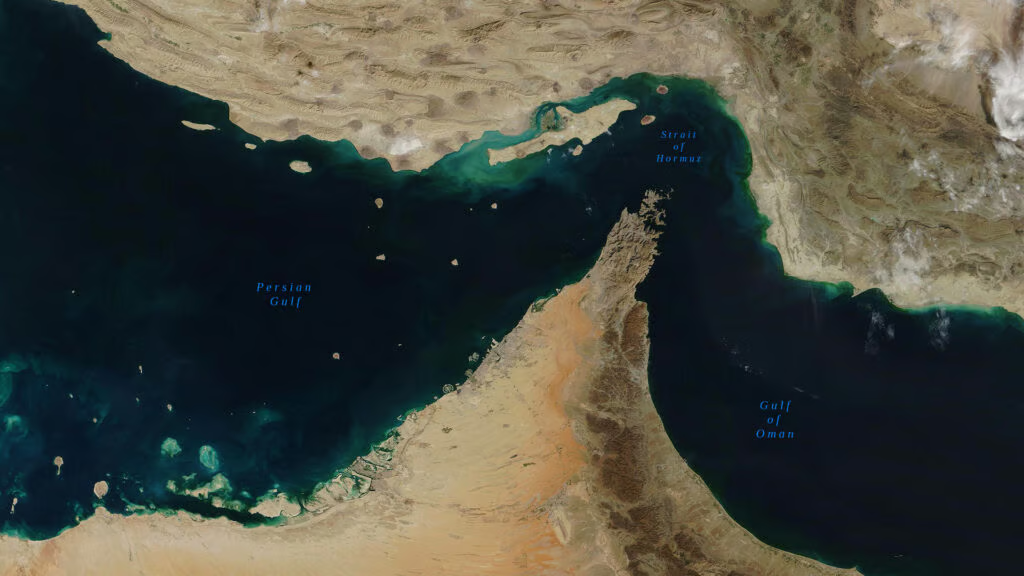
While that diplomatic track stalls, the U.S. military is moving ahead with a very tangible, operational track. The U.S. Central Command (CENTCOM) announced on Saturday that it has launched operations to begin de-mining the Strait of Hormuz.
This isn't a minor logistics issue. The Strait of Hormuz is one of the world's most critical energy chokepoints, a vital trading corridor that has been effectively closed due to threats from Iranian counterstrikes. Reopening it is a prerequisite for stabilizing global energy markets.
CENTCOM stated that its forces have started "setting conditions" for clearing the mines. The Arleigh Burke-class guided-missile destroyers USS Frank E. Peterson and USS Michael Murphy have already transited the strait and are operating in the Arabian Gulf as part of the effort.
"Today, we began the process of establishing a new passage and we will share this safe pathway with the maritime industry soon to encourage the free flow of commerce," CENTCOM Commander Adm. Brad Cooper said.
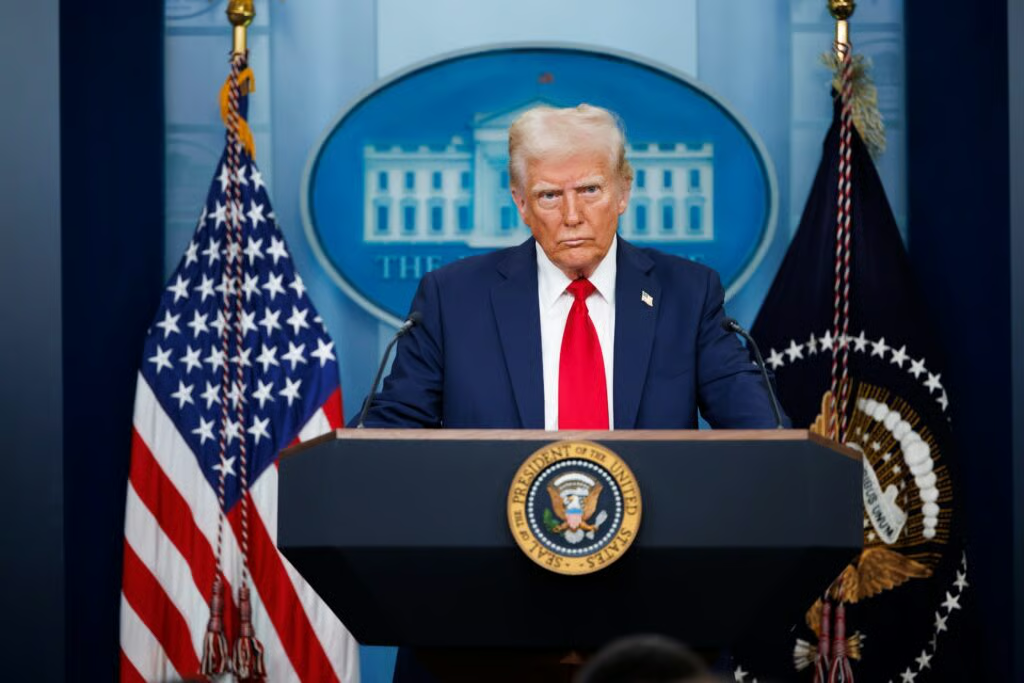
The command added that additional U.S. forces, including underwater drones, will join the clearance effort in the coming days. This announcement follows a statement from President Donald Trump on Friday, who said the U.S. aims to reopen the Strait of Hormuz "fairly soon."
So, to recap the boardroom—er, battlefield—situation: Iran's new top leader is reportedly injured and governing from an undisclosed location, peace talks have hit a wall, and the U.S. Navy is now in the business of underwater mine clearance in one of the world's most tense waterways. It's a messy transition on all fronts.