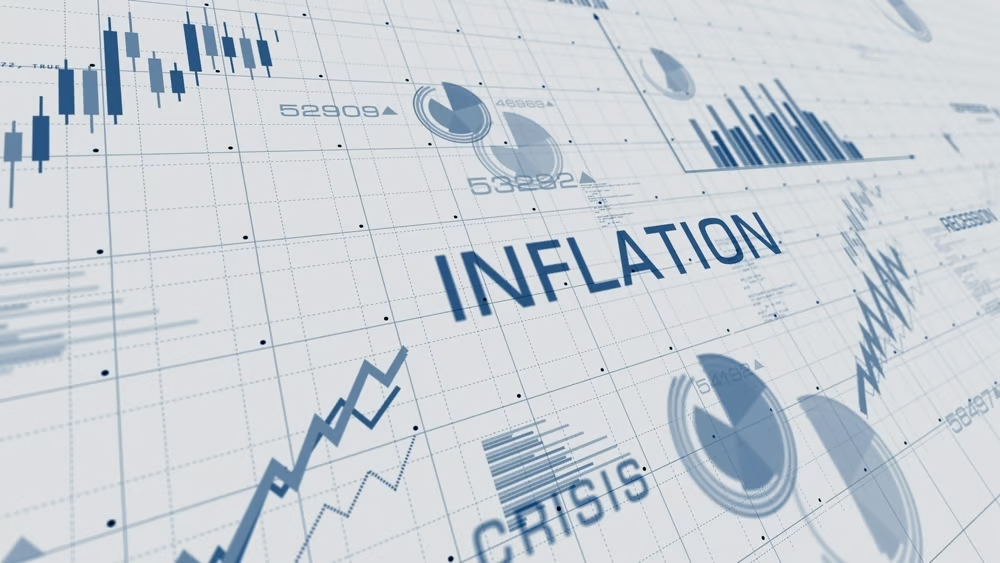
Ross Gerber, the CEO of Gerber Kawasaki Wealth & Investment Management, dropped a sobering take on Friday: the low point for inflation in this cycle is already in the rearview mirror, and prices are now on an upward climb. His reasoning? Two forces he calls "wildly inflationary": tariffs and war. In a market where optimism can feel scarce, Gerber suggests inflation is still very much a brake on both stocks and bonds, making it "hard to be bullish at the moment."
Think of it this way: when the cost of living starts moving quickly, it doesn't just pinch your wallet—it reshapes how investors think about risk. Gerber frames inflation not as background noise, but as a daily constraint that can keep rallies from sticking. "Inflation is real and not going away soon," he's said, challenging any notion that fears have faded. That mindset connects to a broader market stance where, with sellers taking control and the tape looking heavier, justifying risk appetite gets tougher.
Here's where it gets tricky for your portfolio. Gerber contends inflation "is neither good for stocks or bonds." When both major asset classes are under pressure at the same time, the classic playbook of diversifying between them can start to feel less reliable. For stocks, persistent inflation might force investors to demand more growth to justify valuations, especially if discount rates stay elevated. For bonds, higher inflation can eat into real returns and push yields up as markets adjust their expectations.
Gerber doesn't just talk in abstractions. He brings it down to everyday life, pointing to examples like fuel prices. He's argued that operating a gasoline-powered vehicle can run up to "4-5 times more expensive" than driving an electric vehicle, citing a national average gasoline price of $3.842 per gallon and Brent crude moving above $108 per barrel. Switching away from gas, he says, could save "thousands of dollars a year" for many drivers—a practical nod to how inflation hits household budgets.
In Friday's post, Gerber tied the inflation outlook directly to policy and geopolitics, arguing that tariffs and war are pushing prices higher and lifting the cost of living. He added that once inflation expectations become embedded, it can be far harder to cool them back down. While he didn't name specific companies or lay out numeric forecasts, the message was clear: inflation is central to how he's thinking about both markets and day-to-day expenses. The same pressures squeezing household budgets are, in his view, complicating the outlook for diversified investors. So, if you're wondering why the market feels heavy, Gerber's answer is simple: look at the prices you're paying, and remember they're not going down anytime soon.