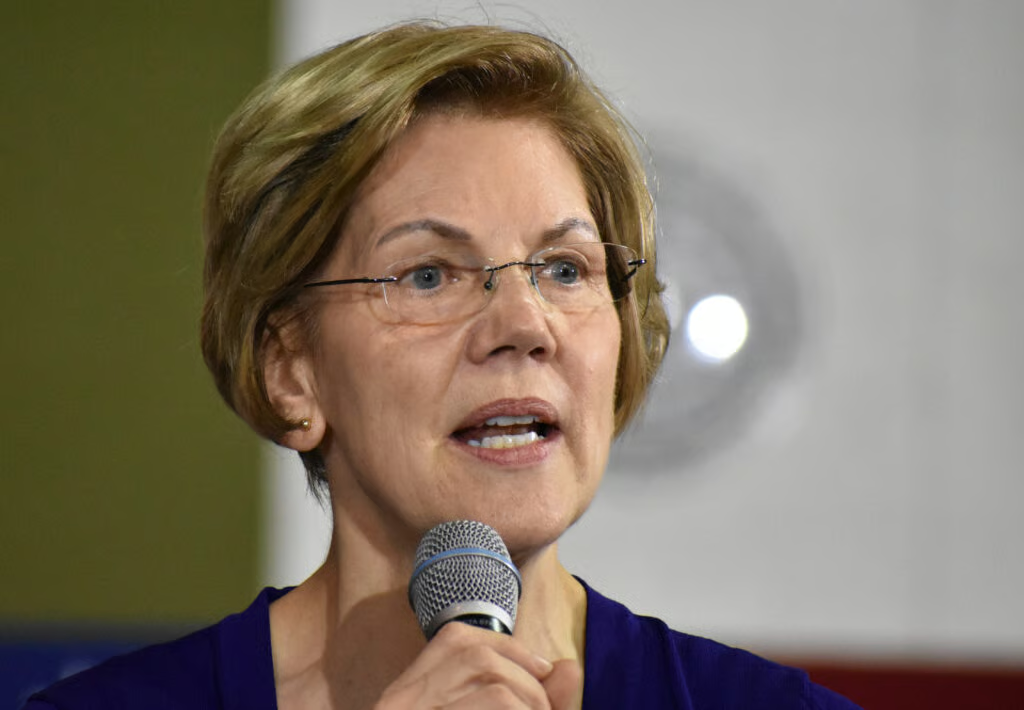
Here's a financial mystery that sounds like it's straight out of a political thriller: massive oil futures bets placed just minutes before major government announcements. Senator Elizabeth Warren thinks it's suspicious enough that she's asking regulators to investigate.
Last Tuesday, Warren and fellow Democratic Senator Sheldon Whitehouse sent a letter to the Commodity Futures Trading Commission requesting that enforcement staff examine what they call "abrupt, high-dollar moves" in oil futures. These trades happened right before two key Donald Trump administration statements about the Iran conflict. The timing, Warren argues, is too perfect to ignore.
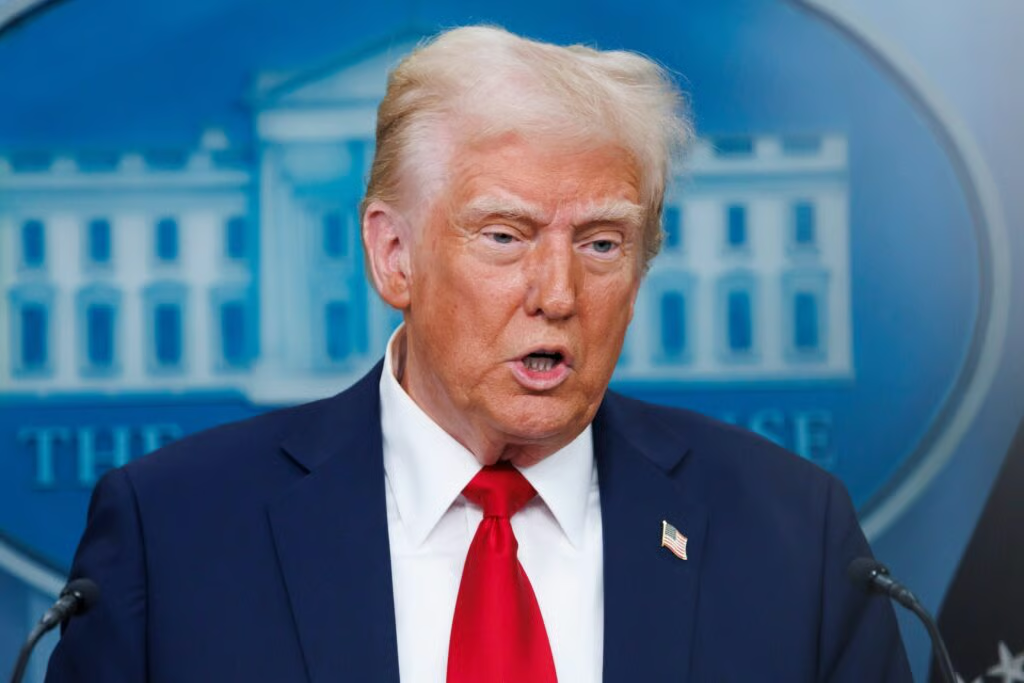
The first incident happened on March 23. According to the senators' letter, a roughly $500 million wager appeared on the New York Mercantile Exchange shortly before Trump used Truth Social to announce the U.S. was pursuing talks with Iran aimed at easing the fighting. That post coincided with a jump in equity indexes and a drop in crude oil prices. The letter points out there was no public catalyst beforehand that would have signaled that move—making the timing of that half-billion-dollar bet look, well, interesting.
Then came the second episode on April 7. Oil slid about 15% after Trump announced a two-week ceasefire with Iran. In the hours leading up to that announcement, traders put on an estimated $950 million position that benefited from falling prices. That's nearly a billion dollars betting correctly on a major geopolitical development before it happened.
Market and legal observers have called the timing suspicious, and Warren says it's enough to justify regulators taking a closer look. But she's connecting these market moves to a bigger picture: she argues that unpredictable decision-making from the Trump administration is carrying a broader cost to U.S. credibility, especially in trade relationships. In an interview with Fortune, she put it bluntly: "Donald Trump has done enormous damage to Americas partnerships around the world."
A Pattern of Well-Timed Bets
The letter frames these oil trades as part of a wider pattern. According to the senators, a recent media report identified at least three other cases where trading appeared to anticipate government actions before they were made public.
One example involved April 2025 options activity shortly before Trump announced the "Liberation Day" tariff pause, which was followed by a 9.5% rise in the S&P 500. Another involved Polymarket wagers in January 2026 that reportedly produced more than $400,000 tied to the ouster of Venezuelan leader Nicolás Maduro, with the last bet placed hours before a U.S. raid.
Warren's critique extends beyond market timing to the economic impact of policy uncertainty. She points to St. Louis Fed figures showing private fixed investment in manufacturing fell 5.2% in Q1 2025 from the prior quarter, arguing that shifting tariff signals are adding to household costs.
The White House, through spokesman Kush Desai, has defended the tariff push as pro-voter and said it has driven trillions of dollars in investment pledges, along with thousands of jobs and new trade agreements. Desai also took aim at Warren's messaging, saying she "talks" while Trump "delivers."
Connecting Market Surveillance to Broader Policy Concerns
This scrutiny of market behavior aligns with Warren's recent criticisms of Trump's budget priorities. She's highlighted his statement that "we're fighting wars" to justify a lack of federal funding for daycare and healthcare, suggesting that redirecting funds from military engagements could better support American families. She estimates this misplaced focus could ultimately cost taxpayers about $1 billion a day.
These comments reflect Warren's ongoing campaign to shift the conversation around national spending toward social welfare rather than military expenditures. This broader discussion on spending priorities underlines what she sees as the potential implications for U.S. credibility and trust among its partners as she continues to challenge Trump's approach to foreign policy and domestic investment.
What Regulators Are Being Asked
The senators' letter to the CFTC isn't vague. They're asking specific, pointed questions: Has the enforcement division opened a probe into the March 23 and April 7 oil trades? If so, when did it begin and what does it cover? How is the agency working with exchanges and other regulated entities to share information and spot potential misconduct?
They're also pressing on surveillance capabilities: What market-monitoring tools does the CFTC use to connect unusual futures activity with market-moving government statements? Did those tools flag the trades at issue? And perhaps most importantly, how does the agency plan to apply Section 4c(a) of the Commodity Exchange Act, including what steps it's taking to ensure enforcement isn't limited by political or institutional pressure?
At its core, this is about whether someone might be trading on non-public information about government decisions—and whether regulators have the tools and will to find out. When half-billion-dollar bets appear minutes before major policy announcements, it's reasonable to ask questions. Warren is asking them loudly, and now she wants answers from the people who watch the markets.