So here's a picture of the global oil market right now: the Strait of Hormuz is shut, about a fifth of the world's seaborne oil and gas is looking for a new route, and President Donald Trump says the answer is sailing toward America. On Saturday, Trump posted on Truth Social that some of the world's biggest tankers are arriving empty at U.S. ports for what he described as a quick load-and-go. He called the domestic crude and gas the "sweetest"—a term for high-quality, low-sulfur oil—and framed the whole thing as evidence of U.S. energy depth and superiority.
His pitch, essentially, is that when other routes get messy, the world turns to American barrels. "We are waiting for you," he wrote, promising a "quick turnaround." He also made the bold claim that the U.S. holds more oil than the next two major oil economies combined. That's the kind of statement that makes you want to check the data, but for now, it's out there as part of his argument for American energy supremacy.
This isn't just chest-thumping; it's landing in a real market moment. The Hormuz shutdown followed Iran's move to block the passage after war broke out, a situation that escalated after U.S. and Israeli strikes on Iran in late February and subsequent retaliation. Trump announced a ceasefire earlier this week, but commercial traffic hasn't restarted, leaving supply chains strained and traders scrambling. With that corridor frozen—it moves about 20% of worldwide oil and liquefied natural gas—rerouting tankers toward U.S. ports has become a tangible workaround for refiners and traders who need reliable cargoes fast.
In another post, Trump took aim at media coverage of the Iran conflict and argued that Tehran's military capacity has been "severely degraded," including naval and air assets. He said mine-laying boats are no longer a threat and claimed the U.S. has begun clearing the strait. It's a mix of geopolitical commentary and market-moving claims, all delivered via social media.
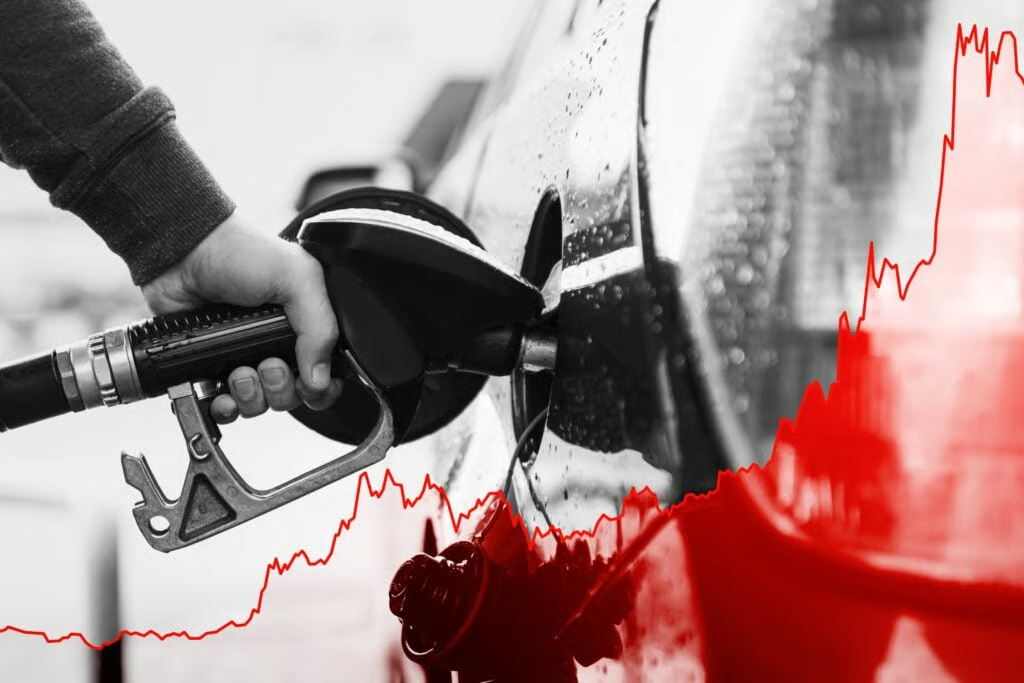
Meanwhile, the numbers tell their own story. As of late Saturday afternoon, WTI crude was down 2.29% to $95.63 per barrel. RBOB gasoline futures were up 0.63% to $3.0197 per gallon, while ULSD heating oil futures fell 4.95% to $3.7421 per gallon. Natural gas futures slipped 0.64% to $2.653 per MMBtu. It's a mixed bag, reflecting the uncertainty and rerouting pressures in the market.