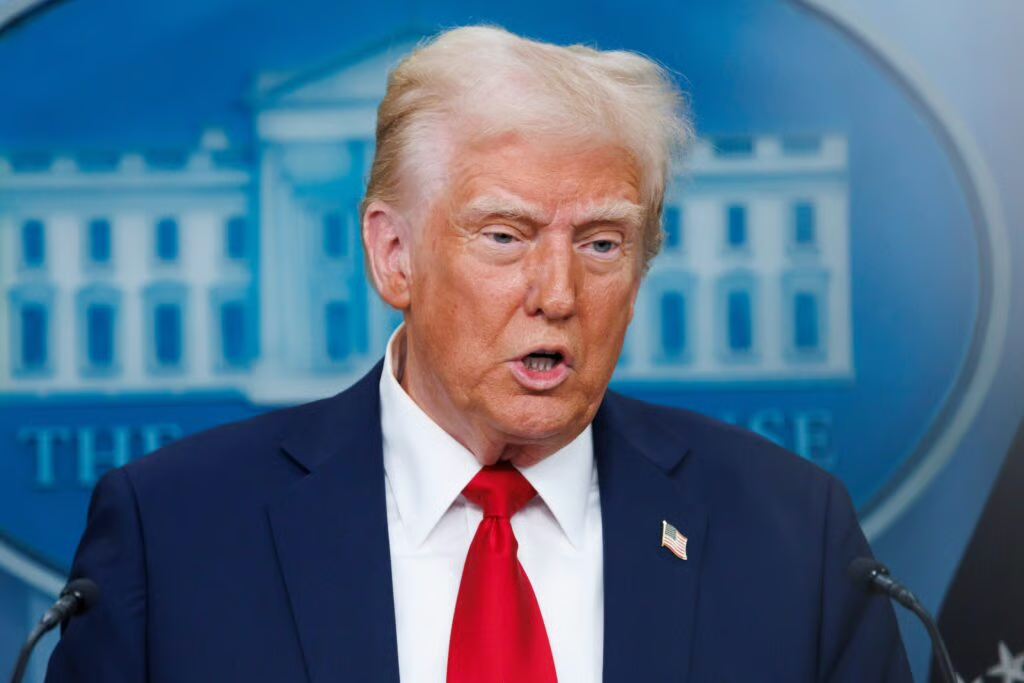
So here's the thing about global energy markets: they really don't like it when someone closes the front door. On Friday, President Donald Trump said the U.S. aims to reopen the Strait of Hormuz "fairly soon"—that narrow waterway between Iran and Oman that happens to be the world's most important oil chokepoint. But he also acknowledged the obvious: it won't be easy while we're still technically at war with Iran.
"It won't be easy … we will have that open fairly soon," Trump told reporters, without getting into the specifics of how exactly one reopens a strait during wartime. He did suggest that other countries who use the route might help out. "Other countries use the strait … and they'll help out."
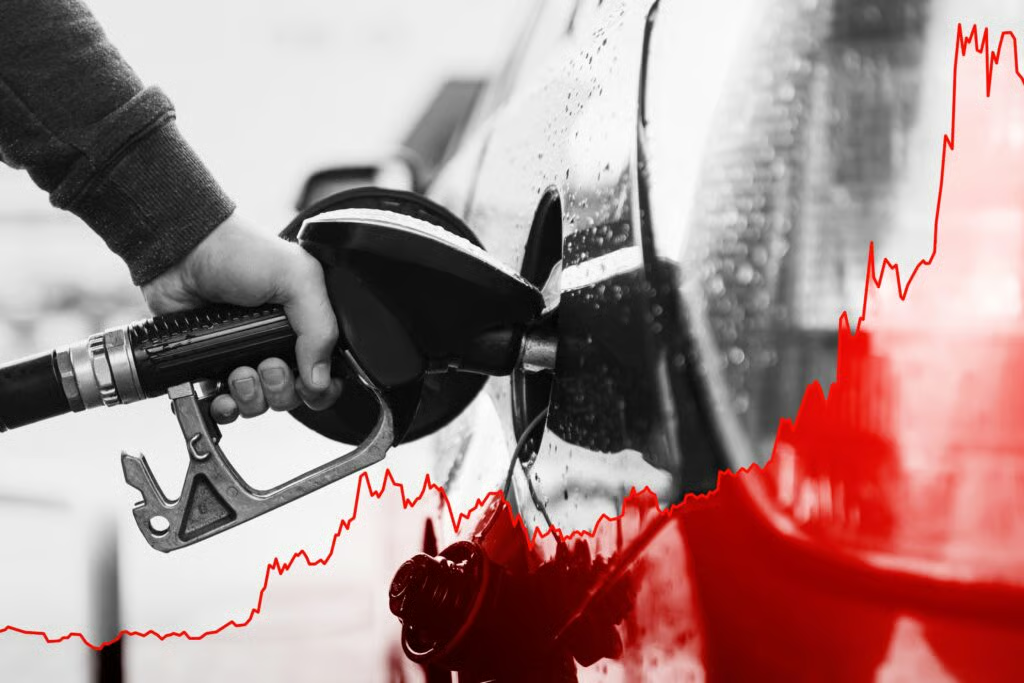
Which makes sense—when your neighborhood's main road gets blocked, everyone has an interest in clearing it. The blockade, imposed by Tehran after war broke out, has essentially put a "Closed for Business" sign on a corridor that carries roughly 20% of the world's oil and liquefied natural gas. That's the kind of disruption that keeps oil prices hovering around $95 and gives energy traders heartburn.
War Escalation and a Fragile Ceasefire
The whole situation escalated after U.S. and Israeli strikes on Iran back on February 28th, which triggered retaliatory attacks on U.S. bases and Israeli targets. Trump announced a ceasefire earlier this week, which sounds good on paper, but commercial shipping through the strait remains completely stalled. It's like declaring peace but keeping the bridge closed—the supply disruptions continue, and oil prices stay elevated.
U.S.-Iran Talks in Islamabad Face Uncertainty
Meanwhile, the diplomatic wheels are supposed to be turning. The U.S. and Iran are scheduled to hold talks in Islamabad on Saturday aimed at ending their six-week conflict. The U.S. delegation—led by Vice President JD Vance and including Trump's special envoy Steve Witkoff and son-in-law Jared Kushner—was en route to Islamabad after a refueling stop in Paris.
But Tehran has already cast some doubt on the whole exercise, saying negotiations can't proceed without assurances on Lebanon and sanctions relief. So we might have a situation where the U.S. team shows up to the meeting only to find Iran has sent a "Maybe Next Time" note.
In the markets, energy commodities were doing their usual Friday afternoon dance. WTI crude fell 2.29% to $95.63 per barrel. RBOB gasoline futures actually rose 0.63% to $3.0197 per gallon, while ULSD heating oil futures dropped 4.95% to $3.7421 per gallon. Natural gas futures declined 0.64% to $2.653 per MMBtu.
So here we are: a president promising to reopen a critical waterway, diplomats potentially heading to a meeting that might not happen, and oil prices holding steady around $95 while everyone waits to see if the world's most important energy corridor gets unblocked. Fairly soon, apparently.