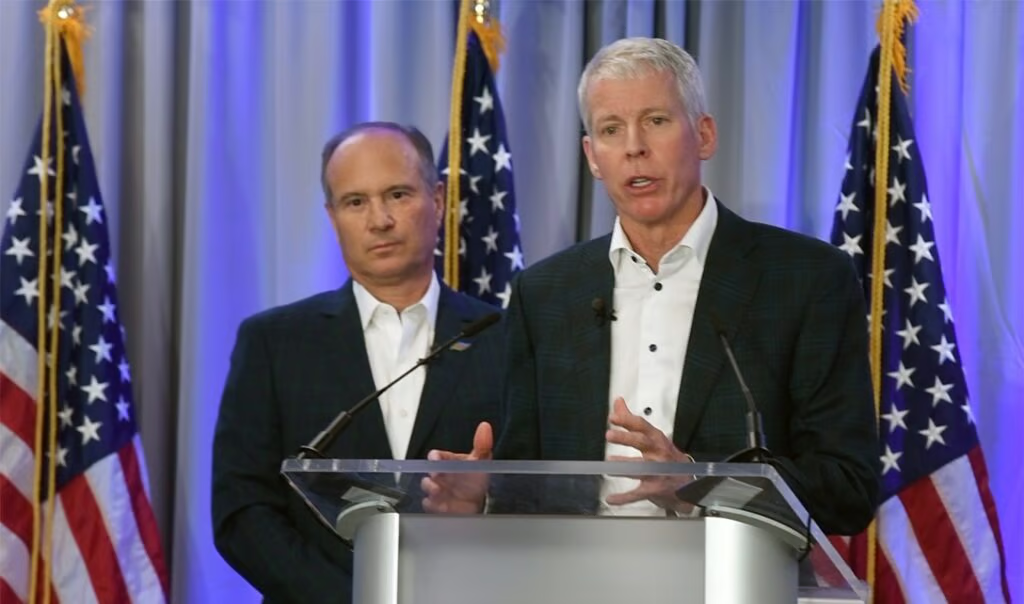
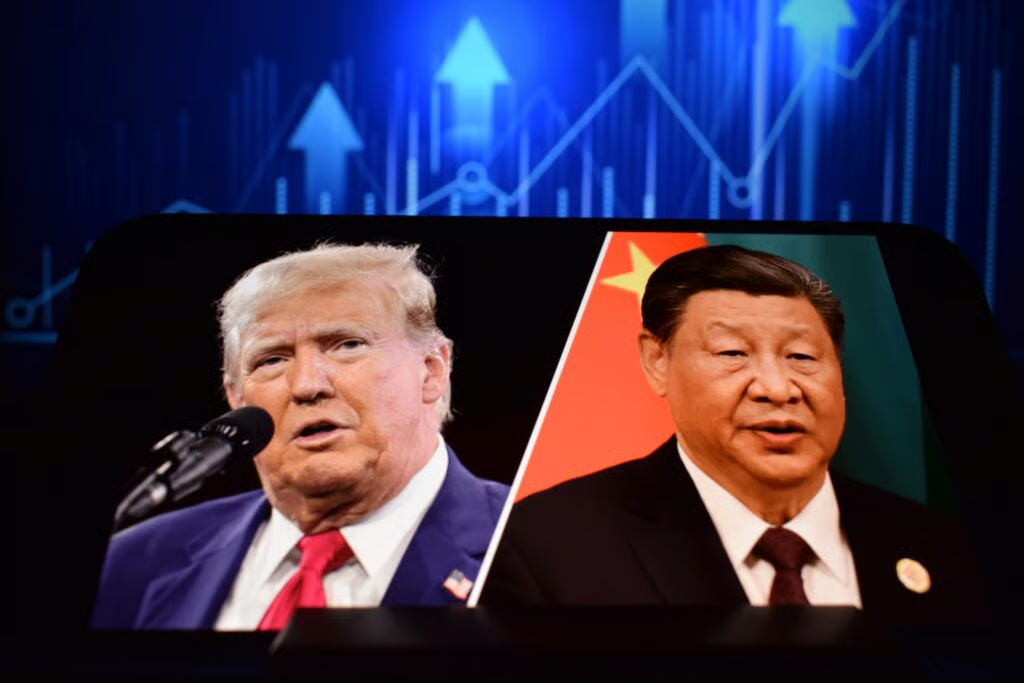
So here's the situation: the U.S. is trying to squeeze Iran into a deal, and the Energy Secretary is out there explaining why squeezing is the right move. On Sunday, Energy Secretary Chris Wright went on CNN to defend President Donald Trump's latest round of tough talk toward Tehran. This comes after Trump took to Truth Social to threaten strikes on Iranian power plants and transport links if they don't agree to a proposed agreement. He framed it as a response to Iran breaking a ceasefire and argued the ongoing maritime blockade is draining Tehran by a cool $500 million every single day. In Trump's view, this pressure campaign is going to "knock out" the post—whatever that means exactly.
Wright's job was to make this sound like smart strategy, not just bluster. He told CNN that Trump is trying to "build leverage at the table." And when the interviewer brought up concerns that hitting infrastructure might cross legal lines, Wright pushed back. He argued that some facilities primarily support Iran's military capacity, even if they also serve civilians. It's the kind of argument you make when you're trying to justify turning the screws.
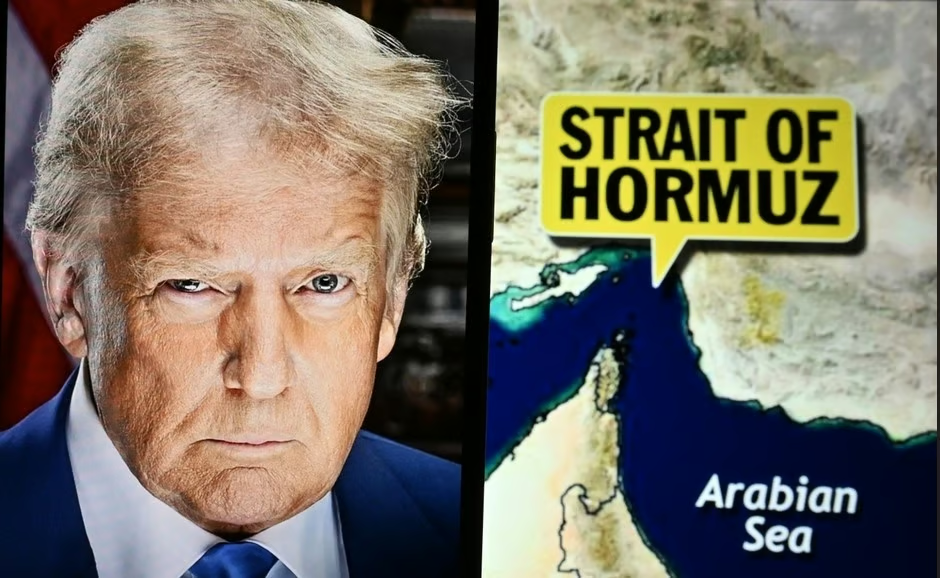
The Strait of Hormuz Is a Mess Right Now
Wright also addressed the elephant in the room—or rather, the very narrow, very important shipping lane. He said passage through the Strait of Hormuz is "not safe" right now. Trump had pointed to gunfire involving a French vessel and a U.K. freighter as evidence. Wright suggested conditions could improve once a deal is reached, but for now, it's risky business. He did note that the U.S. has already moved two warships through the corridor, which is either a show of force or a really expensive way to test the waters.
In his separate messaging, Trump frames this standoff as both a security issue and an economic choke point. The U.S. blockade is presented as the main tool to force movement. Trump has claimed that keeping Iranian-linked shipments pinned down is already rerouting empty tankers toward U.S. loading areas in Texas, Louisiana, and Alaska. So in his telling, the pressure isn't just hurting Iran; it's helping American energy exports.
U.S. Central Command provided some numbers to back up the blockade's impact. They said that after the blockade began earlier in the week, vessels were ordered to turn back. So far, 21 ships have complied with direction from U.S. forces to turn around and return to Iran. That's a lot of cargo not going where it was supposed to go.
Oil Prices, Gasoline, and the Financial Squeeze
During the interview, Wright explained that the administration is pairing the shipping pressure with financial actions. He described Treasury-led efforts to cut off what he called Iran's "overseas funding networks." The goal, he said, is to end the conflict and prevent Iran from obtaining nuclear weapons, even if energy markets take a near-term hit. It's the classic "short-term pain for long-term gain" argument, though if you're filling up your car, the pain feels pretty immediate.
Speaking of which, the conversation turned to U.S. gasoline costs. Wright was blunt: he could not promise a quick return to under $3 a gallon. In fact, he said it might not happen until 2027. He did add that prices had likely topped out and should ease as the conflict is resolved. So if you were hoping for cheap gas next month, you might want to adjust your expectations.
The oil market is already reacting. Crude trading showed sharp moves as operators assessed the risks around Hormuz. WTI's May contract was down 9.63% to $85.57 a barrel, and the June contract was off 7.86% to $84.00 as of 6:44 p.m. EDT. Those are significant drops, and they came as Iranian officials warned access could tighten further if the blockade continues. It's a volatile mix of fear and speculation.
Wright also addressed a separate sanctions decision involving Russia. He said the U.S. extended a pause after global bankers pressed for steps to keep fuel costs lower in Asia and Europe. He added that the administration expects those restrictions to return later. So even the sanctions have temporary relief valves when the pressure gets too high elsewhere.
Trump's Pitch: America as the Reliable Supplier
In previous statements, Trump has emphasized the U.S. energy landscape. He claimed that large, empty oil tankers are arriving to load what he described as the nation's "sweetest" crude, highlighting America's competitive edge in quality and supply. He stated that the U.S. holds more oil than the next two largest oil economies combined. The message is clear: amidst the disruptions in the Strait of Hormuz—where about 20% of global oil supply transits—the U.S. is positioning itself as the reliable alternative.
This backdrop of supply chain strain adds urgency to the negotiations. Trump's comments suggest a push for U.S. exports to fill the void left by conflict in the region. It further complicates the dynamics of oil pricing and availability as tensions remain high. It's not just about geopolitics; it's about market share.
Iran's Confusing Signals and the Negotiating Table
On the other side, Iran's public line has not been consistent. Officials alternate between claims that commerce can continue and warnings that the route could shut if the U.S. keeps blocking Iran-linked traffic. Foreign Minister Abbas Araghchi said commercial shipping was completely open during a 10-day ceasefire tied to tensions involving Israel and Lebanon. Meanwhile, parliament speaker Mohammad Bagher Ghalibaf wrote, "With the continuation of the blockade, the Strait of Hormuz will not remain open." So which is it? Probably both, depending on the day.
Iran's Revolutionary Guard has described the strait as under "strict management and control" by Iran's armed forces. An IRGC spokesperson accused Washington of "maritime piracy" under the blockade. The IRGC has also acknowledged striking two ships in the strait, arguing the vessels challenged Iranian jurisdiction. The U.K.'s Maritime Trade Operations Center reported a tanker was fired on by two IRGC speedboats, though the crew was unharmed. It's a dangerous game of chicken on the water.
Wright said the vice president has been leading talks, and he suggested a deal could come within the next couple of weeks. Trump has separately said U.S. negotiators were heading to Islamabad for discussions scheduled for Monday evening. But an Iranian negotiator told state television the sides were still "far from a final agreement." So don't hold your breath.
Iran's deputy foreign minister, Saeed Khatibzadeh, has said Tehran does not want to restart direct, in-person talks without a framework agreement first. He criticized U.S. sanctions as "economic terrorism" that harms ordinary citizens. Trump, meanwhile, has kept the negotiating track paired with explicit military threats, including his all-caps warning: "NO MORE MR. NICE GUY!" It's not exactly the language of diplomacy, but then again, subtlety has never been his strong suit.
So where does this leave us? The Strait of Hormuz is a tinderbox, oil prices are swinging, gas is expensive, and both sides are talking tough while trying to cut a deal. Wright's defense of the pressure tactics is part of a broader story where energy, security, and economics are all tangled up. The next few weeks will show whether the squeeze works or just makes everything more volatile.