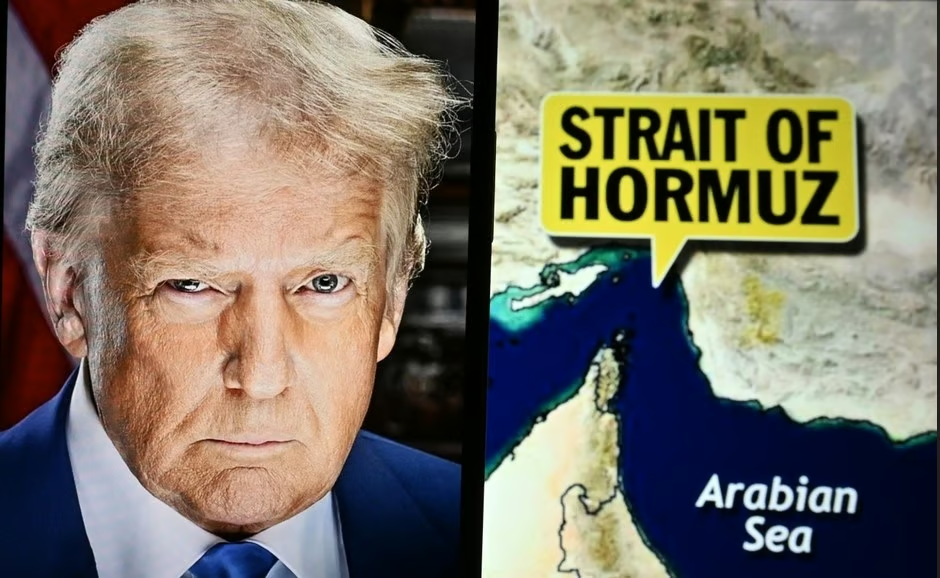
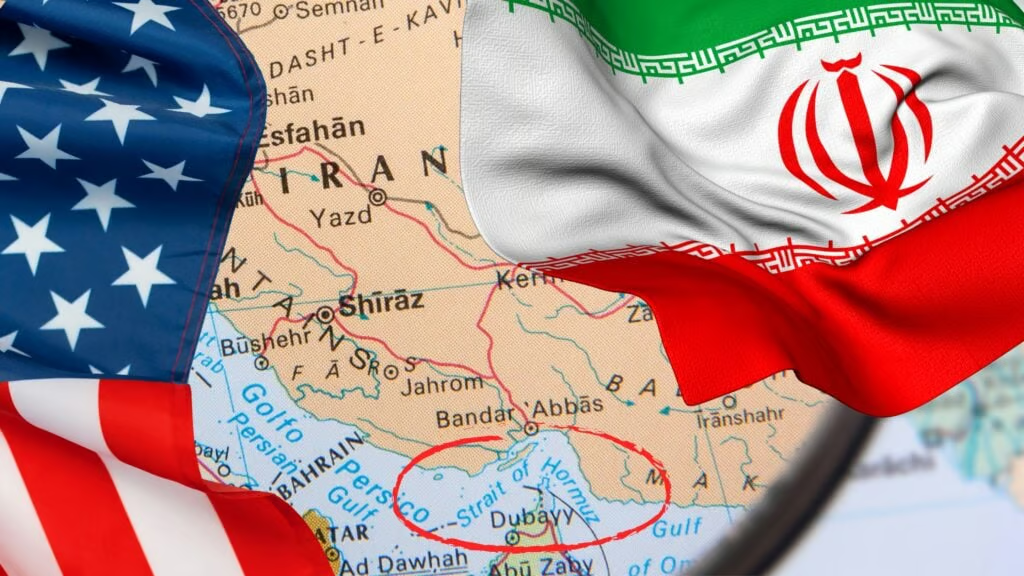
So here's what's happening: on Sunday morning, President Donald Trump took to Truth Social and accused Iran of "a Total Violation of our Ceasefire Agreement." He warned that if Tehran doesn't accept a deal, the U.S. could escalate sharply. This isn't just tough talk—it's happening while the Strait of Hormuz, that crucial oil chokepoint, is under tighter Iranian military oversight. Think of it as a high-stakes game of chicken, but with tankers and warships.
In his post, Trump said gunfire was directed at a French vessel and a UK-linked freighter. He tied this to a U.S. naval blockade that he claims has already halted traffic. Oh, and U.S. negotiators are headed to Islamabad for talks scheduled for Monday evening. Because why not add some diplomacy to the mix?
Meanwhile, Tehran has its own story. An IRGC spokesperson accused Washington of maritime "piracy" under the blockade and signaled a tougher approach to supervising the corridor. Iran says it previously allowed a managed transit setup for a limited number of ships, framing it as part of earlier understandings. So, both sides are pointing fingers, and the strait is caught in the middle.
How Iran's Actions Impact Global Oil Markets
You can see the market's nerves in the crude trading numbers. WTI's May contract is down 9.63% to $85.57 a barrel, and the June contract is off 7.86% to $84.00 as of 6:44 p.m. EDT. Those declines came as ship operators weighed new restrictions and Iranian warnings that access could tighten further if the blockade persists.
U.S. Central Command has described immediate knock-on effects for routing, saying 21 vessels were instructed to reverse course after the blockade began earlier in the week. "21 ships have complied with direction from U.S. forces to turn around and return to Iran," the command said on X. That's a lot of ships doing a U-turn.
The IRGC has also acknowledged striking two ships in the strait, arguing the vessels tried to challenge Iranian jurisdiction. Separately, the UK's Maritime Trade Operations Center said a tanker transiting the passage came under fire from two IRGC speedboats, adding that the ship and crew were not harmed. So, shots fired, but no casualties—yet.
Escalating Tensions Over Maritime Security
This whole situation is playing out against a backdrop of diplomatic stalemate. Iranian Deputy Foreign Minister Saeed Khatibzadeh recently said Tehran is unwilling to restart in-person negotiations with U.S. officials due to what he called "maximalist" demands from Washington. His remarks highlight ongoing tensions as Iran tightens shipping regulations in the Strait of Hormuz, reverting to a pre-April 17 operational framework with increased military oversight.
Khatibzadeh emphasized that Iran seeks a "framework agreement" before engaging in face-to-face talks and criticized U.S. sanctions as "economic terrorism" targeting ordinary citizens. This ongoing stalemate underlines the complexities surrounding maritime security and economic interactions involving Iran, particularly as Trump ties military pressure to broader negotiations, insisting on maintaining the blockade until an agreement is reached.
U.S.-Iran Tensions Escalating Again
Iranian leaders have sent mixed signals on whether the lane is open. Foreign Minister Abbas Araghchi said commercial traffic was "completely open" during a 10-day ceasefire tied to tensions involving Israel and Lebanon. Hours later, parliament speaker Mohammad Bagher Ghalibaf warned on X that "With the continuation of the blockade, the Strait of Hormuz will not remain open." So, one says it's open, another says it might close—classic coordination.
Iran's latest posture has been framed as a return to the pre-April 17 operating setup rather than a full closure, but with stricter enforcement while Iran-linked shipping remains constrained. The IRGC has described the strait as under "strict management and control" by Iran's armed forces as the dispute continues.
Trump, meanwhile, portrayed Iran as the side taking the economic hit. He claimed a closed passage costs Tehran $500 million per day while the U.S. "loses nothing," according to Truthsocial. He also said ships were redirecting to U.S. loading points including Texas, Louisiana and Alaska, and he mocked the IRGC as wanting to be "the tough guy!" Because nothing says diplomacy like a little taunting.
Trump paired the negotiating track with explicit military threats, saying the U.S. would target Iran's power plants and bridges if Iran refuses what he called a fair deal. He punctuated the warning with "NO MORE MR. NICE GUY!" and said it would be his "Honor" to do what he argued prior presidents failed to do. So, the message is clear: deal or else.
On the U.S. side, Trump has separately argued the blockade would stay in place until a broader transaction is finished, tying maritime pressure to the outcome of negotiations. In short, it's a high-pressure tactic with global oil markets and shipping lanes hanging in the balance.