So, here's where things stand with Iran and the U.S.: they're not talking. At least, not in person. Iranian Deputy Foreign Minister Saeed Khatibzadeh said over the weekend that Tehran isn't prepared to restart face-to-face negotiations with U.S. officials. The reason? He says Washington is sticking to what he calls "maximalist" terms that are blocking any progress.
He delivered this message on the sidelines of the Antalya Diplomacy Forum in southern Turkey, according to reports. And he wasn't just talking about the negotiating table. He also flatly rejected the idea that Iran would ship its enriched uranium to the United States. "I can tell you that no enriched material is going to be shipped to United States," he said.
This hardline stance signals a pretty serious impasse. Khatibzadeh said Tehran wants a "framework agreement" locked in before any sit-down session, and he pinned the delay squarely on U.S. demands that Iran views as excessive. He described sanctions as a central issue, attacking what he termed "illegal unilateral sanctions" and "economic terrorism," arguing the pressure campaign targets ordinary Iranians.
He also pushed back on remarks from President Donald Trump, who said on Friday the U.S. would go into Iran and "get all the nuclear dust." That comment, according to reports, referred to 970 pounds (440 kilograms) of enriched uranium believed to be buried beneath nuclear facilities that were heavily damaged by U.S. strikes last year.
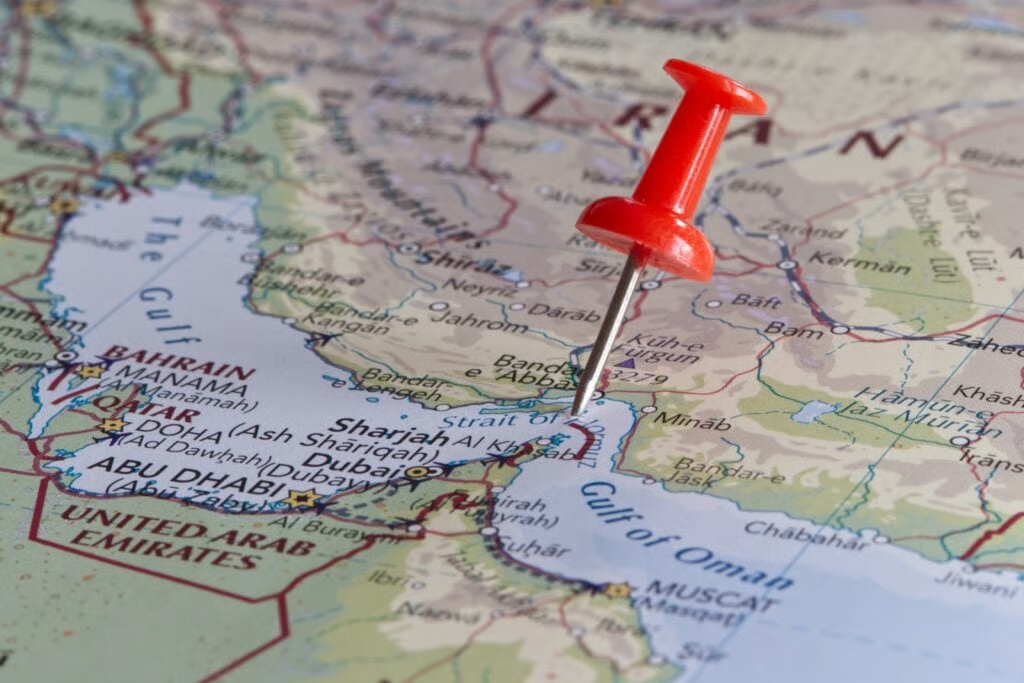
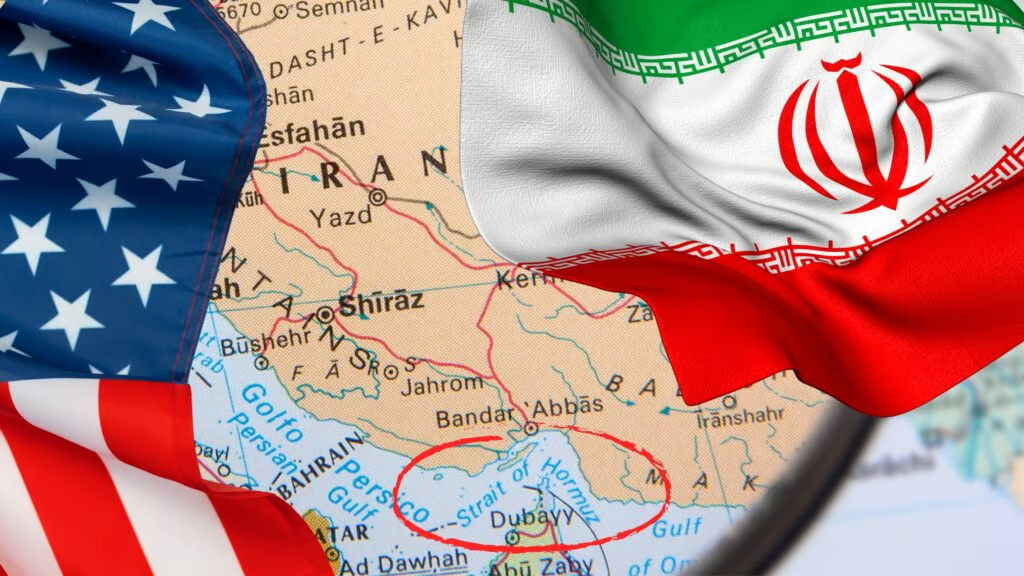
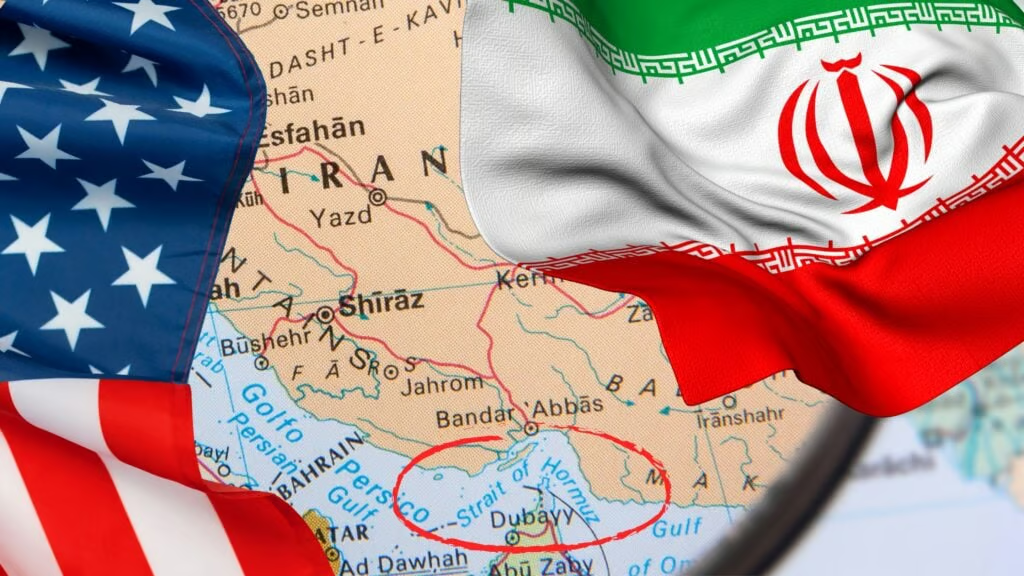
While the diplomats talk (or don't talk), things are getting more tense on the water. Iran has again tightened how ships move through the Strait of Hormuz. The corridor's rules have shifted back to a pre-April 17 setup under heavier military oversight. That's the strait that a huge chunk of the world's oil passes through, so when the rules change, people notice.
Iranian messaging on maritime traffic has been a bit all over the place. Foreign Minister Abbas Araghchi said commercial traffic was "completely open" during a recent 10-day ceasefire tied to Israel-Lebanon tensions. But other officials have warned access could be narrowed. Parliament speaker Mohammad Bagher Ghalibaf wrote on social media that "With the continuation of the blockade, the Strait of Hormuz will not remain open," signaling Tehran could tie passage to its own approval.
And, of course, the market noticed. The Strait of Hormuz is a massively sensitive chokepoint. Crude prices reacted as traders weighed the risk of tighter transit rules and potential U.S. enforcement actions. WTI crude's May contract fell 9.63% to $85.57 a barrel. The June contract dropped 7.86% to $84.00. That's a big move on a Saturday, which tells you how jumpy this market is.
Khatibzadeh said a "new protocol" for the strait is expected to be part of U.S.-Iran negotiations, and he claimed it would "remain open and safe for all civilian passage." But President Trump has linked maritime pressure to a broader deal. He wrote on social media: "The naval blockade will remain in full force and effect … until such time as our transaction with Iran is 100% complete."
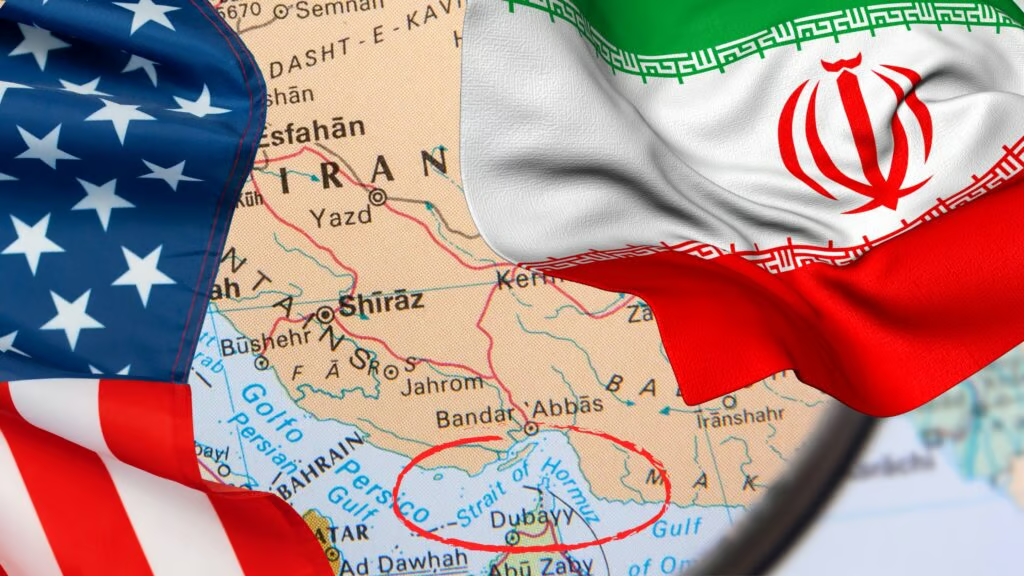
So, we have a U.S. naval blockade and Iran tightening its own oversight. This follows Trump's announcement that the U.S. Navy would initiate the blockade to prevent vessels from entering or exiting the strait, citing Iran's perceived failure to comply with maritime security protocols and its laying of mines.
The U.S. military is already reporting knock-on effects. U.S. Central Command said 21 vessels were directed to alter course after the blockade began earlier in the week. "21 ships have complied with direction from U.S. forces to turn around and return to Iran," the command said.
On the other side, Iran's Islamic Revolutionary Guard Corps said it would move from a managed transit approach to stricter oversight, framing the change as a response to what it called maritime "piracy." The IRGC also acknowledged striking two ships it said challenged Iranian jurisdiction. The UK Maritime Trade Operations Center confirmed a tanker was fired on by two IRGC speedboats, with no injuries reported.
Adding another layer to the situation, satellite imagery company Planet Labs (PL) told customers it will halt satellite imagery services covering Iran and the Middle East conflict zone for an open-ended period. That pause comes as shipping operators and insurers watch closely for fresh signs of disruption in the waterway.
The diplomatic stalemate was underscored by Vice President JD Vance's remarks in Islamabad, indicating that U.S. negotiators did not reach an agreement with Iranian officials after nearly 20 hours of talks, framing the outcome as detrimental to Iran's interests.
Back in Antalya, Khatibzadeh also addressed the Israel-Hezbollah front, saying: "Iran has no option, just to stop aggressors once and forever." He argued Tehran acted defensively and said any ceasefire should cover Lebanon.
So, to sum up: No in-person talks. Tighter rules in a critical oil chokepoint. A U.S. naval blockade. Ships being turned back and fired upon. And oil prices swinging on the news. It's a classic geopolitical standoff with very real market consequences. The question now is whether the maximalist demands ease, or the tensions escalate further.