So here's how your Friday went if you're the Strait of Hormuz: in the morning, you're "completely open" according to Iran's foreign minister. By the afternoon, you might be closing if the U.S. doesn't back off.
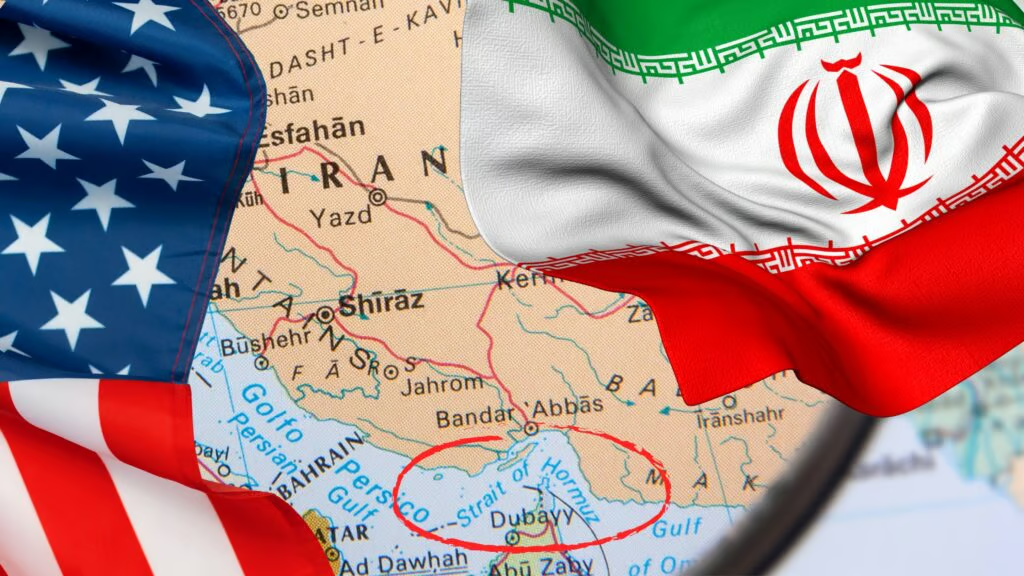
Iran's parliament speaker, Mohammad Bagher Ghalibaf, posted on X that "with the continuation of the blockade, the Strait of Hormuz will not remain open." He added that access to the waterway could become subject to Iran's approval—which is a diplomatic way of saying "we might just shut this thing down."
This came just hours after Foreign Minister Abbas Araghchi had declared commercial shipping through the strait was "completely open" during a 10-day ceasefire linked to tensions between Israel and Lebanon. The whiplash is real.
Meanwhile, the U.S. isn't just talking about blockades—they're enforcing them. U.S. Central Command reported that 21 vessels have already been forced to reverse course since the blockade began earlier this week. "21 ships have complied with direction from U.S. forces to turn around and return to Iran," the command said on X.
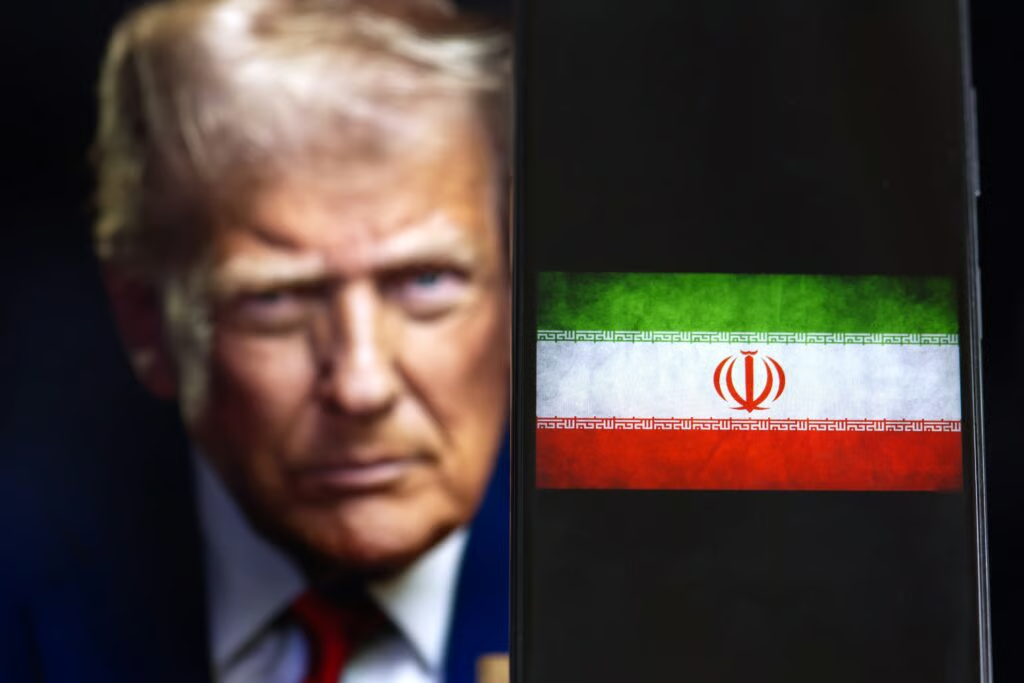
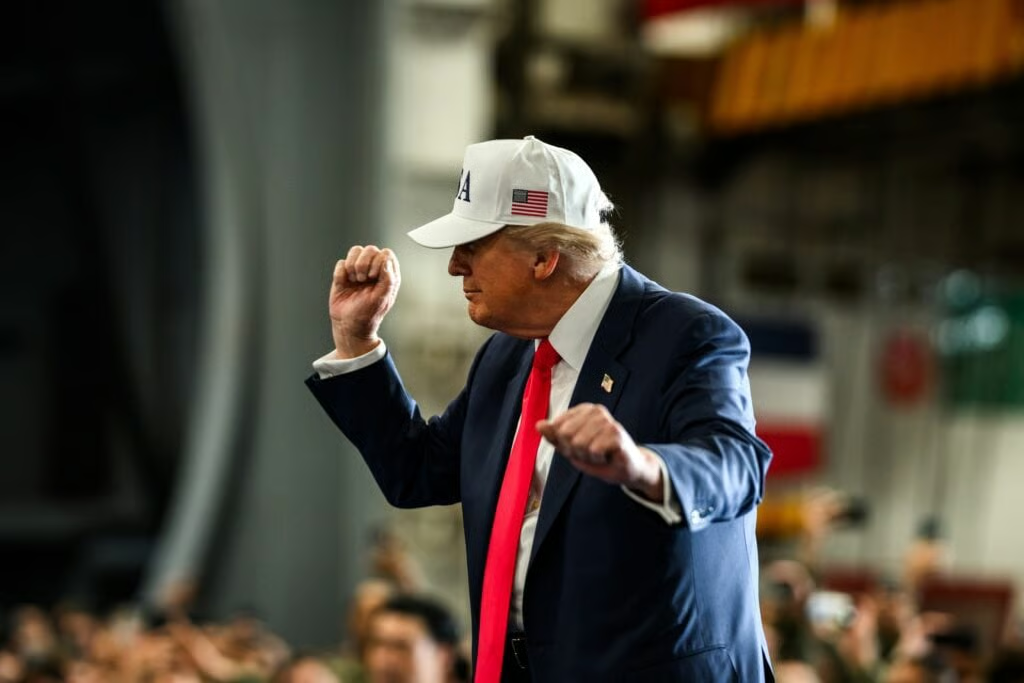
President Donald Trump made the policy clear on Truth Social: "The naval blockade will remain in full force and effect … until such time as our transaction with Iran is 100% complete." What that "transaction" entails exactly wasn't specified, but the message was clear: no backing down.
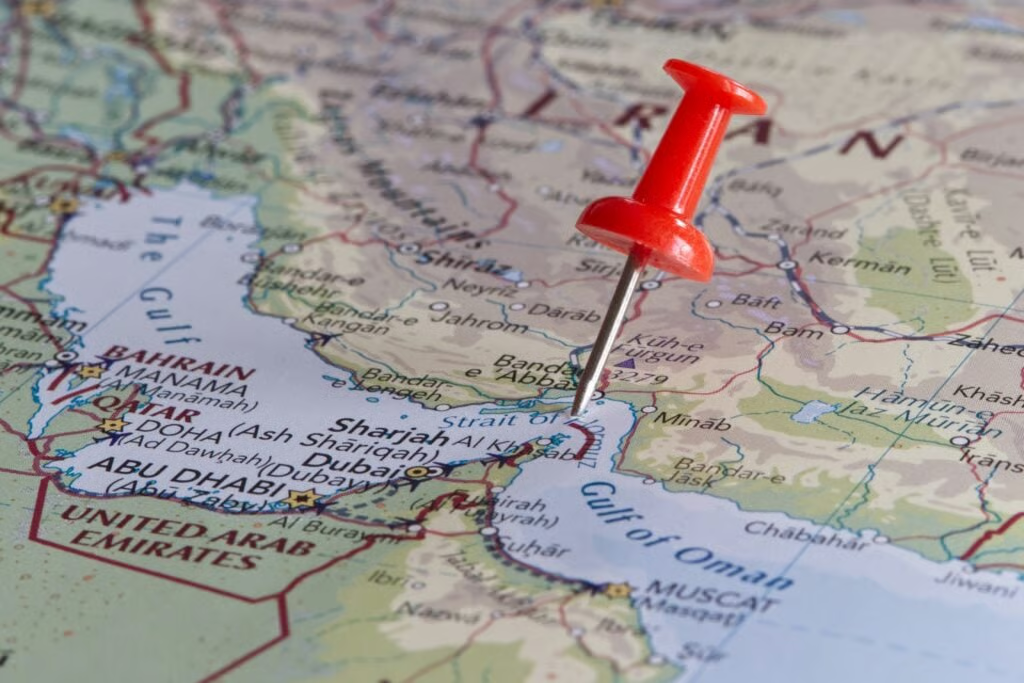
All of this matters because the Strait of Hormuz isn't just any waterway—it's one of the world's most critical energy corridors. A significant share of global oil shipments passes through this narrow passage between the Persian Gulf and the Gulf of Oman. When Iran talks about closing it, they're talking about squeezing the world's oil supply.
In commodities, WTI crude oil (May) fell 9.63% to $85.57 per barrel, while the June contract declined 7.86% to $84.00 per barrel, both remaining in a downtrend as of 6:44 PM EDT. The market seems to be betting on this getting resolved without a complete shutdown—or maybe just exhausted by the back-and-forth.