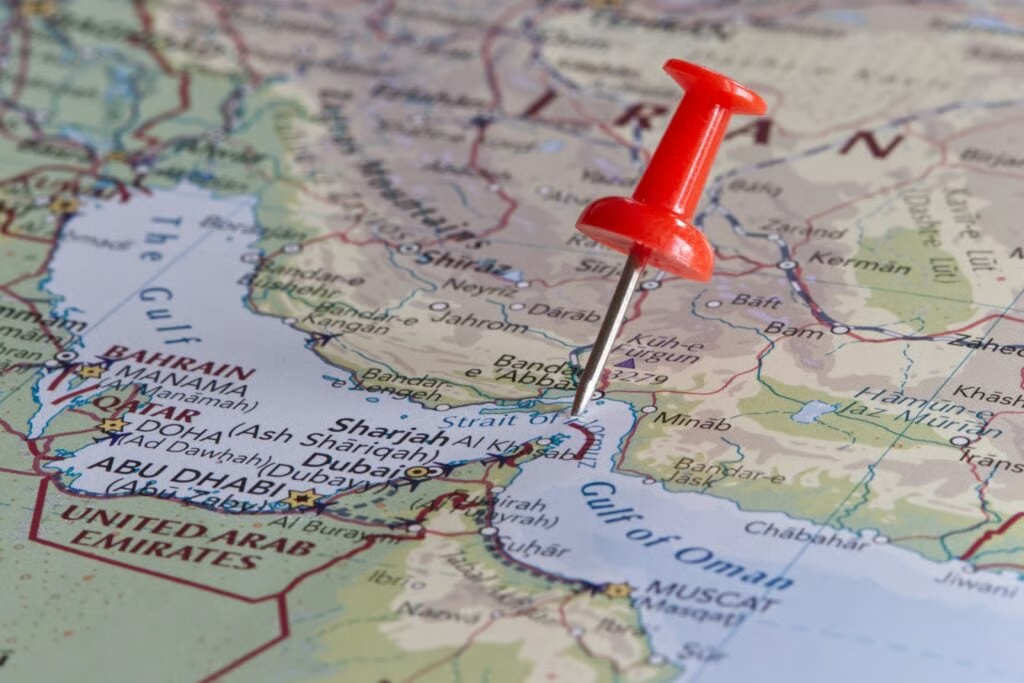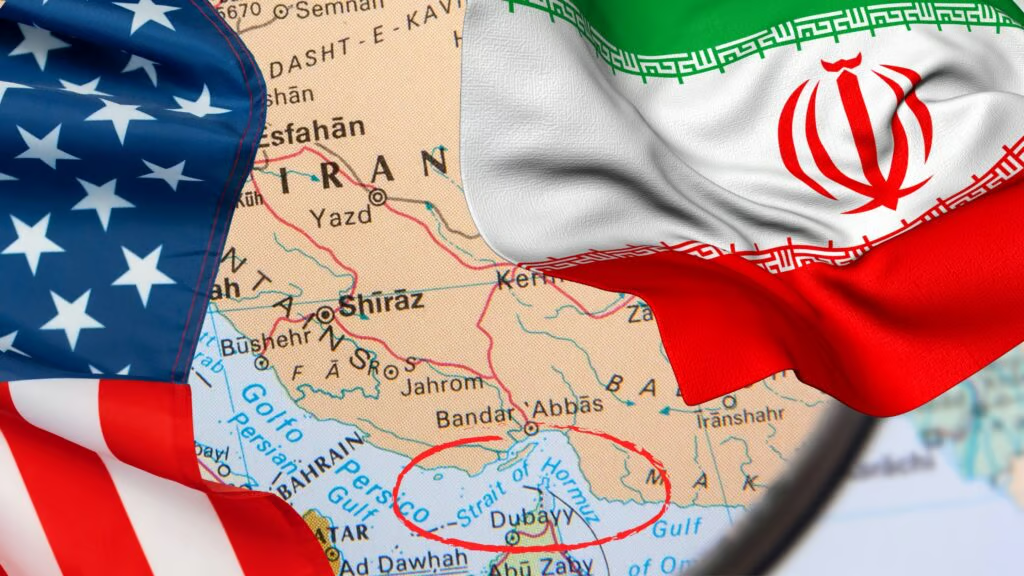
Sometimes, the market narrative flips on a dime. After weeks dominated by war, inflation jitters, and triple-digit oil, Friday delivered the kind of news that makes traders throw their spreadsheets in the air. The Strait of Hormuz is open for business, and Wall Street responded by smashing every record in sight.
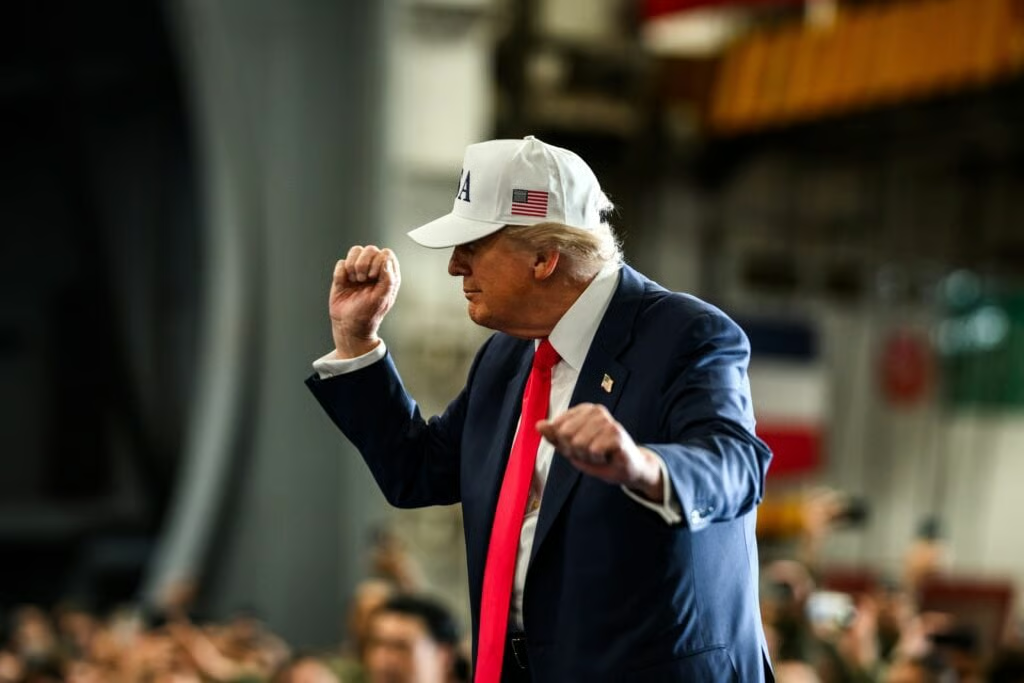
It all started with a sequence of announcements that traders had been waiting for since late February, when U.S. and Israeli military operations against Iran began. Iranian Foreign Minister Abbas Araghchi declared the critical waterway completely open for all commercial vessels for the remainder of the ceasefire. Then, President Donald Trump took to Truth Social with a victory lap, claiming credit and dropping the most consequential line of the day: Iran had agreed to never close the strait again.
“It will no longer be used as a weapon against the World,” Trump wrote. According to reports citing unnamed sources, the U.S. is considering releasing $20 billion in frozen Iranian funds in exchange for Iran giving up its stockpile of enriched uranium.
The immediate effect? Oil got crushed. It plunged 15% to around $80 a barrel by midday Friday. West Texas Intermediate crude is now down 27% in two weeks—its worst two-week decline since the chaotic days of April 2020—as traders rapidly priced out the supply shock that had defined the first quarter.
Meanwhile, stocks went bananas. The S&P 500, as tracked by the SPDR S&P 500 ETF Trust (SPY), crossed 7,100 for the first time ever. It posted its third straight week of gains, rising 12% over that stretch. That’s its best three-week performance since, you guessed it, April 2020.
The Nasdaq 100, tracked by the Invesco QQQ Trust (QQQ), reached 26,700. More impressively, it extended its winning run to 13 consecutive sessions. A streak that long has only happened four times in the index's history since 1985, and only once since 2013. This 13-day advance also ranks as the strongest since the pandemic rebound of April 2020.
Small caps didn't want to be left out. The Russell 2000 hit a record at 2,780, up 15% over 13 sessions, and managed to close higher every single day this week.
The week's biggest winners within the S&P 500 read like a manifesto for returning risk appetite. Robinhood Markets Inc. (HOOD) surged 32%. Oracle Corp. (ORCL) rose 30%—its best week since the dot-com frenzy of 1999. Coinbase Global Inc. (COIN) added 25% as crypto names rallied right alongside growth stocks.
Speaking of crypto, Bitcoin rallied to $78,000 on Friday and was up over 10% for the week, on pace for its best weekly performance since November 2024.
On the flip side, the biggest losers were last month's biggest winners. Energy names bore the brunt of crude's collapse. APA Corporation (APA), Devon Energy Corporation (DVN), and Coterra Energy Inc. (CTRA) each fell roughly 10% on the week as the war premium that had propped them up began to unwind in earnest.
Elsewhere, Michigan's automakers extended their recovery. General Motors Co. (GM) rallied 7.7%, its best weekly performance since October 2025. Ford Motor Co. (F) gained 7%, notching its third consecutive week of gains.
The ceasefire that made all this possible expires on April 21. Talks between Washington and Tehran are set to resume Sunday in Islamabad. For now, the math on Wall Street is refreshingly simple: peace is good for business.