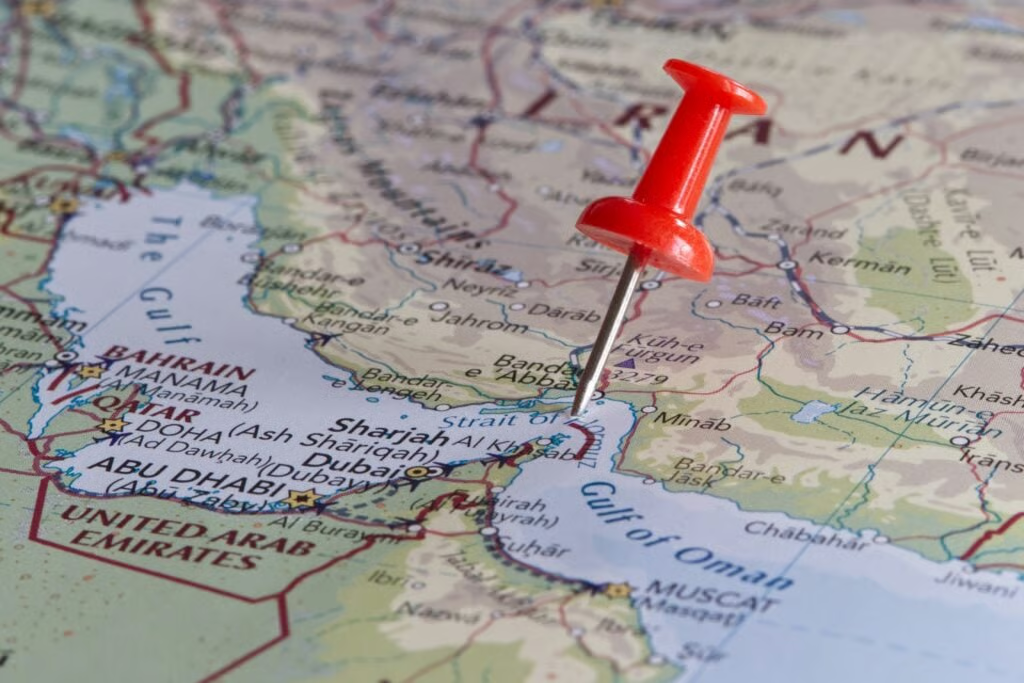
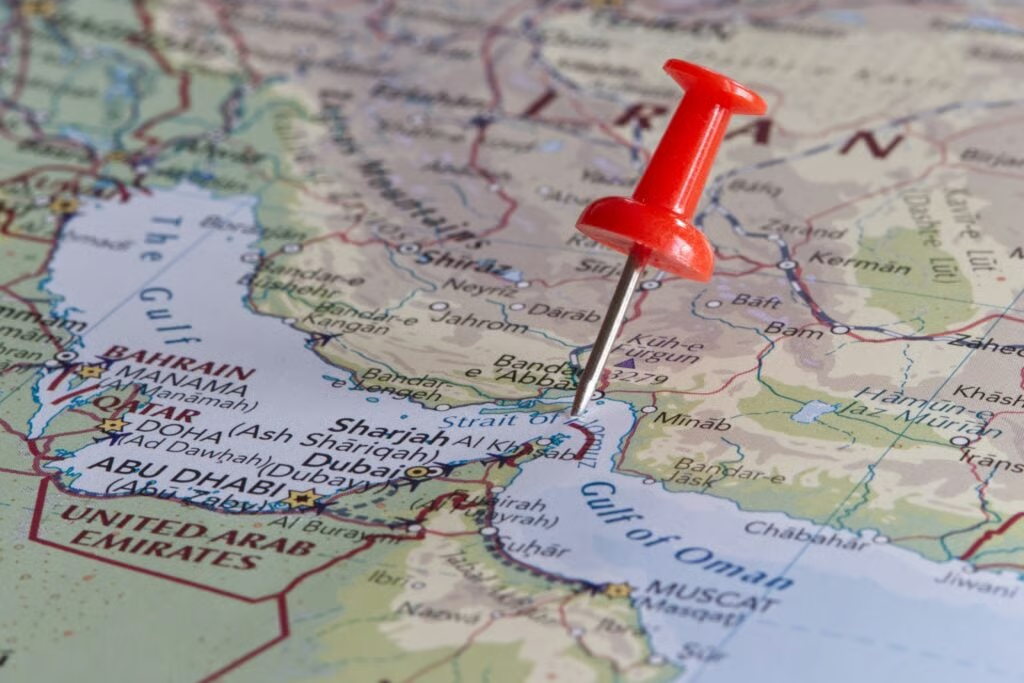
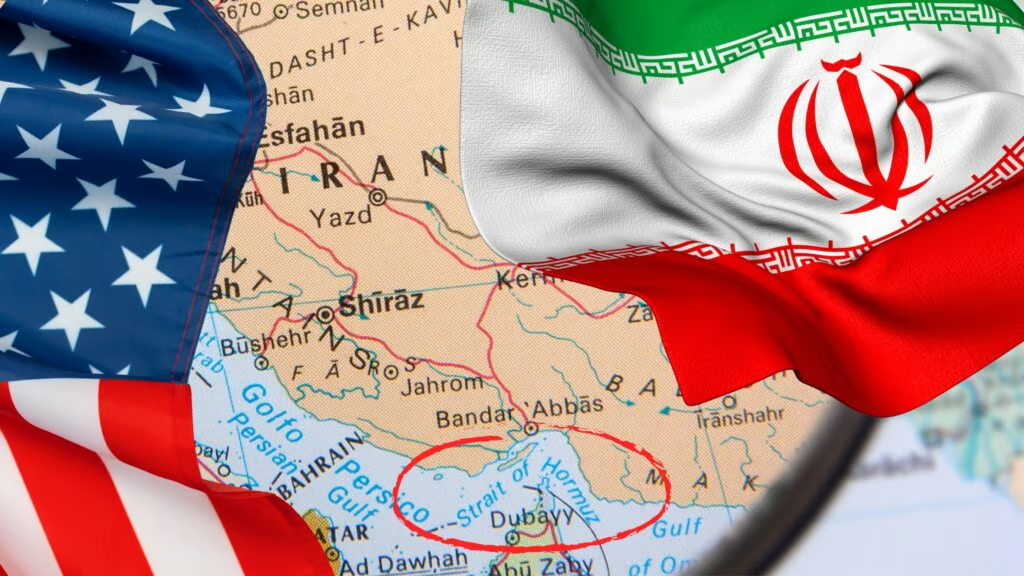
So, remember when things in the Strait of Hormuz seemed to be calming down? Yeah, scratch that. On Saturday, Iran's Islamic Revolutionary Guard Corps (IRGC) announced it was putting the vital waterway back under what it calls "strict management and control." Essentially, they've hit the rewind button, reverting to the tighter military oversight that was in place before April 17.
The reason? Iran is accusing the United States of maritime "piracy" under what it describes as a blockade. In a statement, the IRGC said this stricter posture will remain until ship movements to and from Iran are no longer obstructed by the U.S. It's a classic geopolitical standoff playing out in one of the world's most important shipping lanes.
Just a day earlier, the messaging from Tehran was all over the map. Parliament speaker Mohammad Bagher Ghalibaf posted on X that "With the continuation of the blockade, the Strait of Hormuz will not remain open." He suggested access could hinge on Iran's approval, turning the route into a bargaining chip. Hours before that, however, Iranian Foreign Minister Abbas Araghchi had taken a different tone, saying commercial traffic was "completely open" during a 10-day ceasefire tied to tensions involving Israel and Lebanon. Talk about mixed signals for anyone trying to sail a tanker through there.
The U.S. military is already seeing effects. U.S. Central Command stated that 21 vessels have been ordered to change course and return to Iran since the blockade began earlier in the week. Meanwhile, the IRGC has acknowledged launching strikes on two ships in the strait that it claimed defied Iranian jurisdiction. Adding to the chaos, the UK’s Maritime Trade Operations Center confirmed a tanker came under fire from two IRGC speedboats, though no one was hurt.
Could Iran Really Close Hormuz Again?
Saturday's announcement describes a rollback, not a full shutdown. But it comes with a clear ultimatum: the strict control stays until the U.S. ends its restrictions. The strait is now a direct proxy in the wider U.S.-Iran dispute.
On the American side, President Donald Trump signaled no quick end to the pressure. "The naval blockade will remain in full force and effect … until such time as our transaction with Iran is 100% complete," he wrote on Truth Social. This directly contradicts Trump's own recent claims that the strait was open and that Iran had agreed it "will never close the waterway again." He had even asserted Iran was removing sea mines with U.S. help. The reality on the water looks quite different.
Iran's Friday posture included the more severe threat of a full closure if the blockade persists. The combination of U.S. enforcement and Iran's shifting rules has left ship operators navigating a rapidly changing and dangerous set of instructions.
Iran’s Maritime Shifts Impact Global Trade
This escalation is hitting markets where it hurts. The Strait of Hormuz is a key chokepoint for global oil shipments, and traders hate uncertainty. WTI crude's May contract dropped 9.63% to $85.57 a barrel, while the June contract slid 7.86% to $84.00. These moves came as the U.S. reported ships being turned back and Iranian leaders floated the possibility of restricting passage.
The latest Iranian statement points to intensified monitoring, not an outright seal-off. But by explicitly tying the strait's operating rules to the U.S.-Iran dispute, they've ensured that every tanker passage is now a political event. For global trade, and especially for oil prices, that means more volatility is almost certainly on the horizon as this high-stakes game of chicken continues.