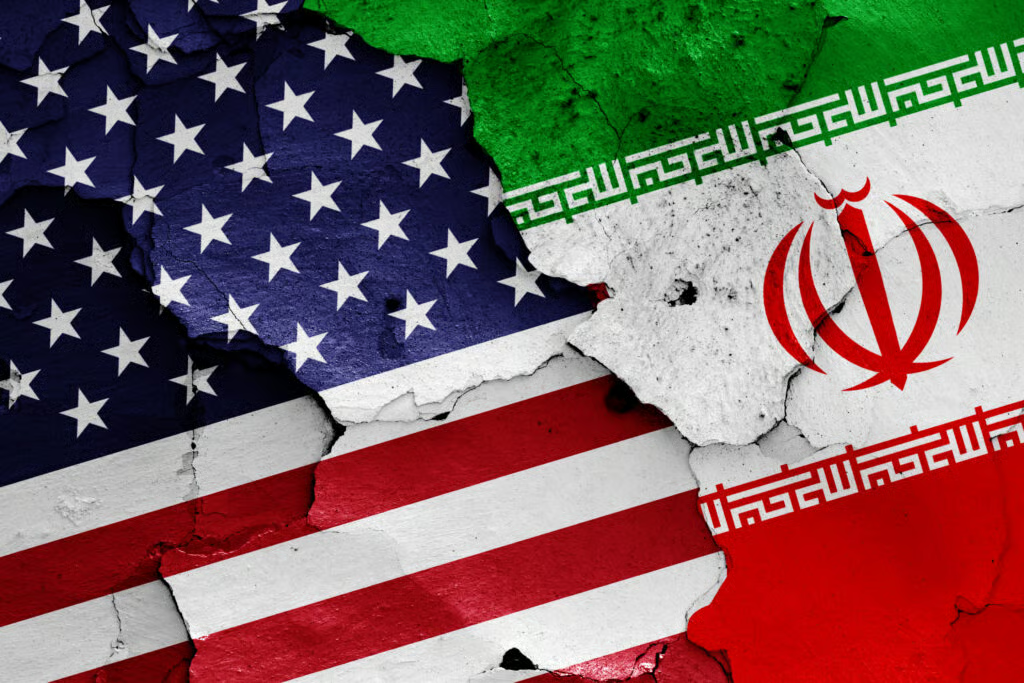
So here's how close we apparently came to peace: "inches away." That's according to Iran's Foreign Minister Seyed Abbas Araghchi, who took to social media Sunday to vent about the collapse of U.S.-Iran peace talks in Islamabad, Pakistan.
Araghchi called the discussions "intensive talks at highest level in 47 years"—which sounds like the kind of thing you say when you're trying to emphasize just how serious the negotiations were. But according to him, when Iran was ready to sign what he called the "Islamabad MoU," the U.S. responded with "maximalism, shifting goalposts, and blockade." His summary of the experience? "Zero lessons earned."
Meanwhile, Iranian President Masoud Pezeshkian offered what sounded like a slightly more diplomatic version of the same complaint. "If the American government abandons its totalitarianism and respects the rights of the Iranian nation," he wrote, "ways to reach an agreement will certainly be found."
When Talks Fail, Blockades Begin
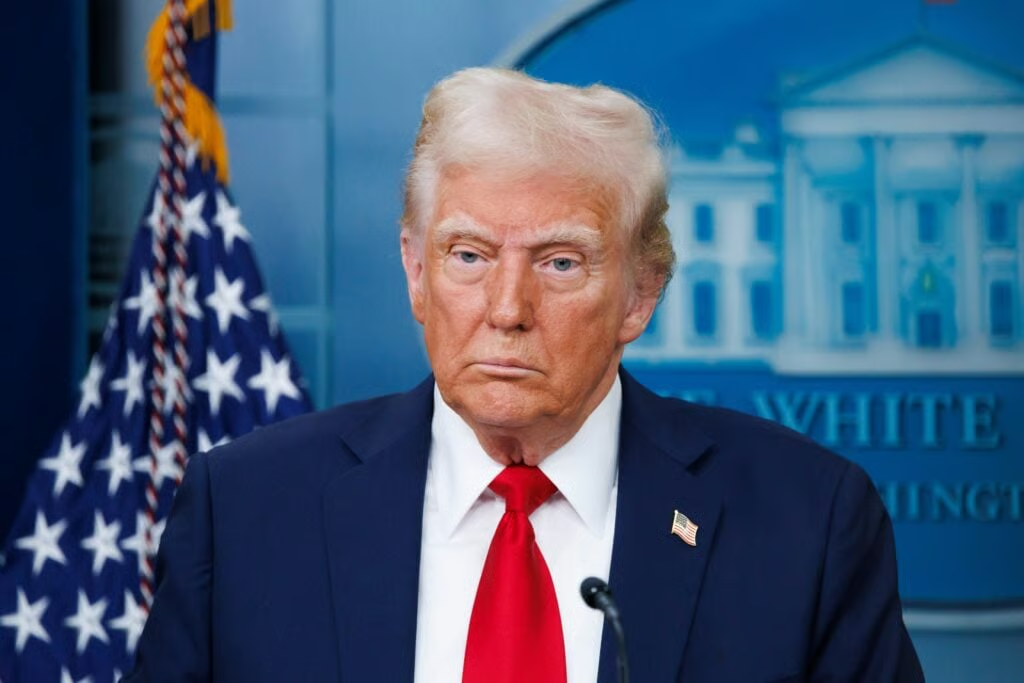
This isn't just diplomatic posturing—the collapse of talks has immediate real-world consequences. Hours after the Pakistan negotiations fell apart, President Donald Trump announced that the U.S. would enforce a naval blockade on Iran and the Strait of Hormuz.
Think about that timeline for a second: peace talks collapse, and within hours there's an announcement about military escalation. That's not exactly a cooling-off period.
Vice President JD Vance framed the breakdown differently, warning that Washington wouldn't compromise on core demands and suggesting the failure was "bad news for Iran much more than it's bad news for the United States of America." Which is the kind of thing you say when you're trying to project strength, but also maybe when you're acknowledging that yes, this is actually bad news for everyone.
The Mediators Aren't Giving Up Yet
Here's where it gets interesting: while the public statements sound pretty definitive, the people actually in the room seem to think this isn't over yet.
According to reports, Turkish and Egyptian officials coordinated with Pakistani, U.S., and Iranian counterparts on Sunday, with all sides still seeing a possible deal. The mediators aim to resume talks before the April 21 ceasefire deadline, saying the Islamabad negotiations have actually laid groundwork for future progress.
A U.S. official told reporters that a deal remains possible—but only if Iran shows greater flexibility and accepts the Islamabad proposal as its best offer. Which sounds like the diplomatic version of "take it or leave it."
Even Iran's ambassador to Pakistan, Reza Amiri Moghadam, who participated in the negotiations, tried to put a positive spin on things, writing that the Islamabad talks were "not an event but a process."
So what we have here is the classic diplomatic dance: public statements that sound like everything has collapsed, private channels that suggest maybe it hasn't, and a clock ticking toward a ceasefire deadline. The inches that separated the sides on Saturday might feel like miles today, but the mediators seem to think there's still a path to bridge that gap. Whether anyone actually wants to walk that path is the real question.