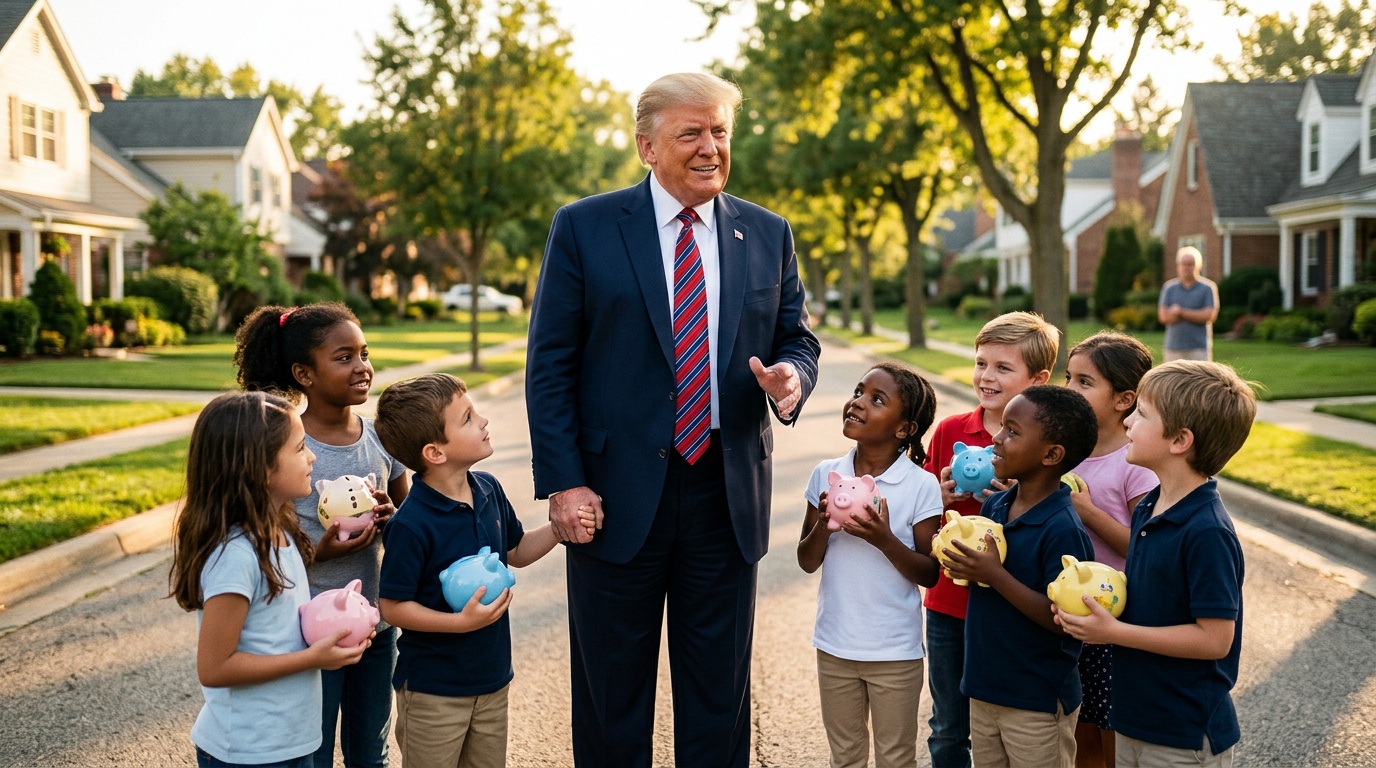
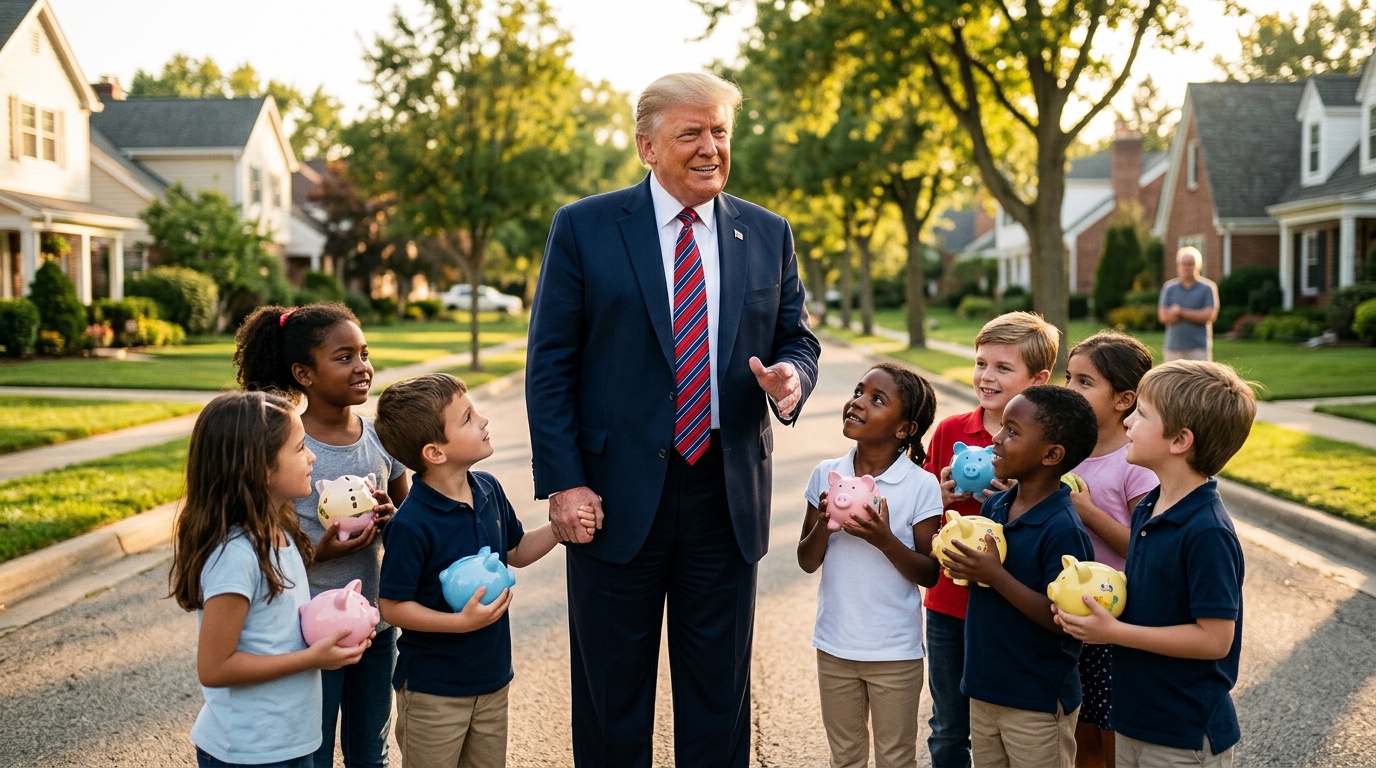
President Donald Trump took a victory lap at the White House on Wednesday, touting a massive expansion of the country's child investment accounts after the Treasury Department automatically created accounts for more than 60 million additional children. That brings the nationwide total to nearly 70 million.
"Trump Accounts has turned out to be bigger than anyone ever thought even possible, and we had big, big dreams," Trump said. He noted the administration had now automatically enrolled every eligible minor child, while urging parents and guardians to claim the accounts. The expansion follows Treasury's recent move toward automatic enrollment.
Parents Still Have To Claim What's Already Theirs
Here's the catch: the account exists, but you have to claim it. Treasury said every child under 18 with a valid Social Security number now has an account ready to claim through the Trump Accounts app. Parents must claim the account to manage it, enable contributions and receive the one-time $1,000 federal seed available to U.S. citizen children born between Jan. 1, 2025, and Dec. 31, 2028. The accounts launched nationwide in July.
Private Money Is Pouring In
The White House said more than $4.5 billion has already entered the accounts. That breaks down into $1.3 billion in federal seed contributions, more than $600 million from families and friends, and $2.6 billion in philanthropic gifts. Officials estimate about 80% of accounts are linked to families earning below $200,000 annually.
Private funding has accelerated too. Michael Dell and Susan Dell pledged $6.25 billion to provide $250 contributions to 25 million qualifying children, a commitment Dell said gives young Americans a "real stake" in the economy. More than 70 companies have committed to employee Trump Account contributions, according to the White House.
Treasury Opens The Door To Corporate Stock
Treasury's new rules also allow certain qualified general contributions to be made with publicly traded U.S. corporate stock. Those shares generally carry a five-year holding requirement. Regulators acknowledged that concentrated stock can produce riskier returns, but said the change should attract additional giving and could generate "billions of additional dollars per year" for children's accounts.
Families can generally contribute up to $5,000 annually, while employers can contribute up to $2,500 within that overall limit. Corporate participation has already included matching programs from major employers.