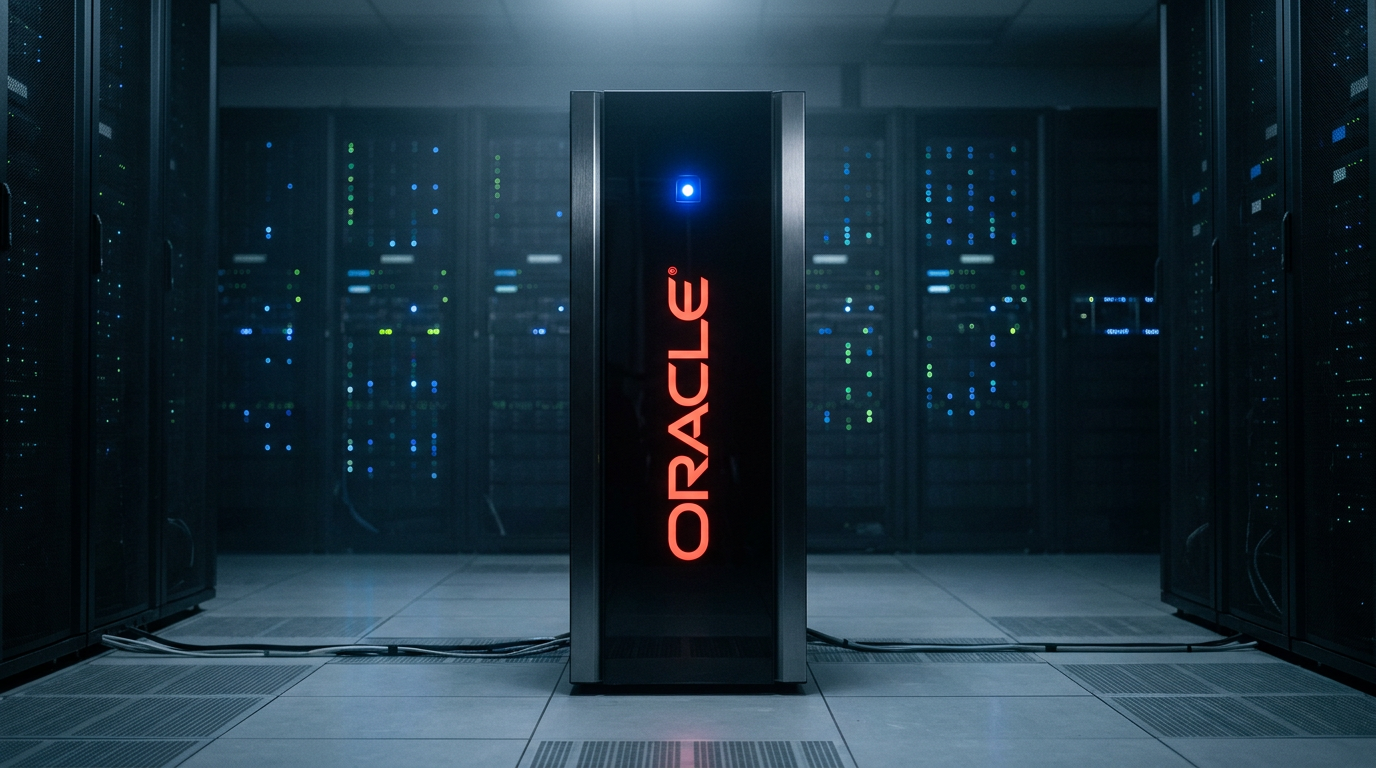
Oracle (ORCL) shares are getting a little love on Monday, rising more than 2% in premarket trading as investors dip their toes back in after a truly ugly June. The broader market is helping too — Nasdaq futures are up 1.20%, and S&P 500 futures are up 0.47%.
The stock has been in freefall lately, down 28% year to date. The trigger? Oracle's aggressive bet on artificial intelligence infrastructure. The company spent $16.49 billion on capital expenditures last quarter alone, pushing full-year free cash flow to negative $23.7 billion. Wall Street expects that number to hit roughly $92 billion next fiscal year. Meanwhile, Oracle's debt stood at about $130 billion at the end of May. That's a lot of borrowed money, and investors started to wonder if the spending was sustainable.
But here's the thing: Oracle also has a $638 billion remaining performance obligation (RPO) backlog. That's a fancy way of saying customers have already committed to paying that much for Oracle's cloud and AI services over time. It's a massive revenue pipeline that provides long-term visibility. Some investors are now looking at that backlog and thinking the sell-off was overdone.
June was brutal — the stock fell about 35%, its worst monthly performance since September 1990. That came after a nearly 40% rally in May, so the whiplash was real. But history offers some comfort. Going back to 1986, Oracle has dropped 30% or more in a single month only eight times. After the previous seven such drops, the stock bounced back with a median gain of 16% three months later and 93% a year later. And it was higher about two-thirds of the time.
Several analysts have also stuck by the stock, reaffirming bullish ratings and raising price targets in June, citing strong cloud and AI demand. So while the debt-fueled AI buildout is scary, the revenue potential is real.
As of Monday premarket, Oracle shares were trading at $143.59, up 2.37%.