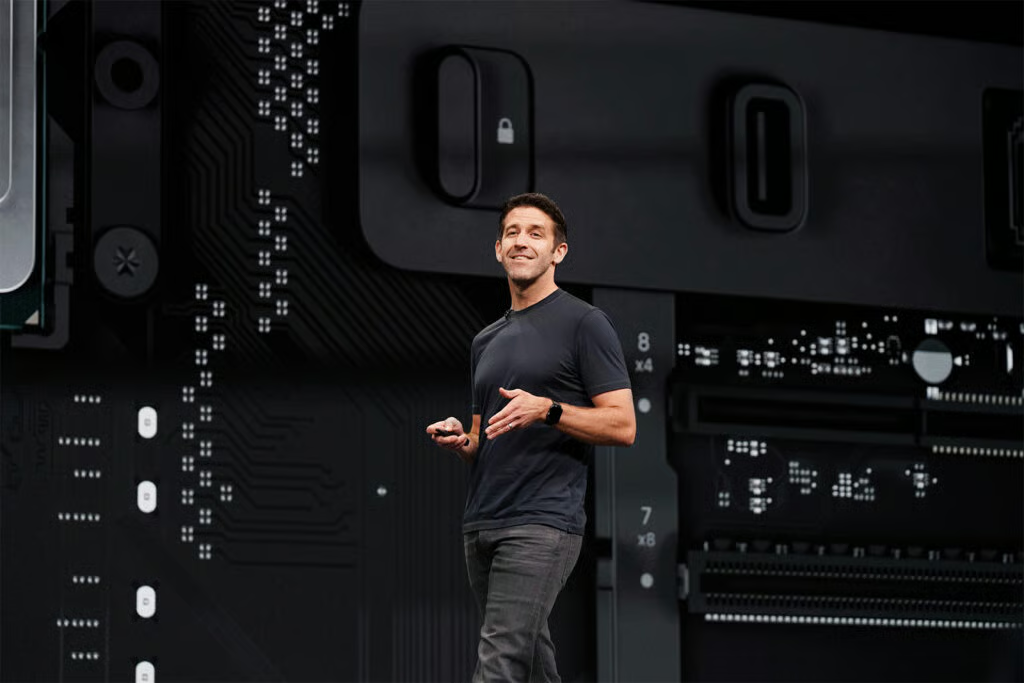
So here's the thing about Apple Apple Inc. (AAPL): it's not just a tech company, it's a machine for executing leadership transitions. And it's about to do it again. Longtime CEO Tim Cook is preparing to hand the reins to hardware chief John Ternus, and Wall Street is leaning in to see if this is the move that sharpens Apple's focus on AI and the next wave of gadgets.
Think of it as a baton pass where both runners keep going. Bryan Ma of IDC put it nicely, telling CNBC on Tuesday that the incoming CEO, John Ternus, will address investor concerns about AI readiness with his "technical and—and engineering chops" to build products "all the way down to the silicon level." Ma added that Ternus will play a "key role" as Apple rolls out its AI strategy and new devices.
And Cook? He's not disappearing. Ma noted that Cook will remain influential as executive chairman, acting as "that diplomat" who can "help smooth out" negotiations, giving investors "the best of both worlds." So you get the steady hand of Cook on strategy and relationships, plus the hardware-focused execution of Ternus. It's a classic Apple move: change without chaos.
The timing, though, caught some off guard. Gene Munster of Deepwater told CNBC on Tuesday that the move came "about two years earlier than what I was expecting," but emphasized it was long anticipated. He said Cook managed Apple "almost like a president of a country, not a company," and credited Steve Jobs with giving Apple "the gift of transitions." Munster said the shift will test Apple's ability to execute another smooth handoff while maintaining momentum.
So what does a "hardware guy" CEO mean for Apple's strategy? Gil Luria of D.A. Davidson told CNBC on Tuesday that the transition is "good news," noting that Cook is stepping down amid strong performance, with "record iPhone sales" and a solid roadmap. He highlighted that Ternus is "a hardware guy," signaling a focus on innovation in devices such as "glasses, rings, uh, folding phones," rather than competing heavily in AI model spending.
Luria's take is interesting: Apple can "sit back, let those guys compete" on frontier AI models and instead leverage them through its premium hardware ecosystem. It's a classic Apple play—own the experience, not necessarily the underlying tech race. But don't think AI is taking a back seat. Munster and Ma both stressed that AI remains central: Munster described the transition as "the opportunity here" for Apple to prove "they get it." At the same time, Ma said the company must deliver a compelling AI story and product roadmap to reassure investors.
In short, Wall Street sees this as a pivot moment. It's not just a CEO change; it's a bet that Ternus's hardware expertise can turn AI from a buzzword into products people actually want to buy, while Cook keeps the ship steady from the boardroom. And the market? Apple shares were down 0.30% at $272.23 during premarket trading on Tuesday, according to market data. Because even smooth transitions make investors pause for a second.
.jpeg)