





When a major shipping chokepoint like the Strait of Hormuz slams shut, the world doesn't just get a little headache—it gets a full-blown energy migraine. The ongoing conflict involving Iran has done exactly that, and the symptoms are showing up in some pretty inconvenient places: empty jet fuel tanks in Europe and driving bans in South Korea. It's a classic case of geopolitical tension turning into very real, very expensive logistics problems.
Jet Fuel Shortages, Driving Bans, and China's Quiet Advantage: The Global Energy Fallout from the Iran War
MarketDash
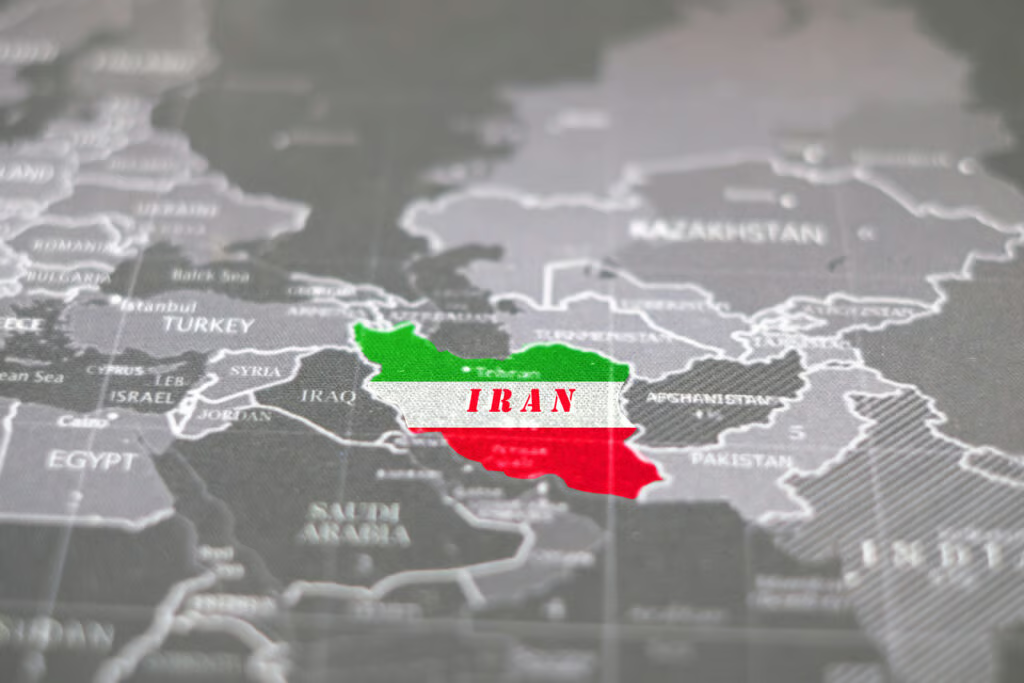
The closure of the Strait of Hormuz is sending shockwaves through global energy markets, forcing drastic measures from South Korea to Europe. Here's how the crisis is playing out—and why China might be sitting pretty.
Get Market Alerts
Weekly insights + SMS alerts
South Korea's Gas Tank Is Running on Fumes
Imagine telling everyone in your office they can't drive to work one day a week. That's basically what's happening in South Korea right now. The country is in a tough spot: it imports over 90% of its energy, and a whopping 70% of its crude oil normally comes sailing through the Gulf region. With the strait closed, those shipments aren't sailing anywhere.
The government has told its employees to park their cars one weekday out of five. It's also asking regular folks to get creative: charge your EV during the day, not at night; take shorter showers; save the vacuuming and laundry for the weekend. It's a whole new energy etiquette. On the policy side, South Korea has earmarked 26 trillion won (nearly $17 billion) to buy fuel the moment the shipping lanes reopen, is pushing for more nuclear power, and has stopped exporting jet fuel to keep its own planes in the air.
Why European Airlines Are Grounding Planes Early
Over in Europe, the aviation industry is feeling the squeeze. It turns out that a lot of the region's jet fuel refining capacity had been dialed back in recent years due to environmental rules and lower demand. So when imports from the Gulf dried up, there wasn't enough homegrown supply to fill the gap.
The ripple effect is hitting airlines where it hurts. Deutsche Lufthansa (DLAKY), the biggest airline in the region, is responding by retiring some aircraft ahead of schedule and cutting back on flights. The company cited "increased kerosene costs and additional burdens from labor disputes." It's not just a European problem, either. In the U.S., jet fuel hit $3.87 a gallon on Monday. That kind of pressure has U.S. Transportation Secretary Sean Duffy hinting that President Donald Trump is open to airline mergers as a way for the industry to weather the storm.
China's Surprisingly Sturdy Energy Fortress
Here's the interesting twist in the story. You'd think China, which imports over 70% of its crude oil (about 11.9 million barrels a day) and is the world's top buyer of liquefied natural gas, would be sweating this crisis. But reports suggest Beijing might be the best-prepared player at the table.
For years, President Xi Jinping's administration has been working to reduce foreign energy dependence. How? By throwing money at wind and solar power, building oil pipelines from friendly neighbors like Russia and Central Asia, and digging new oil wells at home in places like Xinjiang. The rapid shift to electric vehicles has been a game-changer, too—cutting China's daily oil demand by up to 1 million barrels. That's not a small number.
Speaking of EVs, Chinese automakers are on a tear. BYD Co. Ltd (BYDDY) and BYD Co. Ltd (BYDDF) have seen sales in Europe skyrocket by triple-digit percentages over the past year, leaving rivals like Tesla Inc. (TSLA) in the dust in some markets. This isn't just about cars; it's about exporting the technology that reduces oil demand. Chinese exports of wind turbines and lithium-ion batteries jumped 45% and 50%, respectively, in early 2026. Of course, China still leans heavily on coal for electricity, so it's not a completely green picture—but its energy mix is looking more resilient by the day.
Tensions, Threats, and Market Jitters
Back in the geopolitical arena, the situation remains volatile. President Trump has warned Iran that failed negotiations could lead to U.S. military strikes, potentially targeting critical infrastructure. And where there's market-moving presidential commentary, allegations of insider trading aren't far behind. Investor Peter Schiff has claimed Trump's recent social media posts about Iran smack of "market manipulation," a sentiment echoed by Minnesota Governor Tim Walz.
So, what's the takeaway? A war in one corner of the world doesn't stay there. It travels through supply chains, shows up at the gas pump, and grounds flights. Some countries, like South Korea, are forced into emergency rationing. Others, like those in Europe, are scrambling to adjust their industrial output. And then there's China, which spent years building buffers—from pipelines to EV factories—that are now paying off. In the global game of energy risk, it seems preparation might be the ultimate hedge.
More News
Iran Says No Talks Under Trump's 'Shadow of Threats,' Prepares 'New Cards' as Ceasefire Nears End
.jpeg)
Inside: Pre-IPO Ticker + The Next Elon Musk?
Market Moves Higher as Iran Talks Loom and Earnings Season Heats Up

Apple's CEO Handoff: Why Wall Street Is Betting on the 'Hardware Guy'
Jet Fuel Shortages, Driving Bans, and China's Quiet Advantage: The Global Energy Fallout from the Iran War
Elon's "Bottleneck" (NOT SpaceX)
TSMC's $56 Billion Bet: Can the Chip Giant Build Fast Enough for the AI Boom?
Trump Clashes With Energy Secretary Over Gas Price Forecast, Says Iran Loses $500 Million Daily
Get Market News Alerts
Real-time alerts on price moves, news, and trading opportunities.
Join 20,000+ investors. No spam, ever.
Featured Articles
View all newsIran Says No Talks Under Trump's 'Shadow of Threats,' Prepares 'New Cards' as Ceasefire Nears End
By MarketDash
April 21, 2026
Trump's Executive Order 14330: What Wall Street Doesn't Want You to Know (Ad)
By The Oxford Club
Market Moves Higher as Iran Talks Loom and Earnings Season Heats Up
By MarketDash
April 21, 2026
Apple's CEO Handoff: Why Wall Street Is Betting on the 'Hardware Guy'
By MarketDash
April 21, 2026
TSMC's $56 Billion Bet: Can the Chip Giant Build Fast Enough for the AI Boom?
By MarketDash
April 21, 2026
How To Claim Your Pre-IPO Stake In SpaceX! (Ad)
By Paradigm Press
Trump Clashes With Energy Secretary Over Gas Price Forecast, Says Iran Loses $500 Million Daily
By MarketDash
April 21, 2026
Ripple CEO Praises New SEC Chair, Calls Gensler Era a 'Power Grab'
By MarketDash
April 21, 2026