Here's a classic Washington disagreement: the boss and his cabinet secretary are publicly at odds over what comes next. This time, it's about your wallet at the gas pump.
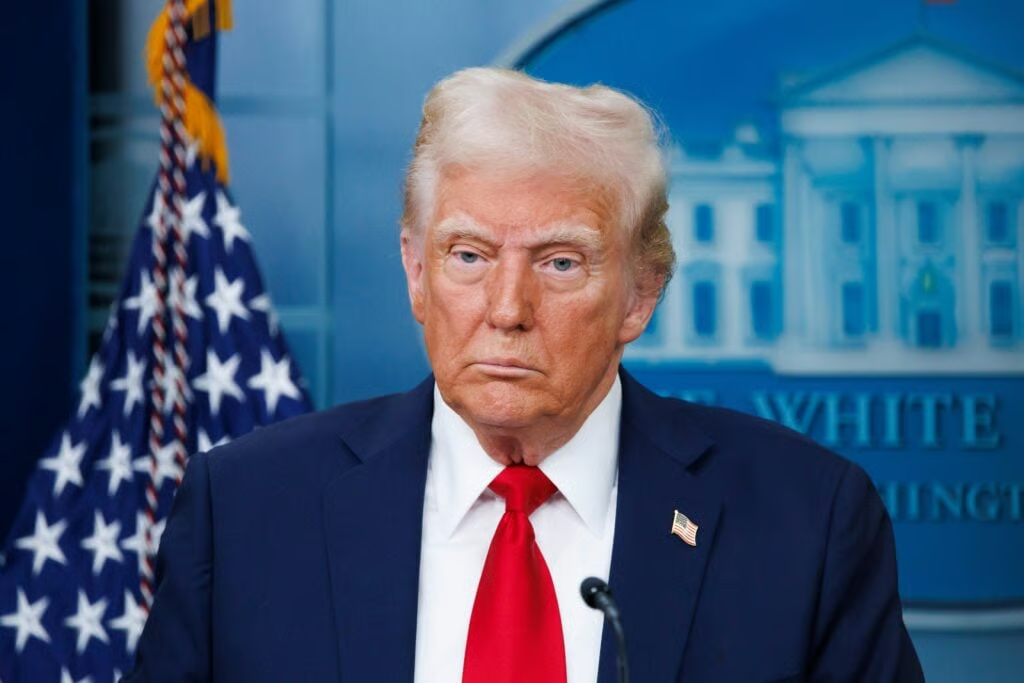
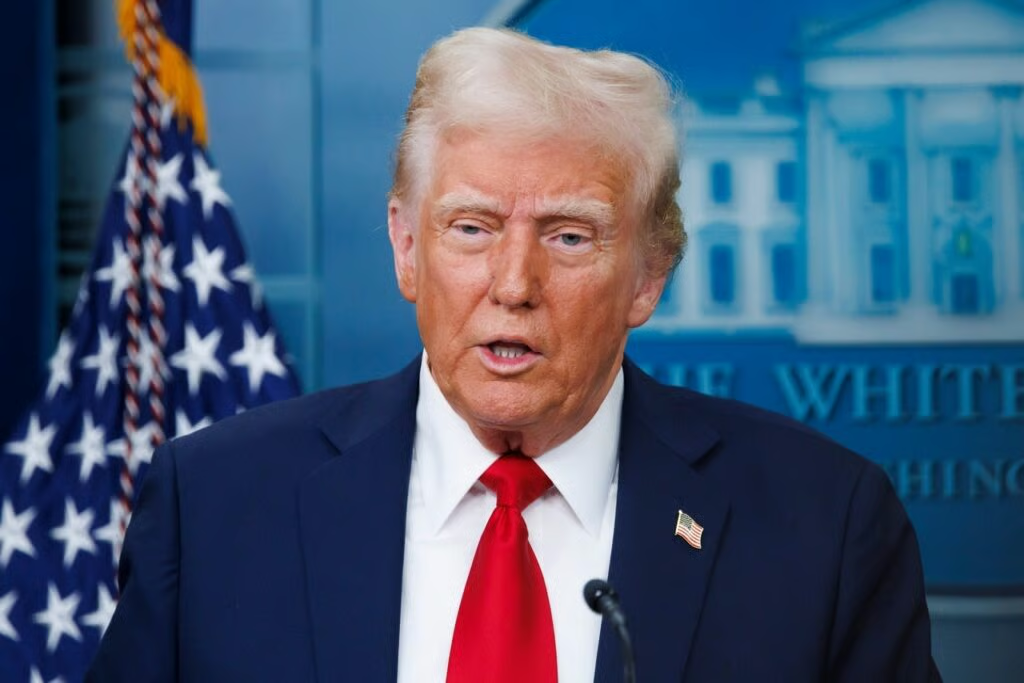
President Donald Trump has taken issue with a prediction from his own Energy Secretary, Chris Wright. In a phone interview with The Hill on Monday, the President pushed back hard on Wright's view that we might not see gas prices dip below $3 per gallon until sometime next year.
"No, I think he's wrong on that. Totally wrong," Trump stated, leaving little room for interpretation.
So when does the President think relief is coming? His timeline is directly tied to geopolitics. "As soon as this ends," he said, referring to the ongoing war with Iran. The U.S. is currently enforcing a blockade on all Iranian ports, a major point of contention and a key factor in global oil markets.
The conversation also touched on international diplomacy. Reuters reported that Pakistan's army chief, Asim Munir, had suggested to Trump that the U.S. blockade was complicating negotiations. Trump, however, dismissed that characterization in his talk with The Hill, saying Munir "didn't recommend anything on the blockade."
Instead, Trump doubled down on the blockade's effectiveness, framing it as a significant economic weapon. "The blockade is very powerful, very strong. They lose $500 million a day with the blockade up," he said, referring to Iran. "We control it. They don't control it."
Wright Predicts High Gas Prices
So what exactly is the Energy Secretary saying that has the President calling him "totally wrong"?
The ongoing naval tensions in the critical Strait of Hormuz—a chokepoint for about a fifth of the world's seaborne oil—are the root cause of the anxiety. In a conversation with CNN a day before Trump's comments, Wright defended the U.S. pressure tactics. He argued that the passage through Hormuz is not currently safe, which justifies the maintenance of the blockade.
His outlook for consumers, however, was less optimistic. While he suggested gas prices might have already peaked, he also stated they would likely stay above the $3 per gallon mark until next year. For context, the current national average is sitting at $4.042 per gallon, according to AAA.
Economists Say Relief Not in Sight
If you're hoping for a quick resolution, some economists are suggesting you might want to temper those expectations. The uncertainty isn't just spiking prices today; it's also reshaping expectations for the future.
Economist Justin Wolfers warned that the Hormuz situation is driving up not only current prices but also long-term price expectations through 2027 and beyond. He suggested that Energy Secretary Wright's measured optimism might already be "outdated," adding that without a clear resolution, elevated gas prices are likely to stick around.
The cost is already staggering. Meanwhile, economist Mark Zandi estimated that the war with Iran has already pushed U.S. gasoline costs up by an estimated $21.3 billion over just the past six weeks. That's a massive additional economic pressure landing directly on consumers.
So, we have a split screen: the President forecasting a quicker drop tied to the end of a war, his Energy Secretary projecting stubbornly high prices for the better part of a year, and economists warning the financial pain could extend for years. The only point of agreement seems to be that all roads lead back to the Strait of Hormuz.






.jpeg)