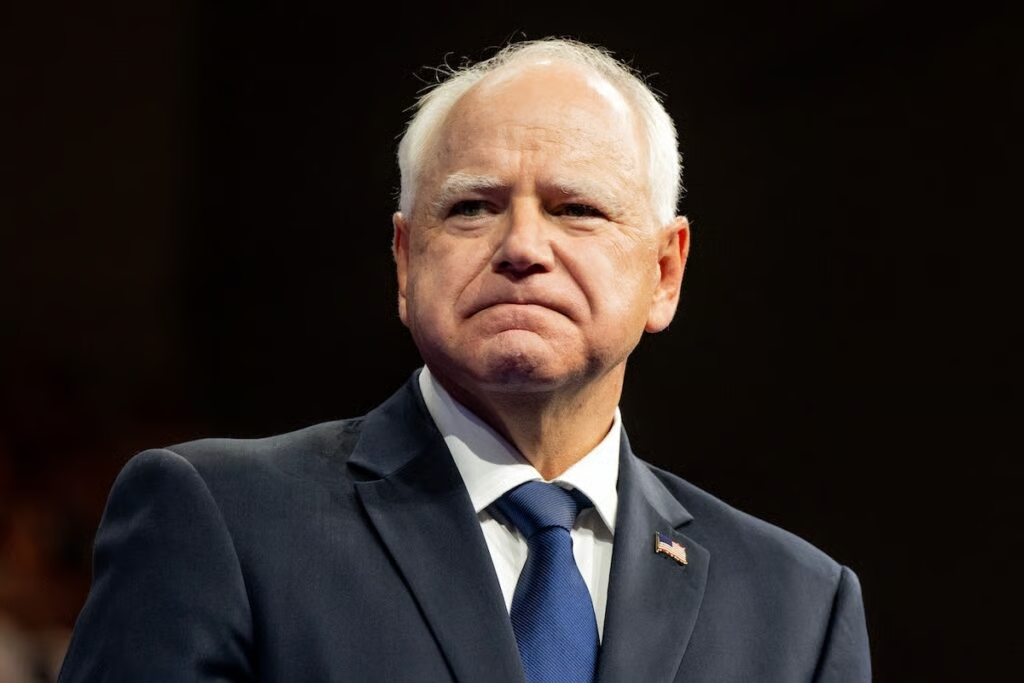
Here's a spicy one for a Monday morning: Minnesota Governor Tim Walz, a Democrat, took to social media over the weekend to basically ask, "Hey, how much money is the Trump family going to make from this?"
The "this" in question is a nearly 7% surge in oil prices, triggered by Iran's decision to close the Strait of Hormuz—a critical chokepoint for global crude shipments. In a post on X, Walz quoted a CNBC report about the price spike and added his own pointed question: "So how much will the Trump family make in the stock market tomorrow morning?"
It's not the first time Walz has raised this flag. Last month, he called for transparency around what lawmakers and officials traded stocks before President Trump announced a halt to strikes on Iranian energy infrastructure. The implication, of course, is that people with inside knowledge of geopolitical moves could profit from the market chaos that follows.
And he's not alone in his suspicions. Representative Sam Liccardo, a Democrat from California, has written a letter to Securities and Exchange Commission Chair Paul Atkins. In it, he points to a number of trades made during the war that seem to suggest investors had a heads-up on key policy decisions before the public did.
Peter Schiff Cries Foul
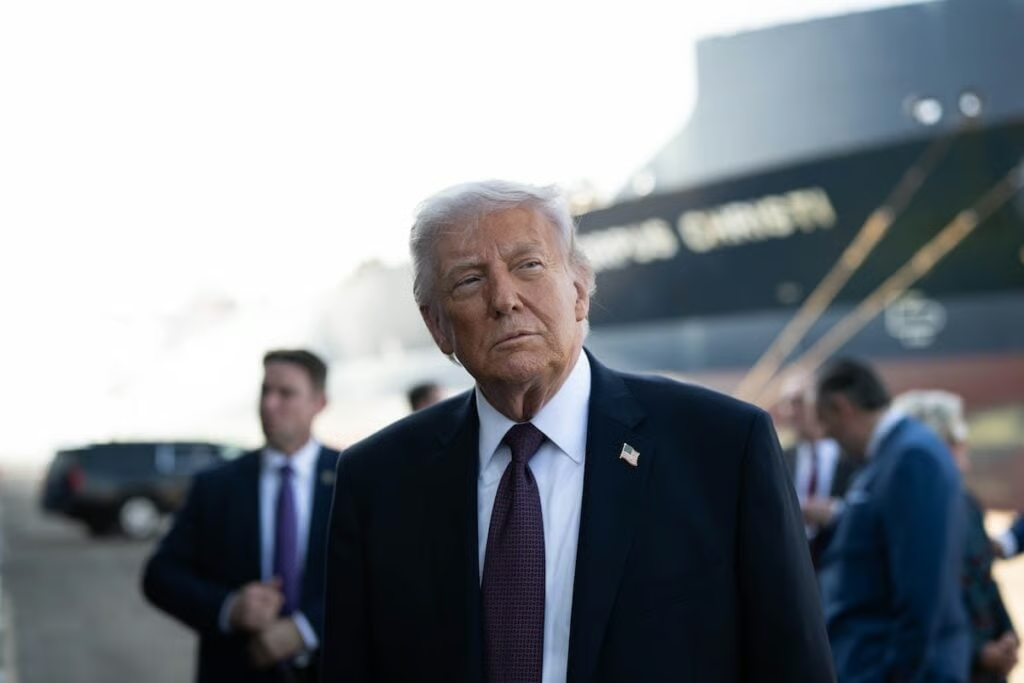
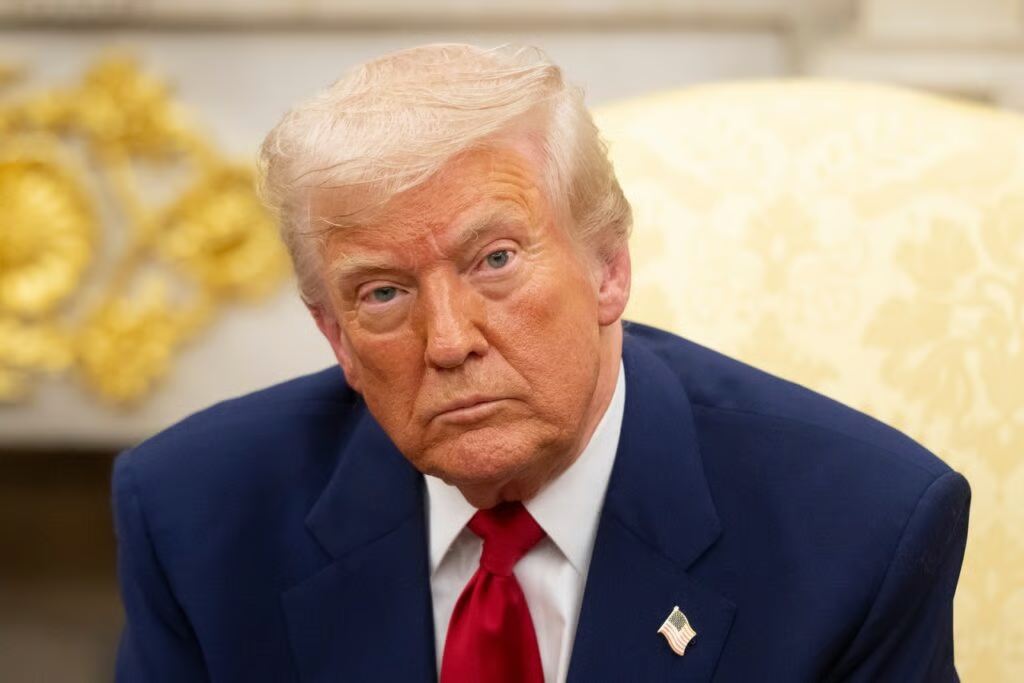
Meanwhile, investor and frequent commentator Peter Schiff is slamming President Trump over the situation, but from a slightly different angle. Schiff is alleging "market manipulation."
He points to posts Trump made on Truth Social on Friday about Iran, suggesting they were timed to move markets. This comes as a $760 million bet against crude oil prices has come to light. Schiff's argument is that public statements from the White House, combined with large, well-timed financial positions, create a whiff of impropriety.
Adding another layer of intrigue, Iranian Parliament Speaker Mohammad Bagher Ghalibaf has threatened to expose several Wall Street insiders. He claims they've been involved in manipulating U.S. policy against Tehran to serve their own financial interests. It's a classic "the real conspiracy is on Wall Street" accusation, straight from the source.
U.S. Energy Secretary Chris Wright offered a more diplomatic take, suggesting Trump's threats to strike Iranian energy infrastructure after the strait's closure were merely a tactic to gain leverage in negotiations. Whether it's a negotiating tactic or something more, the market is certainly reacting.
The Numbers Don't Lie
As tensions escalate, crude oil prices are doing exactly what you'd expect: going up. At the time of writing, West Texas Intermediate (WTI) crude was at $88.94 per barrel, up 6.07%. Brent crude, the global benchmark, was at $94.72 per barrel, a 4.85% increase.
Down at the pump, the pain is already being felt. According to data from the American Automobile Association (AAA), the national average price for a gallon of gasoline on Monday was $4.042. As usual, California and Hawaii led the pack for highest prices, at $5.837 and $5.670 per gallon, respectively.
So, to recap: a major shipping lane is closed, oil prices are jumping, politicians are trading accusations of insider trading, a famous investor is crying market manipulation, and Iran is threatening to name names on Wall Street. Just another week in the global energy markets, where geopolitics and finance are forever intertwined. The real question now is whether any of these allegations lead to actual investigations, or if they'll just remain another layer of noise in an already volatile situation.