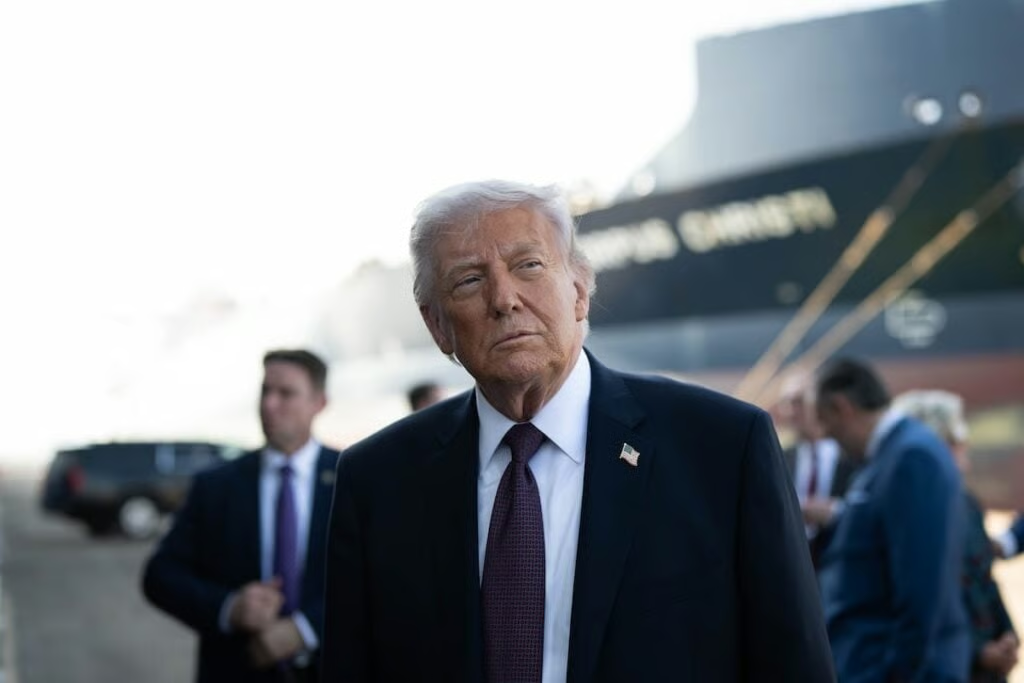
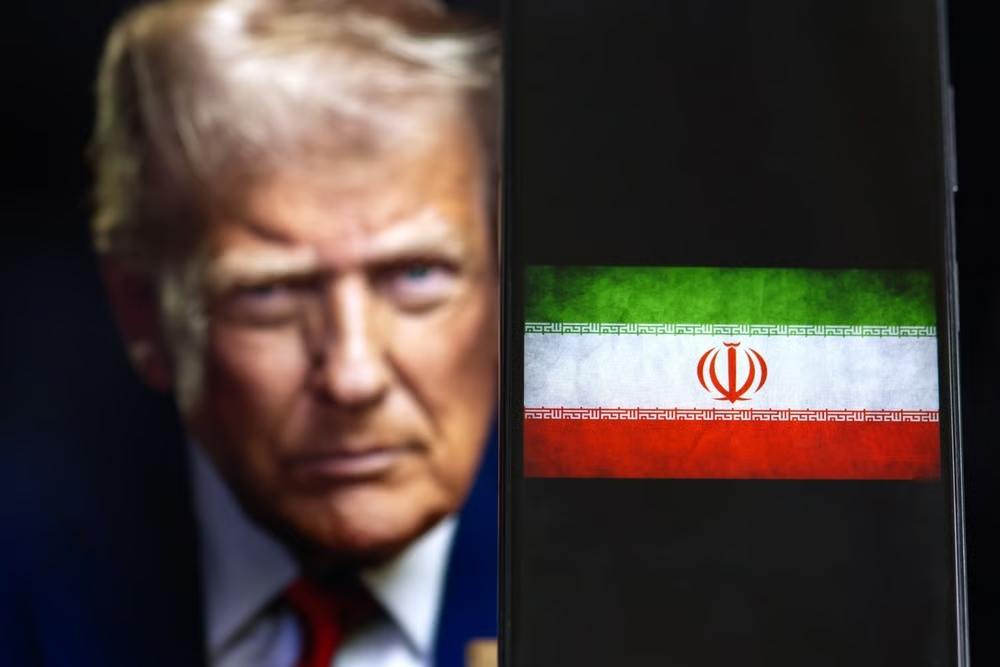
Here's a simple economic equation: gas prices go up, voters get annoyed, and someone gets the blame. Right now, according to a fresh poll, that someone is President Donald Trump.
A Quinnipiac University survey released recently found that 51% of registered voters blame Trump "a lot" for the latest jump in prices at the pump. Another 14% blame him "some." That's a solid majority pointing the finger at the White House as it tries to convince everyone this is just a temporary headache.
It's not a small headache, either. The pain is pretty broad. A separate NBC News Decision Desk Poll found nearly two-thirds of Americans said gas prices have been a problem for them and their family. About 29% called it a serious problem, and 36% said it was somewhat serious.
So, what are we talking about, numbers-wise? AAA listed the national average for regular gasoline at $4.048 a gallon on April 19. That's a big jump from $3.155 a year ago. Federal Energy Information Administration data showed a similar story, with the national weekly average at $4.123 on April 13, up from $3.247 around the same time last year.
Why Are Prices So High? Follow the Oil
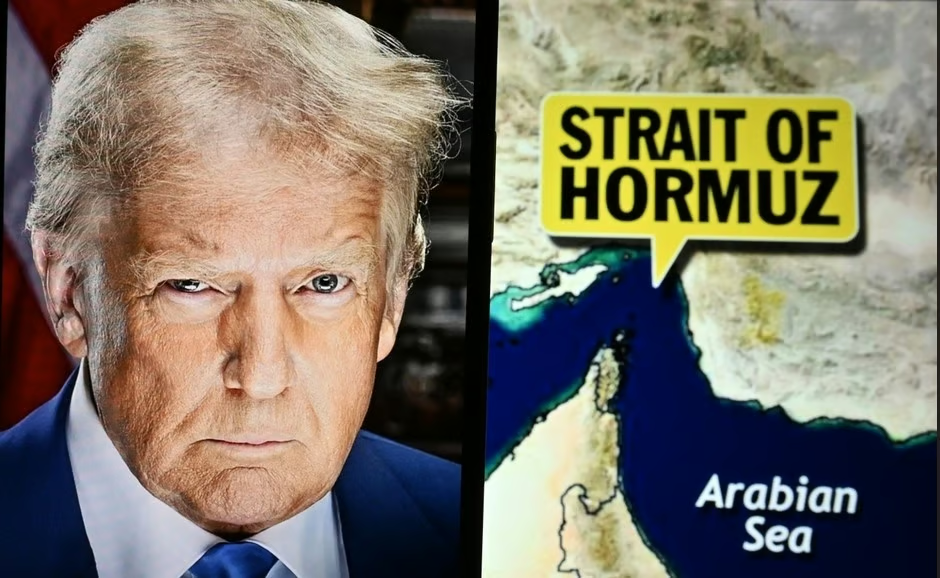
To understand gas prices, you usually have to look at oil prices. And to understand oil prices right now, you have to look at a narrow strip of water called the Strait of Hormuz.
This strait is a big deal—it typically handles about one-fifth of the world's oil supply. Lately, it's been a mess. Traffic has been erratic amid renewed Iranian threats and ship seizures. Reuters reported that the United States has maintained a blockade of Iranian ports. All of this has kept crude markets nervous and on edge, which translates directly to higher prices for the stuff that goes in your car.
The White House's message has been one of patience. Trump said this week he expects prices to fall sharply over time. But his own energy team might be managing expectations a bit more cautiously. Energy Secretary Chris Wright told CNN on Sunday that prices may remain above $3 a gallon until next year. That's a different kind of timeline than "sharply over time."
The Politics of Pump Pain
Unsurprisingly, who you blame depends a lot on who you vote for. The Quinnipiac poll breakdown shows just how partisan this issue has become.
Among Democrats, a whopping 91% blamed Trump "a lot." Among independents, 53% said the same. Republicans, however, were far more forgiving. In that group, 53% said Trump was not to blame at all.
Meanwhile, the diplomatic efforts to calm the situation in the Middle East and get the Strait of Hormuz fully reopened seem... unsettled. Talks that were expected to resume in Islamabad haven't gotten new dates, according to Reuters. Iran later said it hadn't decided to send a delegation. Even so, leaders like U.N. Secretary-General António Guterres and Britain's Foreign Secretary Yvette Cooper have been urging a return to diplomacy.
So, for now, the math is pretty clear: high prices plus an election season equals a political problem. The question is whether the "temporary" spike the White House is talking about ends before voters make up their minds for good.