Picture this: a giant government vault containing up to $127 billion is about to be unlocked. The key? A new online portal that goes live Monday morning. That's the scene for thousands of U.S. importers who can finally start claiming refunds on tariffs the Supreme Court said shouldn't have been collected in the first place.
Starting at 8 a.m. on Monday, April 20, 2026, businesses and their customs brokers can log into U.S. Customs and Border Protection's new system to ask for their money back. It's the culmination of a long legal fight, but getting the cash won't be as simple as clicking a button.
The Portal and The Process
The money will flow through something called the Consolidated Administration and Processing of Entries (CAPE) portal. It's part of the government's existing Automated Commercial Environment system. To get in line, importers or their brokers need an ACE account, have to submit their bank details, and file a specific "CAPE declaration" to start the claim for duties they've already paid.
CBP has put out guides to help people figure it out, which is probably a good idea. The agency says if you file everything correctly, you might see your refund in 60 to 90 days. The big "if" there is "correctly." If your submission has mistakes or raises red flags, the timeline stretches out, and your refund gets stuck in bureaucratic limbo.
Not a Free-For-All (At Least, Not Yet)
Here's where it gets interesting. A lot of money was paid. According to a CBP court filing, about 330,000 importers paid an estimated $166 billion in these duties as of early March. But by April 9, only around 56,500 of those eligible importers—the ones who could claim that $127 billion pot—had actually enrolled for electronic payment, which is mandatory to get paid.
And even if you're enrolled, you might not get paid right away. This is "Phase 1" of the refund rollout. It's restricted to specific types of entries and those within a tight 80-day window of something called "liquidation." In plain English: the door is open Monday, but only a certain group gets to walk through it first.
The Billion-Dollar Question: Do Consumers Get a Cut?
This is the part that might make you put down your coffee. The entire refund process is built on a simple, cold fact: importers have no obligation to pass this money on to consumers. The government is refunding the company that paid the tariff at the border. What that company does with the refund is its own business.
This isn't just a theoretical issue. It's the subject of a proposed nationwide class-action lawsuit filed in Illinois. A shopper named Matthew Stockov is suing Costco (COST), arguing that customers who paid higher prices because of the tariffs should get refunds too. The lawsuit aims to force Costco to pass on any tariff refunds it receives. It's a direct legal challenge to the idea that this corporate windfall shouldn't be shared.
On the corporate side, companies are gearing up to handle the process. FedEx (FDX) told Fortune it's focused on helping its customers navigate the changes, coordinating with them as refunds begin, and plans to start submitting claims on Monday.
The Long Road to Refunds
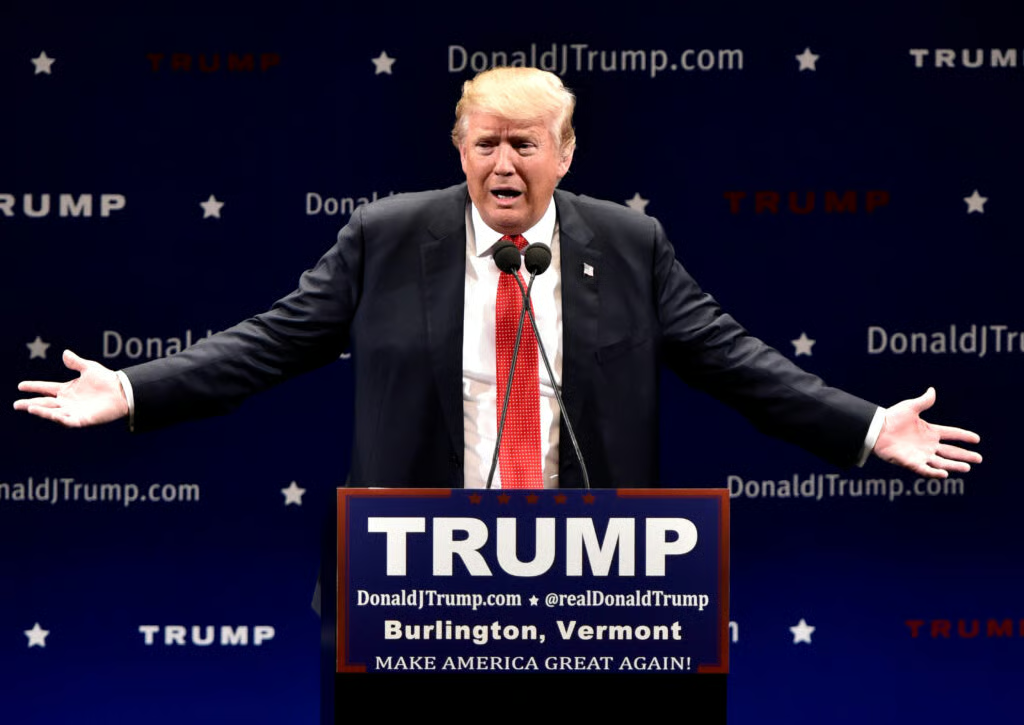
Monday's portal launch is the latest step in a saga that started with tariffs imposed by the Trump administration using the International Emergency Economic Powers Act (IEEPA). The Supreme Court eventually found those tariffs unconstitutional. While the Court didn't spell out how to handle refunds, the U.S. Court of International Trade last month ordered the administration to start the reimbursement process, leading to this week's rollout.
It's a major victory for the importers and businesses that bore the cost. But the victory comes with a catch: complexity and potential delay. The portal is live, the rules are set, but businesses and, by extension, consumers may be waiting a while to see any real money.
The story of this $127 billion isn't over. It's just entering a new, administrative chapter where spreadsheets and portal logins determine who gets paid, and lawsuits may decide who ultimately benefits.