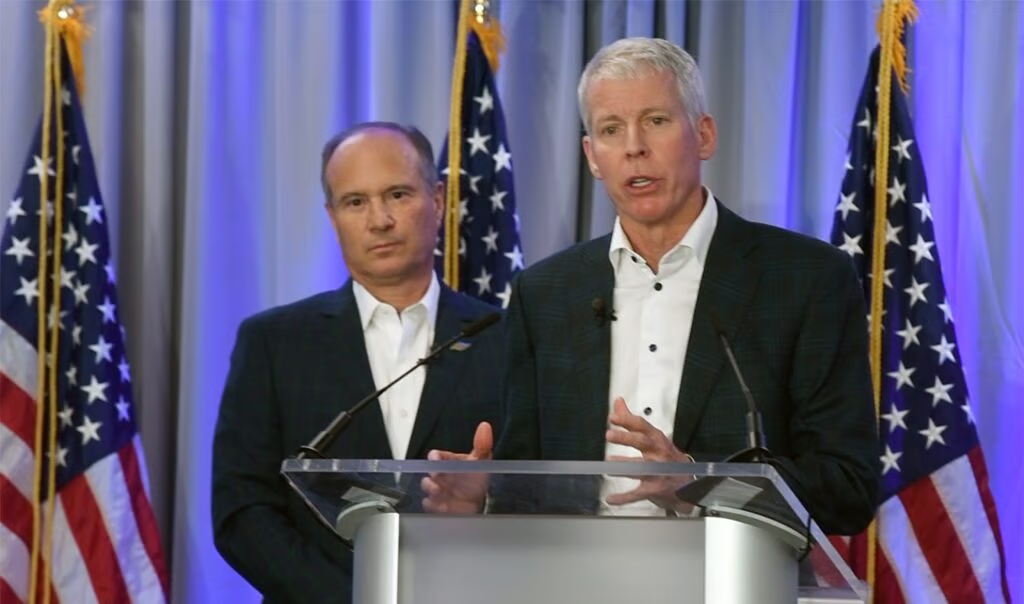
Anthony Scaramucci has a theory about President Donald Trump's latest public spat, and it's not just about theology. He says Trump's battles with Pope Leo XIV are really a clever way to box in Vice President J.D. Vance, turning Vance's Catholic identity into a political vulnerability. According to Scaramucci, this isn't a random culture-war jab—it's a deliberate strike. Vance, who converted to Catholicism and wrote a book about it, is "halfway through the woodchipper right now," as Scaramucci put it in a post on X on Saturday.
Here's how Scaramucci sees it playing out: Trump's move doesn't just needle Catholic leadership; it forces Vance into a posture of submission that undermines the faith narrative he's been building. Think of it like a public display of control—Scaramucci pointed to Vance being pushed onto Bret Baier's show as an example. The dynamic is less about religion and more about hierarchy inside the GOP. Scaramucci says Trump wants to be the party's final Republican president and has zero interest in grooming successors like Vance or Senator Marco Rubio (R-Fla.). It's all about internal dominance.
This theme of control ties into Scaramucci's broader view of how Trump operates. He describes an "off-ramp" concept where Trump can shift the storyline abruptly, declare victory on his own timing, and markets reprice around the new script. In Scaramucci's market-focused commentary, he argues that investors watch politics for cues while politicians watch markets for validation. The market becomes the scoreboard for whether Trump is choosing escalation or de-escalation.
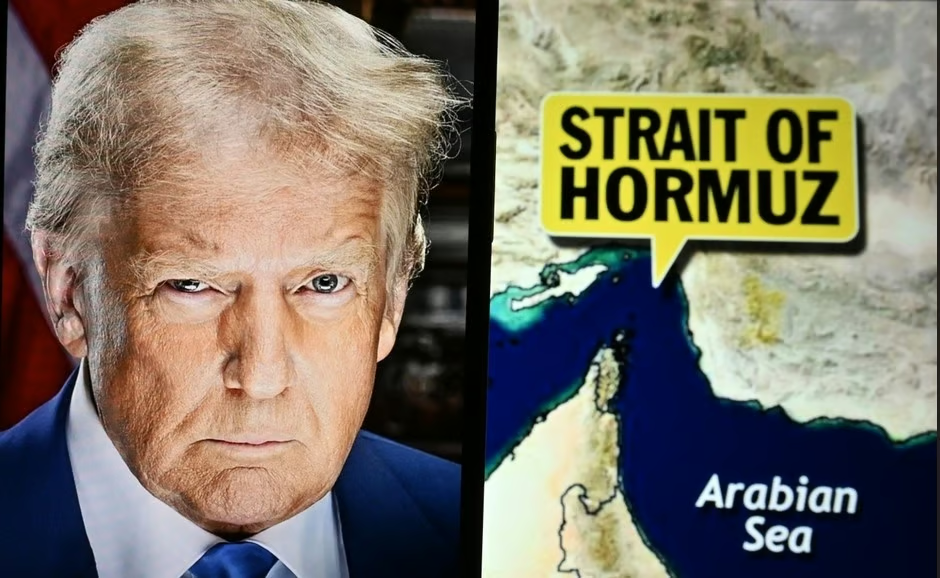
So, what does this mean for your portfolio? Scaramucci has been connecting these political maneuvers to real market moves, especially in energy. He outlined a sequence that could reduce risk premiums if fighting stops: reopening the Strait of Hormuz, setting up naval escort arrangements with France and the U.S., and creating an insurance backstop to lower crude prices. But he's clear that oil flows don't truly normalize until hostilities end. He also cited Mike Novogratz's timeline, noting that Novogratz expects the conflict to be wrapped up within a week. If that happens, Trump could brand it a win and trigger a rally that looks "like that was the plan all along."
Back to Vance: Scaramucci says the "real move" for the senator would be resignation, but he dismisses that as unlikely because Vance is too ambitious and calculating to walk away. This commentary isn't happening in a vacuum. Scaramucci has previously discussed how the Trump administration allegedly pivoted away from releasing Epstein files, using military action as a distraction. He emphasizes that rising fuel costs—nearing $8 a gallon—are a critical issue that could sway public opinion, with families facing $120 fill-ups during celebrations.
Scaramucci's insights reflect a bigger worry: geopolitical tensions, particularly around the Strait of Hormuz, are a key channel for translating political actions into market behavior. He's warned that a U.S. strike on Iran could jolt oil prices sharply higher. In earlier comments, he argued that military action might pressure the U.S. to loosen constraints on Russian oil, helping Moscow while complicating U.S. operations in the region. For Scaramucci, the same political instinct he sees in Trump's treatment of Vance shows up in global crises too: set the terms, force compliance, then pivot to a victory lap when the market allows it.
In short, Scaramucci is painting a picture where Trump's political games aren't just inside baseball—they're directly tied to how markets move, especially in energy. Whether it's targeting Vance or navigating international conflicts, the goal is to control the narrative and let the market validate it. Investors, take note: the drama in D.C. might be more than just headlines.