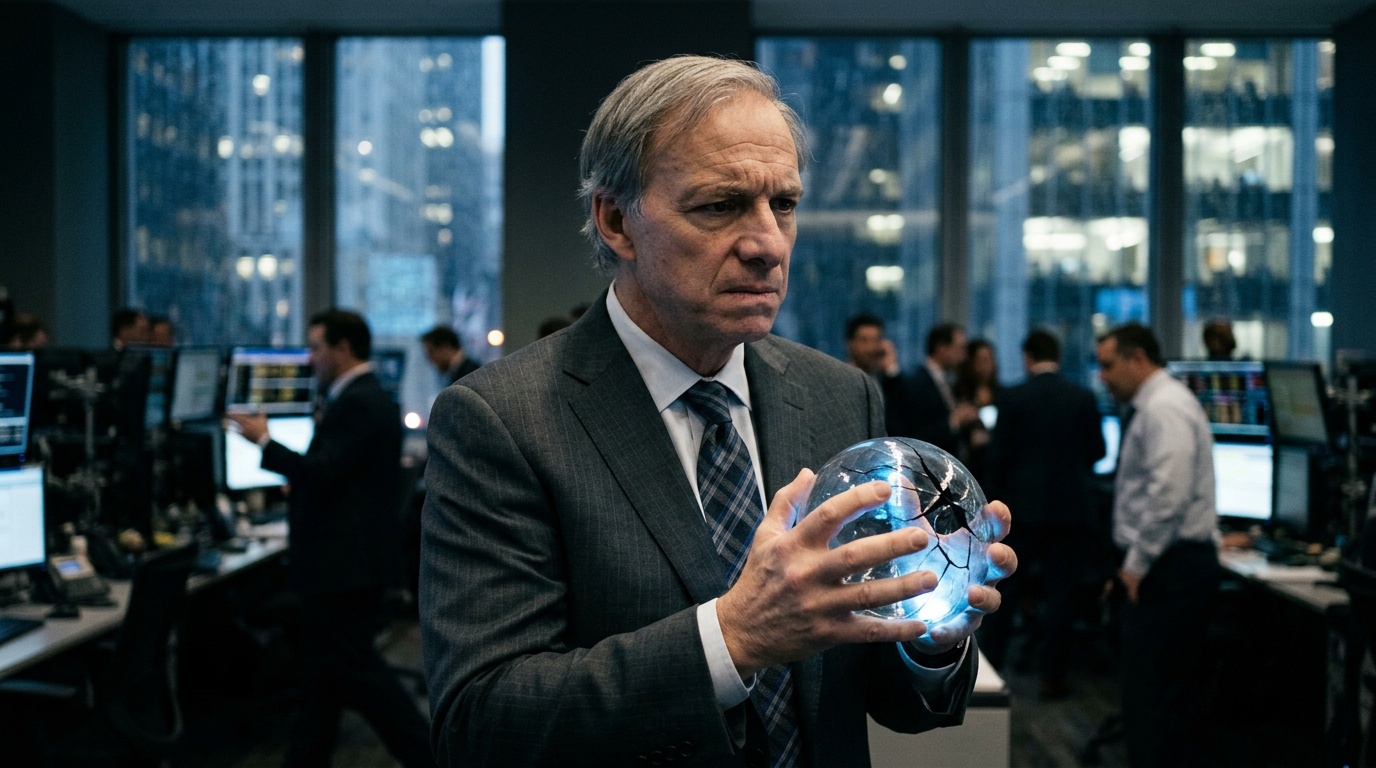
ETF investors may be carrying far more exposure to the artificial intelligence trade than they realize. Some of the biggest funds are heavily concentrated in Nvidia Corp (NVDA), Apple, Inc (AAPL) and Microsoft Corp (MSFT).
Bridgewater founder Ray Dalio warned Wednesday that the AI bubble could be approaching its breaking point. He added that forcing wealthy investors to sell assets to raise cash could contribute to a market break, underscoring the vulnerability of highly valued assets.
The warning comes as market concentration reaches historic levels. Nvidia, Apple and Microsoft now account for almost 21% of the S&P 500.
S&P 500 ETFs Have Major Mega-Cap Exposure
That concentration flows directly into the largest U.S. equity ETFs.
The SPDR S&P 500 ETF Trust (SPY) has about 8.45% in Nvidia, 7.30% in Apple, and 5.76% in Microsoft. Together, the three stocks account for roughly 21.5% of the fund.
The Vanguard S&P 500 ETF (VOO) has a similarly concentrated portfolio, with Nvidia at 8.08%, Apple at 7.03% and Microsoft at 5.70%.
That means investors buying broad-market ETFs are making a substantial bet on a handful of mega-cap companies, whether they intend to or not.
QQQ And VGT Amplify The AI Trade
The concentration becomes even more pronounced in technology-focused ETFs.
The Invesco QQQ Trust (QQQ), which tracks the Nasdaq-100, has roughly 8.5% in Nvidia, 7.2% in Apple and 5.8% in Microsoft. Together, the three represent more than 21% of the fund.
The Vanguard Information Technology ETF (VGT) takes the concentration much further. Nvidia, Apple and Microsoft together account for approximately 45% of the portfolio, giving investors substantially greater exposure to the mega-cap technology trade.
RSP Offers a Different Approach
For investors concerned about a potential AI-led unwind, the Invesco S&P 500 Equal Weight ETF (RSP) provides a stark contrast. Rather than letting the largest companies dominate the portfolio, RSP assigns roughly equal weights to S&P 500 constituents.
That could make equal-weight exposure particularly interesting if leadership broadens beyond mega-cap technology.
The bottom line is that Dalio's warning isn't just a call on individual AI stocks. For ETF investors, the bigger question is how much of their supposedly diversified portfolio is ultimately riding on the same handful of mega-cap winners.