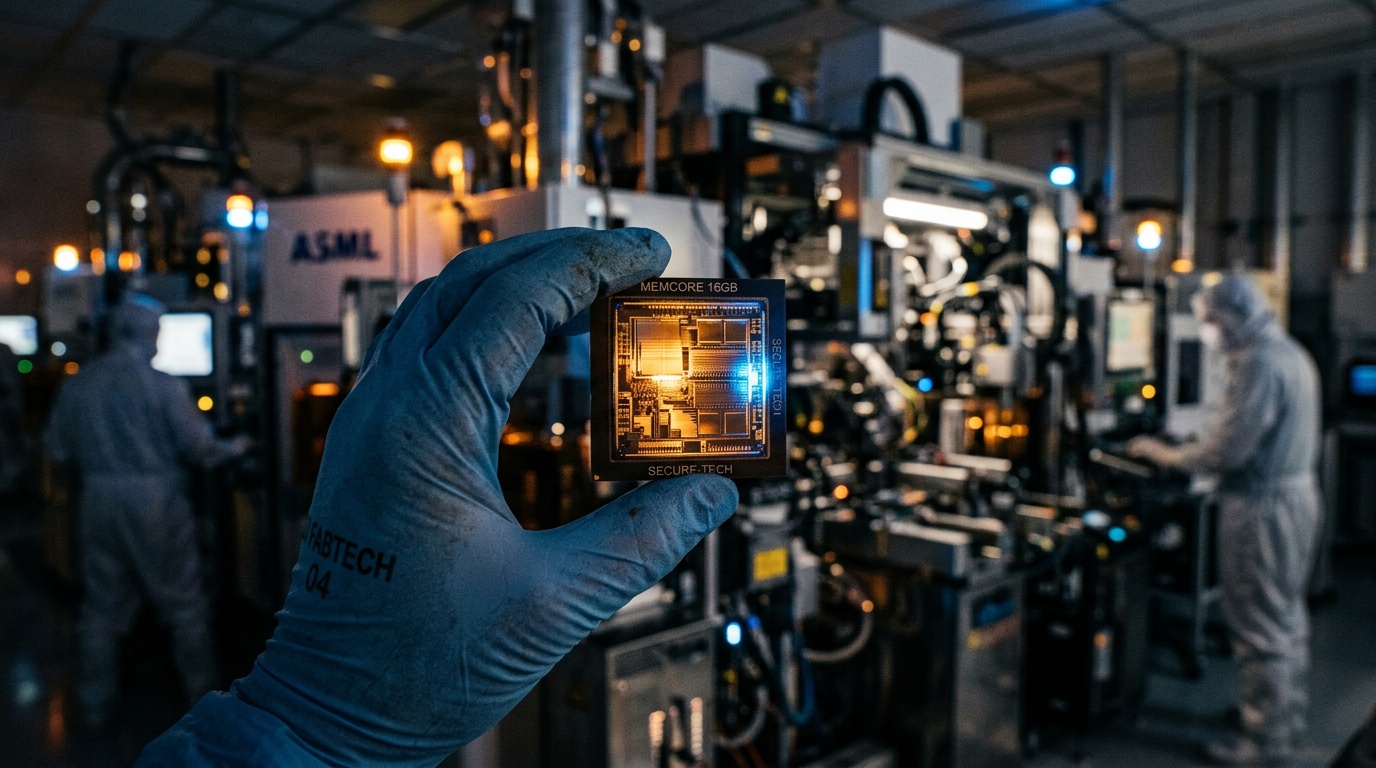
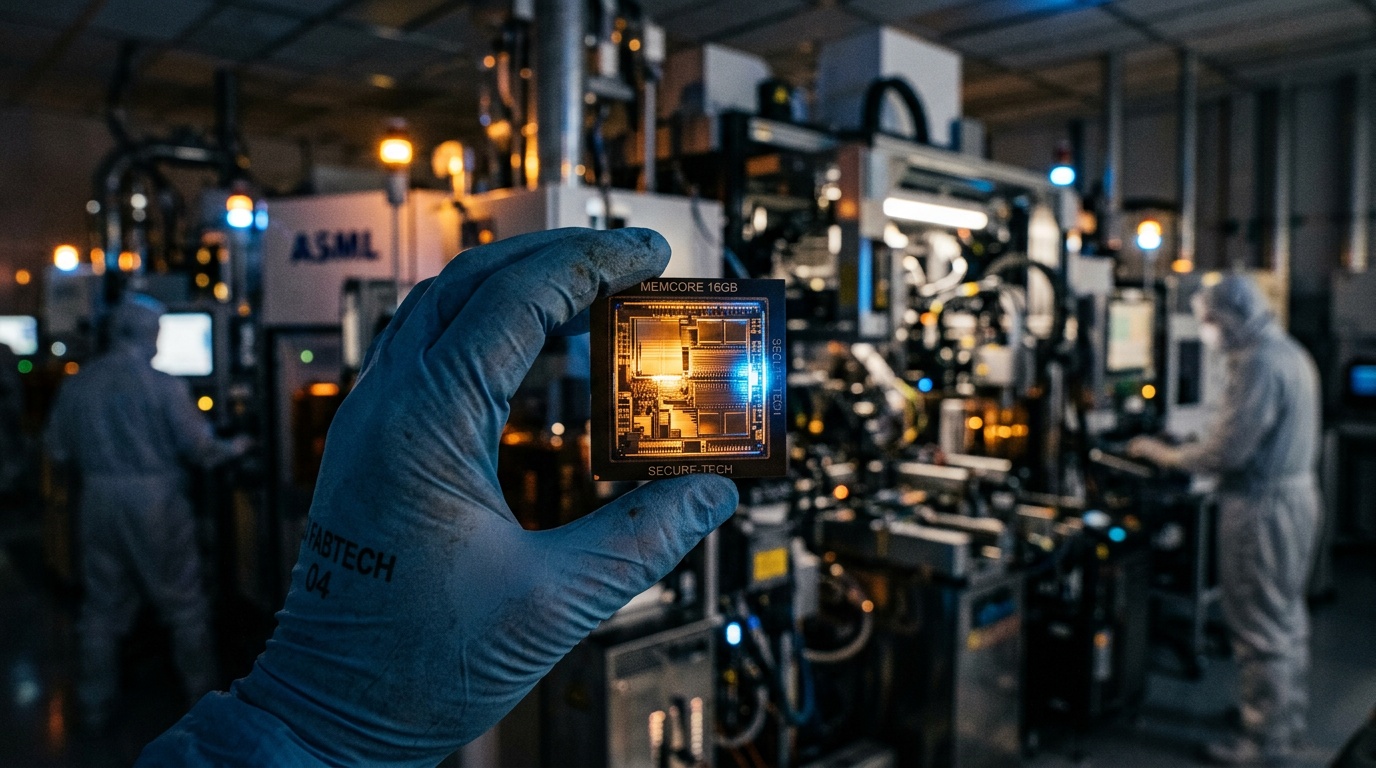
Memory chips now make up more than half of all semiconductor sales worldwide. Bank of America expects them to remain there and exceed $2 trillion by the end of the decade.
In a Wednesday note, Bank of America analyst Vivek Arya highlighted the chip industry's current state and how fast each part is expected to grow from here.
The numbers are particularly relevant for companies like Micron Technology Inc. (MU), SK Hynix Inc. (SKHY) and Samsung Electronics Co. Ltd. (SSNLF).
Where Memory Stands Today
Memory chip sales jumped 384% from the same period last year in the second quarter of 2026, according to Bank of America using industry data.
As a result, memory's share of global chip sales rose to 57%, from 27% a year earlier.
Units rose 50%, while the average selling price rose 222%. Most of the growth therefore came from higher prices.
On Thursday, Samsung said third-quarter operating profit likely reached a record 107.4 trillion won, or about $80.2 billion.
Revenue is expected to reach a record 195 trillion won, or about $146 billion, up about 127% from a year earlier.
Micron's latest quarter tells the same story. Fiscal fourth-quarter revenue reached $54.23 billion, up from $11.32 billion a year earlier.
Memory Has Grown Fourfold In One Year
Bank of America expects total chip sales of $1.68 trillion in 2026, up 113% from $787 billion in 2025.
The bank forecasts memory sales of $937 billion this year, up 327% from $220 billion. That means memory alone will sell more in 2026 than the entire chip industry sold in 2025.
About 81% of this year's new industry sales come from memory.
DRAM, the working memory used in servers, PCs and phones, is forecast at $573 billion, up 328%. NAND, the flash storage that holds data permanently, is forecast at $357 billion, up 341%.
The rest of the industry, which BofA calls "core semis," is forecast at $739 billion, up 30%.
How The Memory Industry Is Expected to Grow by 2030
In 2027, memory sales are expected to grow another 50%, to $1.4 trillion, led by DRAM at 60%.
In 2028, memory growth is anticipated to slow to 8.7%, the weakest year in the forecast. NAND grows just 3.1%. It is also the only year in which the rest of the industry grows faster than memory, at 18%.
Growth then picks up to 11.7% in 2029 and 19.4% in 2030, taking memory sales to about $2.03 trillion, roughly 2.6 times what the whole chip industry sold in 2025.
What It Means For Micron And Equipment Makers
Arya said the latest data "supports MU and the capacity investment" behind its forecast for memory chipmaking equipment.
The bank expects that spending to reach $61 billion in 2026, up 46%, a positive for Lam Research Corp. (LRCX) and Applied Materials Inc. (AMAT).
Third-quarter NAND sales are running well ahead of normal seasonality, while DRAM is tracking in line.
BofA does flag price momentum. DRAM price growth, on a three-month average basis, slowed to 6% month over month in August, from 31% in February. The bank still expects prices to stay high, citing strong AI demand and tight capacity.
Micron shares traded at $1,064.29 on Thursday, down 2.2%. Bank of America has a $1,550 price target on the stock, implying a nearly 50% upside from current levels.