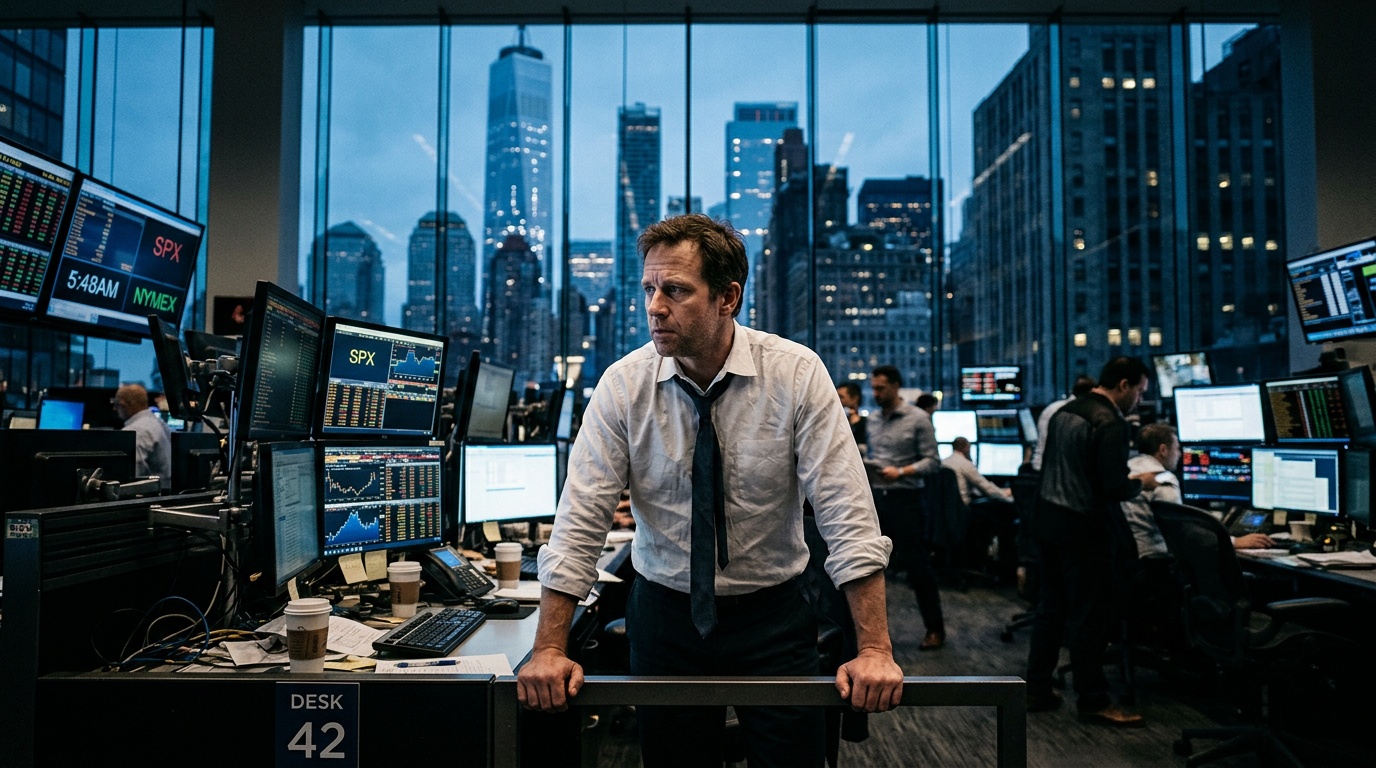
“Throw your soldiers into positions whence there is no escape, and they will prefer death to flight. If they will face death, there is nothing they may not achieve.” Sun Tzu, The Art of War
Textbook macroeconomics says surging benchmark yields should crush high-multiple growth stocks and chill aggressive corporate investment.
Yet with the 10-year Treasury yield above 5.2%—its highest since 2002, propelled by sticky inflation, $2 trillion annual deficits and a Federal Reserve now expected to hike four more times by June 2027—the artificial intelligence buildout is accelerating.
Hyperscaler capital expenditures are on track for $1.3 trillion next year, up from $150 billion in 2023. With market breadth rapidly falling, there is no escape – the AI narrative has to deliver, while facing the biggest stress test of this business cycle.
The Sovereign Crowding-Out and Rising Hurdle Rates
Hyperscalers tapping investment-grade markets now compete head-on with a Treasury financing a national debt above $40 trillion.
“We’re talking about a lot of bonds coming off the assembly line, not just from sovereigns like the U.S. Treasury, but also the AI CapEx buildout,” said Tony Pasquariello, Goldman Sachs’ global head of hedge fund coverage. He called the bond market “the number one clear and present danger for the stock market.”
A 10-year north of 5% mechanically resets discount rates, lifting hurdle rates on long-duration data center and chip projects.
According to The Wall Street Journal, Bridgewater Associates founder Ray Dalio says Washington already spends more than $1 trillion a year on interest—outstripping the defense budget—and warns debt service is beginning to “squeeze out” other spending.
The pain is unevenly distributed. Prime hyperscalers — Microsoft Corporation (NASDAQ:MSFT), Meta Platforms, Inc. (NASDAQ:META), Alphabet Inc. (NASDAQ:GOOGL) and Amazon.com, Inc. (NASDAQ:AMZN) — can largely self-fund from cash flow. The Tier-2 ecosystem of data center developers, utilities and specialized cloud operators dependent on leveraged loans and refinancing cannot.
“More than half of U.S. growth is coming from interest-rate-insensitive borrowers,” said Bryan Whalen, TCW’s Chief Investment Officer of Fixed Income, arguing that one, two or three more hikes “won’t matter for that swath of the economy.”
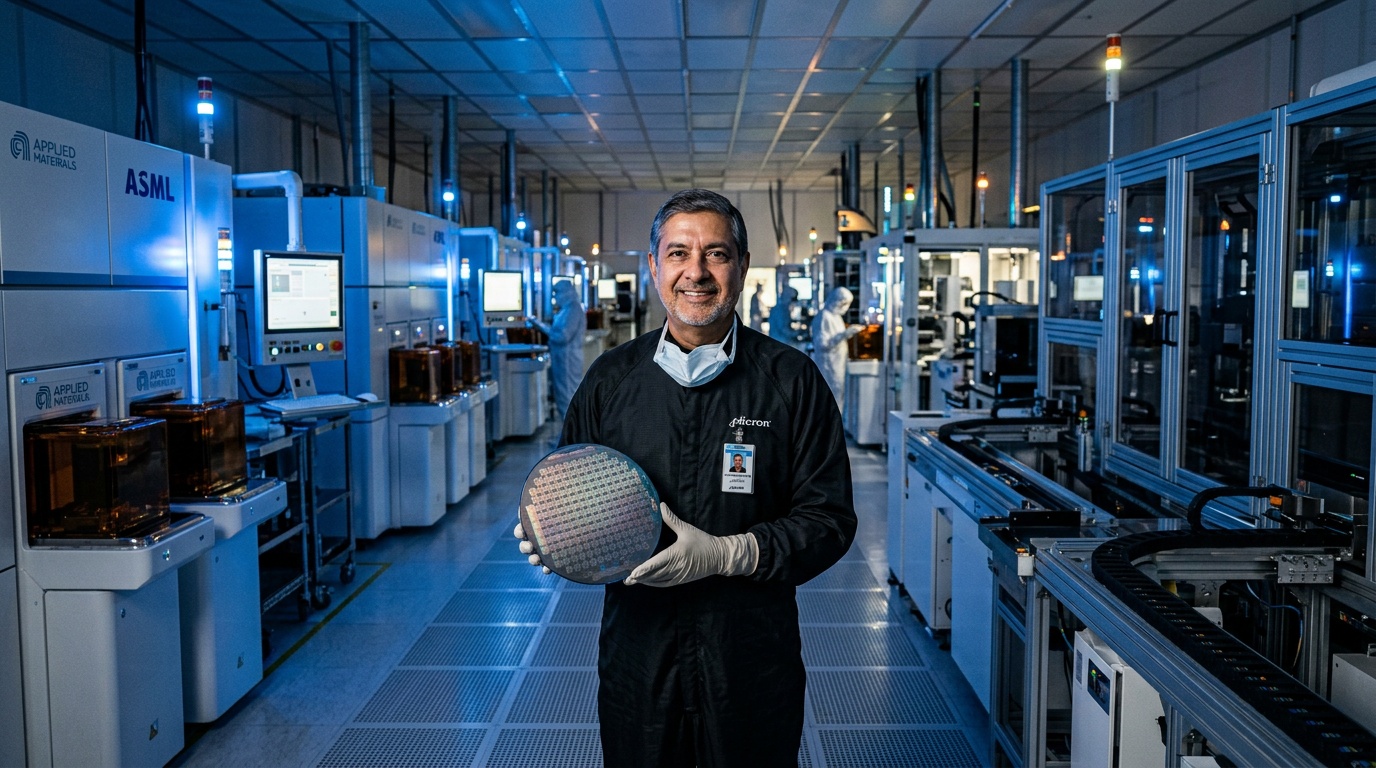
Micron Technology, Inc. (NASDAQ:MU), which reports earnings after the close today, illustrates the fortress dynamic. Its fiscal 2026 capex guidance has climbed toward $27 billion, with fiscal 2027 projected above $45 billion.
Yet with quarterly revenue quadrupling year over year to $41.46 billion on insatiable demand for high-bandwidth memory, capex intensity has shrunk from 42-49% of sales to roughly 17-19%.
The Second-Derivative Trap and the Death Ground
Going forward, Goldman projects S&P 500 earnings growth normalizing from a “mind-bending” 25%–30% to 10%–12%.
“Trying to calibrate how the market’s going to treat that second derivative slowdown is one of the big open questions,” Pasquariello said—particularly with capital commitments locked at record highs.
The capex wave is itself inflationary. Data center, grid, and semiconductor spending has third-quarter GDP tracking 3.3%, keeping the Fed hawkish. Pasquariello calls trillions in AI spend stacked atop trillions in deficits “a very pro-cyclical offset… Not uncomplicated.”
Still, concentration compounds the risk. At 18–19 times forward earnings— the 90th percentile historically—index-weighted mega-caps offer a thin margin for error if depreciation erodes operating margins.
“I’m of the view that we’re looking at a bubble here,” said Rob Arnott, founder of Syzygy Asset Management, blaming index inflows that pumped air into valuations “in a way that was impossible in 1999 and 2000.”
However, for Pimco’s Chief Investment Officer Dan Ivascyn, productivity is the counter thesis. AI investment could ultimately make the economy more efficient, keeping a lid on inflation and compressing break-evens.
“We expect some slowing,” he said. “Just not a recession.”
That end-game disinflationary payoff is the AI gambit. By committing a trillion-dollar bet at the face of a hurdle rate in excess of 5%, Big Tech has marched onto the death ground – a terrain with no viable exit.
Past the point of retreat, the mega-caps must now either unleash historic productivity to justify the cost of capital or surrender the valuations that brought them here.