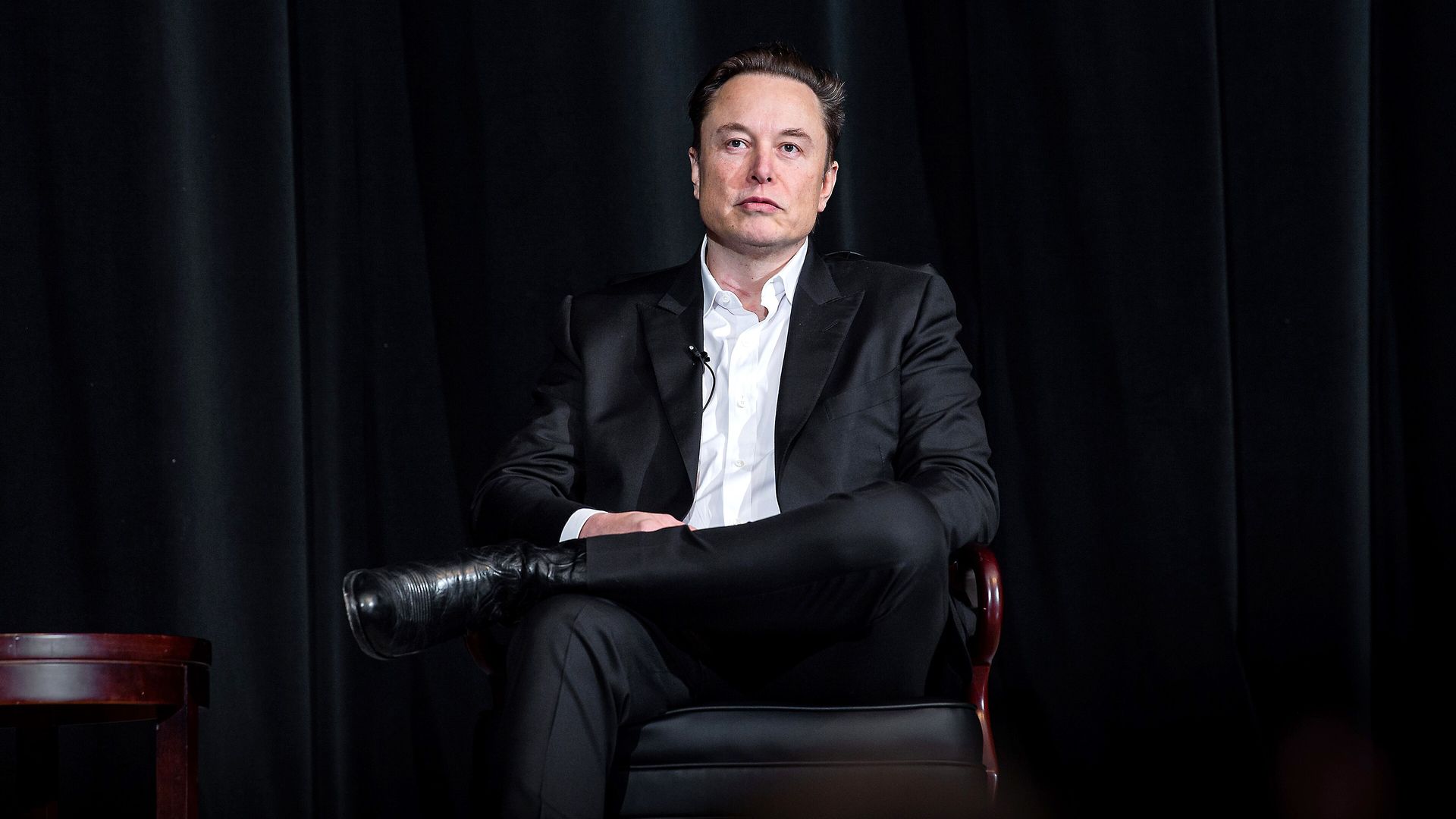
Bob Elliott, the former Bridgewater Associates executive who now runs Unlimited, has a warning for anyone riding the AI stock wave: the market is pricing in something that has never happened before. And not in a good way.
In a recent interview, Elliott described the current rally as an "expectations mania." It's not that the economy is weak or earnings are disappointing. Quite the opposite. The problem is that investors are betting on an extraordinary outcome several years down the road, especially in semiconductors, AI infrastructure, and mega-cap tech.
Here's the math that worries him. Consensus analyst estimates call for earnings growth of about 25% a year over the next five years. Sounds great, right? But as Elliott points out, "What that means over a five-year time frame is we would have the best five-year earnings growth by a good chunk of any period over the course of the entire post-World War II era."
To get there, companies would need a perfect storm of sales growth and margin expansion. Even if revenues grow at a solid 10% annually, profit margins would still need to expand by roughly 1 to 1.5 percentage points each year. That might not sound like much, but margins don't just appear out of thin air.
Elliott explains that margins are the flip side of labor income, financing costs, or input prices. If companies boost margins by squeezing labor's share, households have less to spend. To keep consumption up, consumers would have to dip into savings. And that's where the story gets even more precarious.
The bull case also hinges on a productivity surge that hasn't shown up in the data yet. "Imagine 2% inflation and 10% nominal growth, that's 8% real growth," Elliott said. "On a zero-growing labor force, that's 8% productivity growth. To be clear, that has never happened in any economy in history."
Then there's the $5 trillion question. Over the next five years, AI-related capital spending could total $5 trillion, and investors are "back solving" the revenues and productivity gains needed to justify it. Current annualized AI revenue is only about $130 billion to $150 billion. To support that level of investment, you'd need a multitrillion-dollar annual revenue stream. But here's the catch: the industry's interdependence makes that calculation tricky.
Take Microsoft (MSFT). Its cloud business benefits from spending by OpenAI, which is still loss-making. Meanwhile, NVIDIA (NVDA), Microsoft, Alphabet (GOOG), and model developers are all tangled up in a web of investments, contracts, and computing demand. It's a circular loop where money flows from one tech giant to another, but the ultimate source of revenue has to come from somewhere real.
Elliott draws a chilling parallel to 2008. "In the financial crisis, one of the things that really brought down the whole banking system was that everyone was connected with everyone else," he said. "The problem is we've basically recreated a similar type circumstance."
So where does the real money come from? Elliott argues it has to come from the real economy. He uses a familiar example: "Ultimately, there has to be Kellogg's," he said. "You can't just have OpenAI talking to Microsoft, talking to NVIDIA, talking to Google. Those are all service providers to the real economy."
He also pushes back on the idea that hyperscaler capital spending is the main driver of U.S. growth. Annual spending of $600 billion to $700 billion is about 2% of GDP, and a lot of those high-value components are imported from Taiwan and South Korea. Household spending is still the bigger engine, and that's where things get shaky.
Income is growing about 3.5%, but consumption is rising 6% to 7%. That means people are saving less and less. "Right now the savings rate's 3%," Elliott said. "They'd have to move their savings rate to something like -15% over the course of the next five years." That's not sustainable.
With semiconductor positions crowded across retail investors, hedge funds, and leveraged vehicles, Elliott is urging caution. He's not saying the AI trade can't make money, but he thinks the risk-reward is off. Instead, he favors inflation-protected Treasury securities with real yields around 3%, gold as a hedge against currency debasement (via physical ETF exposure), and value opportunities in Europe, Japan, and biotech.
"Concentrated hype" might still deliver gains, he admits, but diversification could offer better long-term risk-adjusted returns. In other words, don't put all your eggs in the AI basket, no matter how shiny it looks.