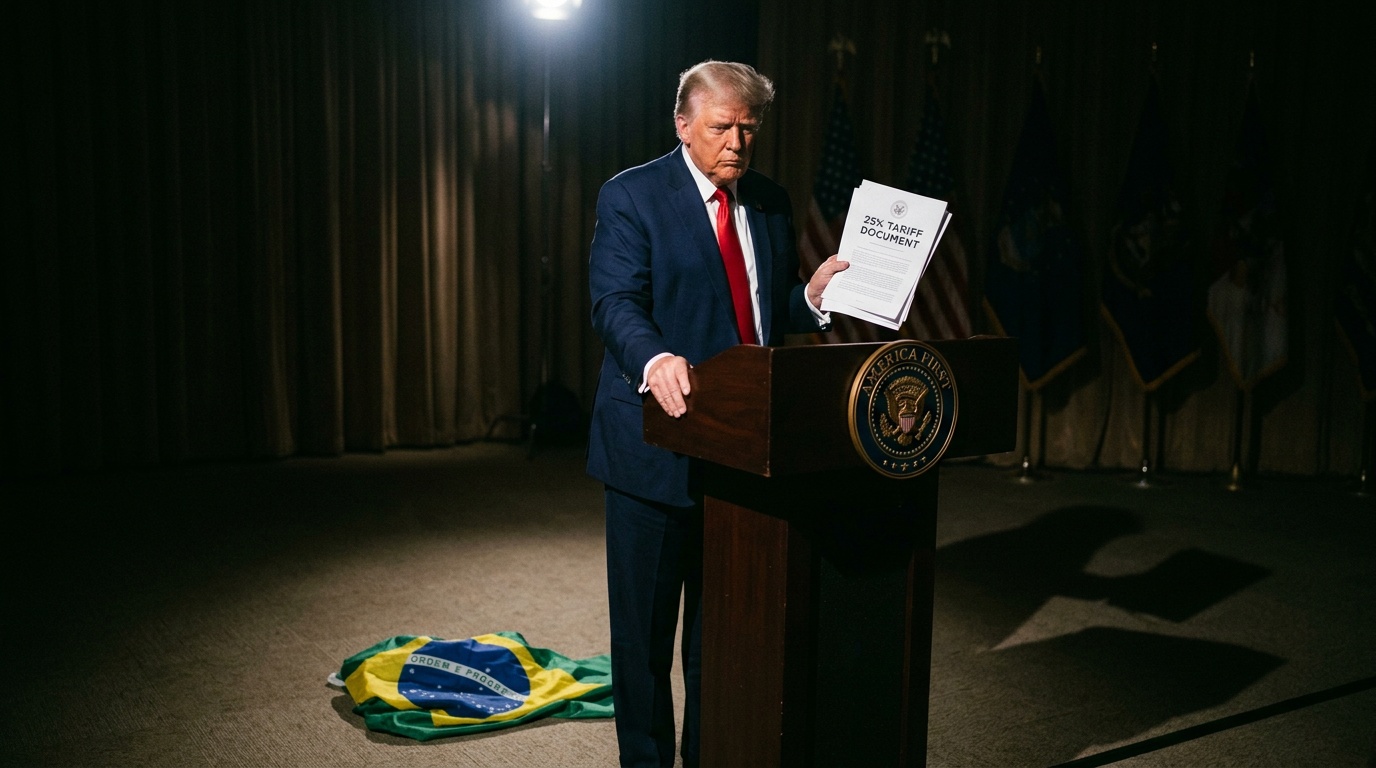
The Trump administration announced late Wednesday that it will slap a 25% tariff on most Brazilian imports, effective July 22. The move, which invokes Section 301 of the Trade Act of 1974, targets a range of Brazilian practices that the U.S. says are unfair.
Among the specific grievances: Brazil has directed American tech giants like Elon Musk's X, Meta Platforms Inc. (META), and Alphabet Inc. (GOOGL) to remove certain political content and suspend accounts of U.S. residents. The U.S. also takes issue with Brazil's preferential tariffs for Mexico and India, weak intellectual property enforcement, and barriers in the ethanol market.
The 25% tariff will apply to most Brazilian imports, though some products are exempt—beef, orange juice, aircraft and aircraft parts, and energy products. Meanwhile, an ongoing U.S. investigation into Brazil's forced-labor enforcement could add another 12.5% tariff, bringing the total to 37.5%. A decision on that is expected next week.
United States Trade Representative Jamieson Greer said year-long negotiations with Brazil failed to resolve the issues, but the U.S. remains open to further talks to achieve meaningful reforms.
Secretary of State Marco Rubio took to X to explain the rationale. "Let there be no confusion about why," he wrote, adding that Brazilian President Luiz Inacio Lula da Silva's government had "not negotiated in good faith" and that the tariffs resulted from Lula "putting his own ego ahead of making a deal." Rubio added: "His economic policies are bad for Americans and bad for Brazilians."
Brazil Condemns the Decision
Brazil didn't take the news quietly. President Lula called the decision a "lamentable milestone" in the history of U.S.-Brazil relations. In a statement, Brazil rejected the U.S. measures as unjustified, pointing out that the U.S. has recorded a $424.5 billion goods-and-services trade surplus with Brazil over the past 15 years. It noted that 76% of U.S. imports entered Brazil duty-free in 2025, with an average effective tariff of just 3.1%. Brazil criticized the investigations as being conducted outside multilateral trade rules but reiterated its willingness to negotiate in defense of its national interests.
Trump Expands Tariff Push
This move is part of a broader Trump administration strategy to address unfair trade practices globally. The new tariffs follow a February Supreme Court ruling that struck down President Donald Trump's earlier 50% tariffs on Brazilian goods, leaving only the 10% global tariff in place. Trump is now using Section 301 investigations to restore his tariff authority, which allows tariffs on countries deemed to engage in unfair trade practices without requiring congressional approval.
The tariff dispute also comes after Trump, earlier this week, endorsed a revised version of the late Senator Lindsey Graham's Russia sanctions bill that proposes tariffs of at least 500% on countries buying Russian energy—which includes Brazil, India, and China.
And the issue has become political ahead of Brazil's October presidential election. President Lula accused Senator Flavio Bolsonaro of contributing to the U.S. tariffs after his Washington trip. Flavio denied the claim, saying he instead sought to convince the Trump administration to postpone the tariffs until after the election.