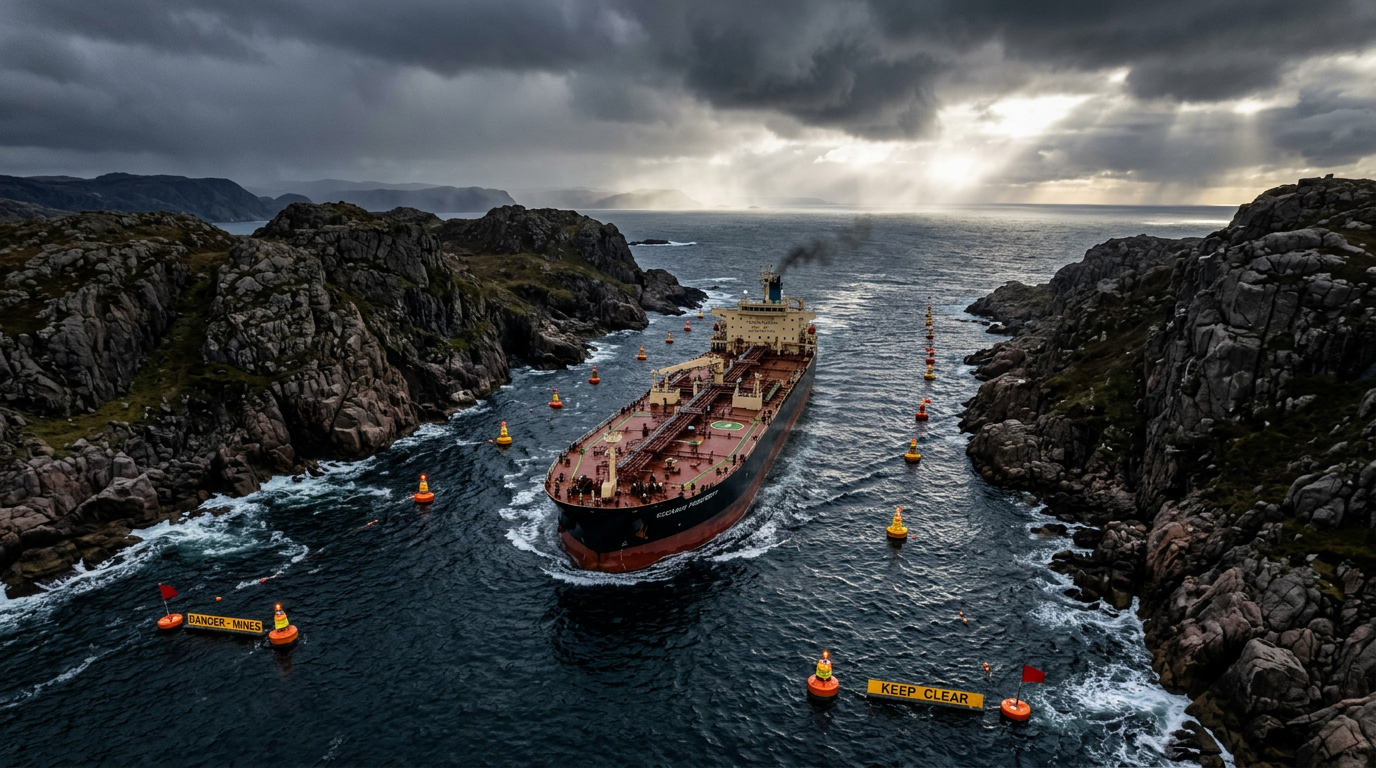
Shipping operations in the Strait of Hormuz are expected to function at less than half of prewar levels for several months, even if the U.S.-Iran peace deal holds, according to a Japanese shipping giant.
NYK Line CEO Takaya Soga told The Financial Times that shipping through the region would resume only at much lower volumes, as safer routes near Iran and Oman have limited capacity, constraining maritime traffic. "The routes available for navigation are extremely limited — they're very narrow corridors," Soga stated.
He further added that the shipping industry is "still nowhere near returning to conditions before the closure of the Strait of Hormuz." The type of naval mines Iran deployed remains unknown, potentially making them harder to detect and remove.
Soga said there is no firm evidence to support the forecast for a recovery in shipping levels, but he anticipates "less than half the normal volume for a while, even if we can properly get in and out."
Conflict Escalates Over the Weekend
The Strait of Hormuz has been a hotspot for U.S.-Iran tensions despite the Memorandum of Understanding signed between the nations on June 17.
Last week, Iran's Islamic Revolutionary Guard Corps (IRGC) warned shipowners about the use of unauthorized transit routes through the Strait of Hormuz, deeming such actions "unacceptable and dangerous." The warning preceded an attack on a Taiwan-operated container ship in the strait, prompting the U.S. to launch retaliatory strikes on Iran on Saturday. Separately, a tanker was hit by an unidentified projectile in the waterway, damaging its bridge but causing no injuries to the crew.
Shipping through the strait slowed after the resumption of hostilities between the two nations. Both nations have traded attacks on each other's military infrastructure, threatening U.S. efforts to return shipping traffic to the pre-war average of about 138 vessels a day.
Late Sunday, the Trump administration reportedly said the U.S. and Iran would "stand down" for now following an exchange of strikes.
Hormuz Risks Keep Ships Away
Earlier, Japan's Mitsui O.S.K. Lines said shipping companies are likely to avoid the Strait of Hormuz despite the U.S.-Iran agreement until there is clear proof the route is safe. The world's largest tanker owner expects it could take at least a couple of weeks for shipping traffic to return to normal.
Meanwhile, U.S. intelligence reportedly believes that Iran can shut down the Strait of Hormuz at will. If nuclear talks fail, Tehran may also use the Houthis to disrupt shipping through the Bab-el-Mandeb Strait, threatening global trade.
At the time of writing, Brent crude oil price was trading 1.47% higher at $73.18 per barrel, while the WTI crude futures were trading 1.20% up at $70.07 per barrel.