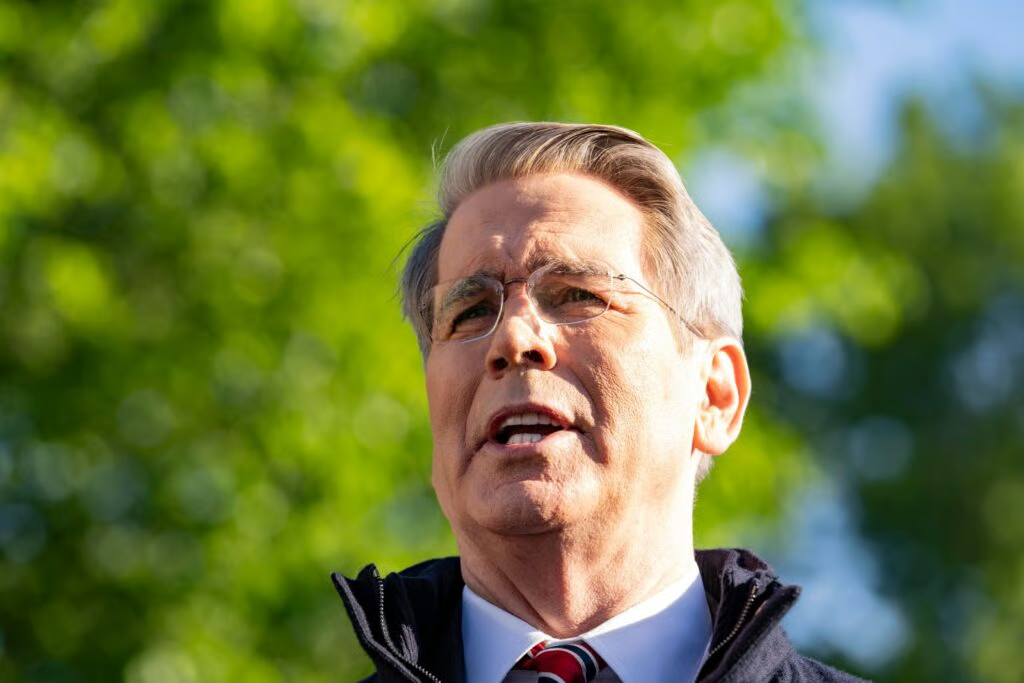
So here's the thing about wars: they're expensive, they're messy, and sometimes, the people in charge start to look like they're making it up as they go along. At least, that's what Senator Mark Kelly (D-Ariz.) seems to think about the current situation with Iran.
On Wednesday, Kelly took to X to deliver a blunt assessment of the escalating conflict. He pointed to the human and financial toll—13 American service members killed, more than 150 Iranian children dead, and billions of dollars spent—and argued that Congress needs to step in because, in his view, the executive branch is dropping the ball.
"Meanwhile, this president is flailing," Kelly wrote. "Congress needs to do its job and assert its oversight authority."
It's a pretty direct call to action, and it comes at a moment when the gears of diplomacy are supposedly turning, but maybe not very smoothly.
On Thursday, reports suggested Iran had put a new proposal on the table during talks with the U.S.: allowing safe passage for ships through the Omani side of the strategic Strait of Hormuz. That sounds like a potential de-escalation, right? Well, maybe. The details were fuzzy. It wasn't clear if Iran would remove mines or guarantee passage for all vessels, including those linked to Israel. And, of course, the whole plan reportedly depends on Washington meeting Tehran's demands. So, it's less of a peace offering and more of a conditional suggestion.
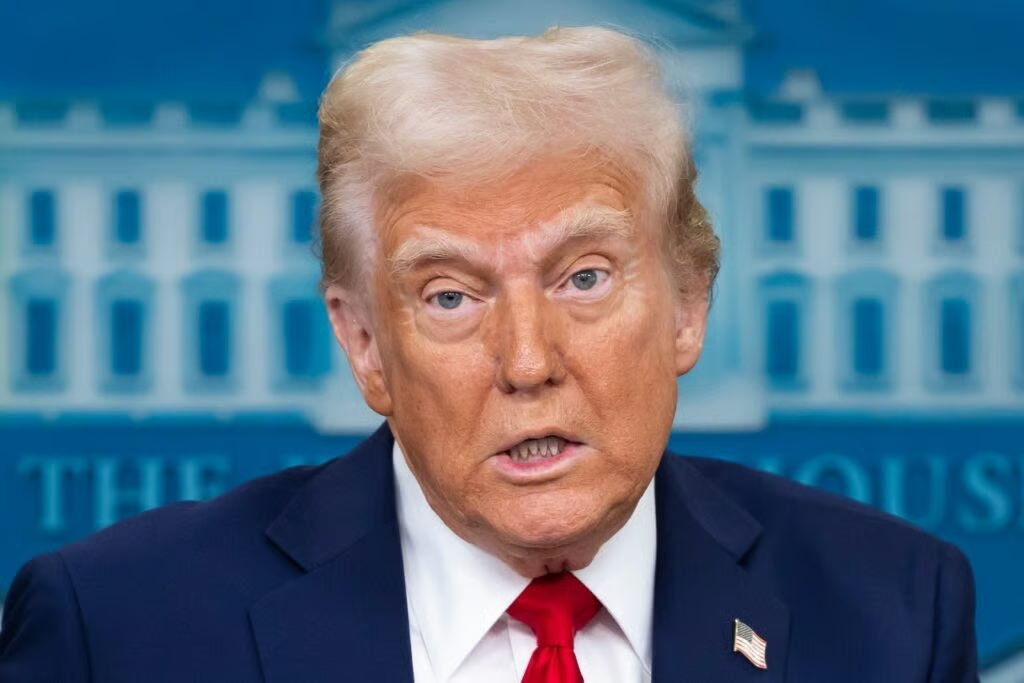
Meanwhile, President Donald Trump was offering his own take, saying the war was "very close to being over." This optimistic pronouncement came even as other reports indicated the Pentagon was preparing to deploy more than 10,000 additional troops to the region. Which, you know, isn't usually what you do when a conflict is winding down. The existing ceasefire is set to expire on April 22, and discussions about extending it seem limited.
Vice President JD Vance added that a deal remains possible—if Iran accepts U.S. conditions on nuclear issues. Iranian officials, for their part, planned to reassess negotiations after meeting with a Pakistani delegation led by Army Chief Asim Munir. Trump suggested talks could restart in Pakistan within days and expressed hope for a breakthrough, though officials on all sides acknowledged that deep mistrust and tensions persist.
So, to recap: a senator is calling Congress to action over a war he says is being poorly managed, the president says it's almost done while the military prepares for more, and diplomatic talks involve a lot of "ifs" and "maybes" centered around a critical shipping lane. It's the kind of situation where you might want someone to, as Kelly put it, "do its job." The question is who, exactly, will step up.