Here's a classic market puzzle: what happens when the news is both good and bad at the same time? Late Wednesday, investors got a taste of that as U.S. stock futures moved higher on hopes for peace in the Middle East, while the government threatened new economic warfare that could make peace harder to achieve.
It's the financial version of having your cake and eating it too, except the cake might be made of sanctions and the eating involves delicate nuclear negotiations.
Stock Futures Climb As Markets Bet On De-Escalation
The numbers told a straightforwardly optimistic story. Dow futures rose 102.00 points, or 0.21%, to 48,771.00. S&P 500 futures gained 14.25 points, or 0.20%, to 7,074.75. Nasdaq 100 futures added 75.75 points, or 0.29% as of 8:51 p.m. EDT.
Over in the commodity pits, the reaction was even clearer. When markets think a major oil-producing region might become less tense, they sell oil. WTI crude oil for May delivery fell 0.45% to $90.88 per barrel. The June contract declined 0.56% to $87.64. Brent crude slipped 0.27% to $94.67 per barrel.
It wasn't just crude. RBOB gasoline futures dropped 0.56% to $3.0519 per gallon. Natural gas futures fell 0.61% to $2.594 per MMBtu. Even the U.S. dollar index was down a tick, standing at 97.981, off 0.07%.
The optimism spread to Asia, where Japan's Nikkei 225 rose 1.50% to 59,007.10 and South Korea's KOSPI gained 1.37% to 6,174.77. Everyone, it seemed, was pricing in a calmer world.
Donald Trump Signals Progress On Iran Talks
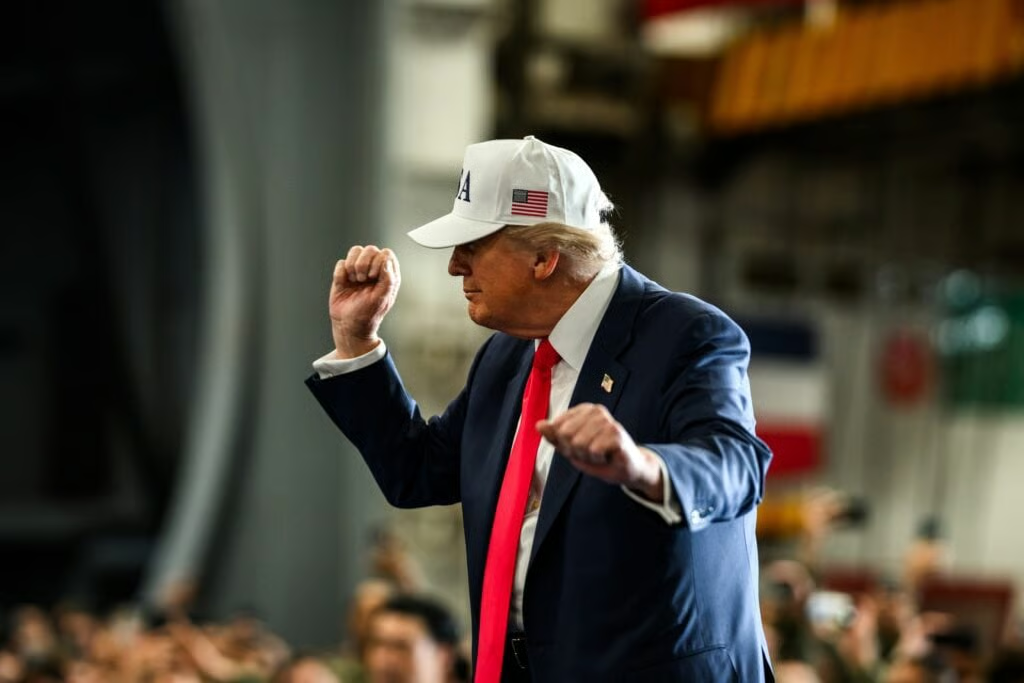
So what sparked all this hopeful trading? President Donald Trump said he believes the conflict, which began in late February, could be nearing its conclusion, according to reports.
"We feel good about the prospects of a deal," White House press secretary Karoline Leavitt said, describing ongoing negotiations as "productive."
That's the kind of language markets love to hear. It's vague enough to be deniable but specific enough to trigger the algorithmic buying programs. Talks mediated by Pakistan's Field Marshal Asim Munir may resume soon, with both sides considering another round of discussions in Pakistan after the last negotiations ended without a breakthrough.
Think of it this way: they're going back to the table. In diplomacy, as in business, showing up is half the battle.
US Threatens New Sanctions To Pressure Iran
But here's where it gets interesting. At the same time the administration was talking about peace, it was also sharpening its economic weapons. Officials warned that secondary sanctions could be imposed on countries purchasing Iranian oil, a move aimed at cutting off a key revenue stream for Tehran.
Treasury Secretary Scott Bessent, who was speaking alongside Leavitt, said the measures would act as the "financial equivalent" of military actions.
Let's unpack that for a second. The Treasury Secretary is essentially saying, "We might stop shooting missiles, but we're going to start shooting financial penalties at anyone who does business with you." It's a curious dual-track approach: offer peace with one hand while preparing an economic siege with the other.
For investors, this creates a weird calculus. Peace is good for stocks (less geopolitical risk) but potentially bad for oil prices (more supply). Sanctions are bad for peace prospects (they anger the other side) but potentially good for oil prices (they restrict supply). No wonder the oil market only dipped modestly—traders are hedging their bets.
Strait Of Hormuz Blockade And Nuclear Disputes Complicate Outlook
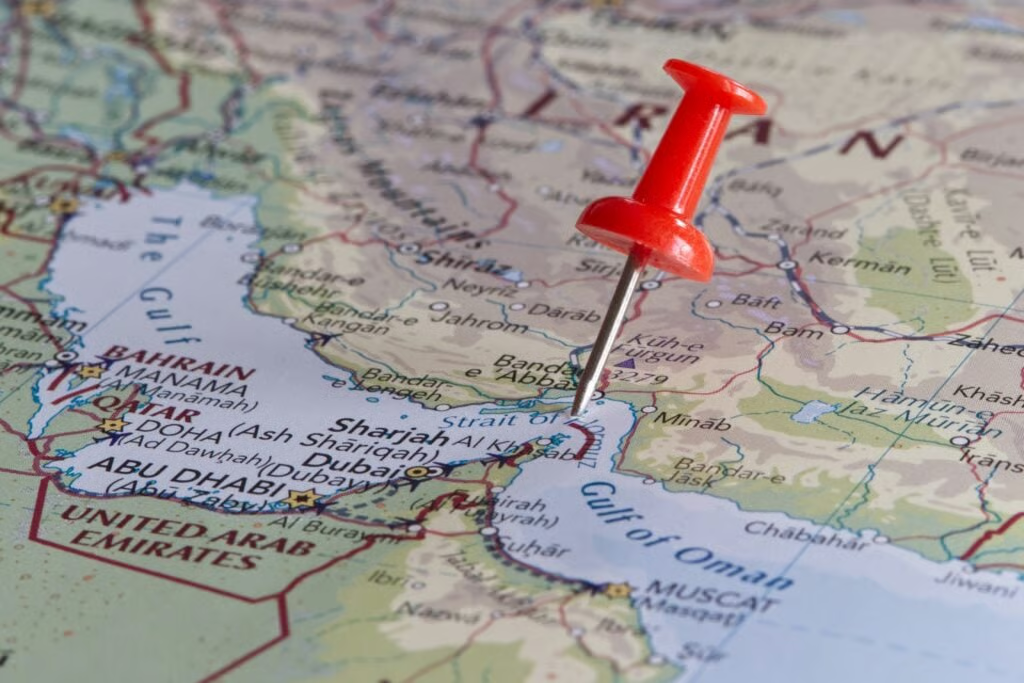
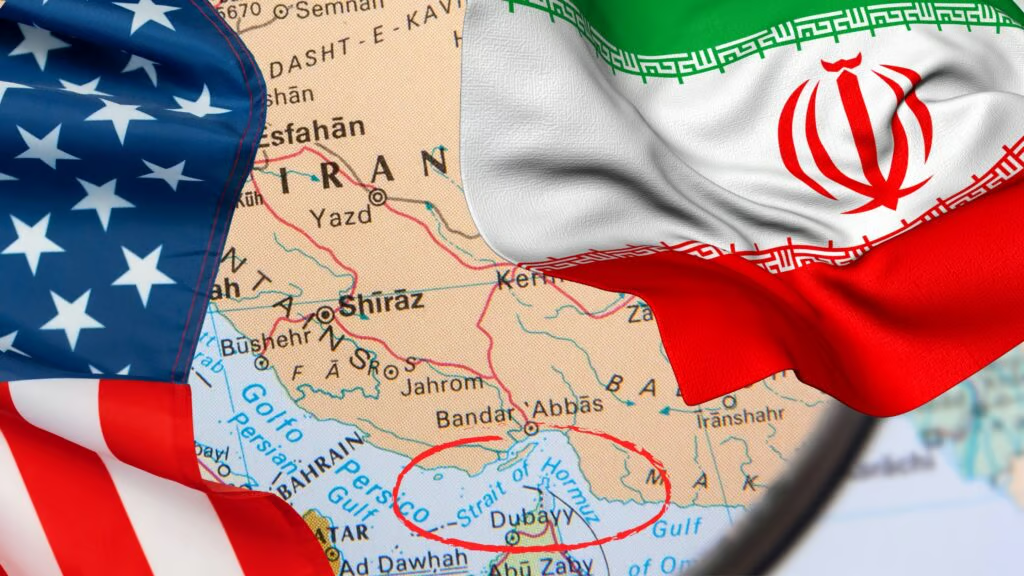
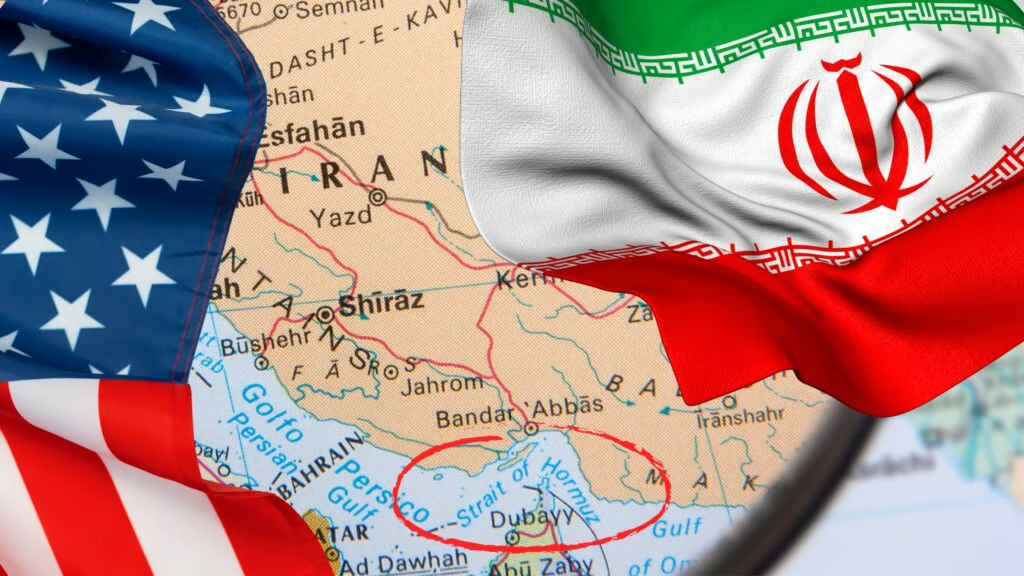
The path to any deal remains littered with obstacles, which might explain the administration's carrot-and-stick approach. U.S. forces have blocked vessels linked to Iranian ports, while Tehran has warned it could disrupt broader regional trade routes if the blockade continues.
Then there's the nuclear elephant in the room. Washington has proposed a long-term halt to Iran's nuclear activity, while Tehran is seeking a shorter timeline and relief from sanctions. These aren't minor negotiating points—they're the core of the dispute.
Add to this the simmering conflict in Lebanon, where Israeli military activity targets Iran-backed forces, and you have a regional puzzle with many moving pieces. A deal on one front doesn't necessarily mean calm on all fronts.
So what's an investor to make of all this? The market's initial reaction—stocks up, oil down—suggests a default bet on de-escalation. But the simultaneous threat of new sanctions is a reminder that the U.S. plans to keep maximum pressure on Iran, deal or no deal. It's a strategy that could either force a favorable agreement or blow up the talks entirely. For now, the market is choosing to believe in the former, but it's keeping one eye on the exit, just in case.