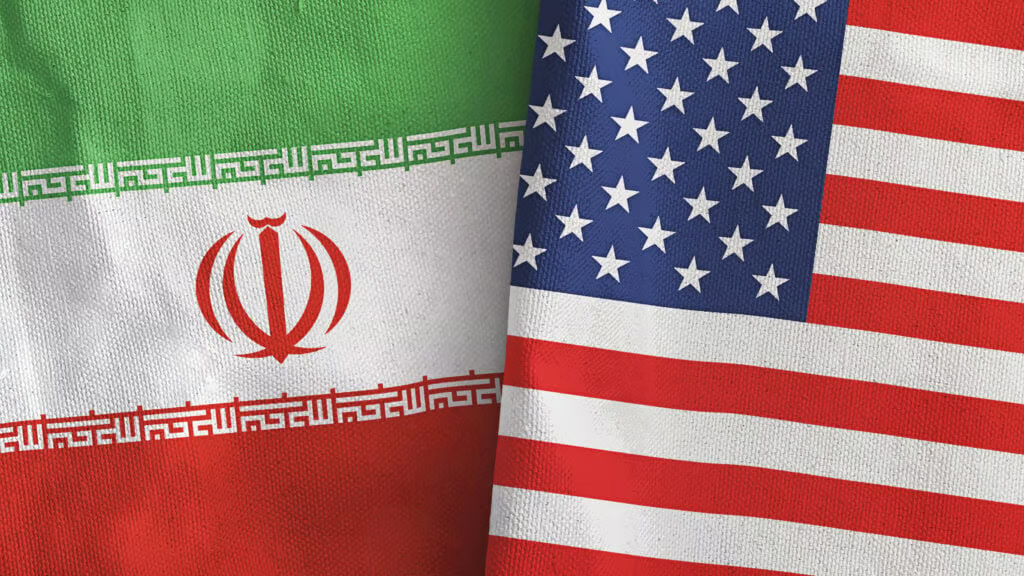
So here's the diplomatic scramble of the week: Pakistan has reportedly raised its hand to host the next round of talks between the U.S. and Iran. The offer comes at a pretty tense moment, right before a two-week ceasefire is set to expire. According to two Pakistani officials who spoke to the Associated Press, the final call on where to meet will depend on what the U.S. and Iran want. Islamabad is back in the running as a potential host city, with Geneva, Switzerland, also being considered. The talks might happen as soon as Thursday, but honestly, the venue and timing are still up in the air.
The White House didn't immediately respond to a request for comment from MarketDash.
'Red Lines' On Nuclear Weapons
This whole venue discussion is happening because the last round of talks over the weekend didn't go so well. Iranian Foreign Minister Seyed Abbas Araghchi came out swinging, saying Iran negotiated in good faith but was met with what he called shifting demands and pressure tactics from the U.S.
The core of the disagreement? Uranium enrichment. A report on Monday suggested the U.S. proposed that Iran halt enrichment for 20 years during the weekend talks. Iran's counteroffer was for a much shorter "single-digit" number of years. They couldn't bridge that gap, and the dispute over enrichment levels and Iran's existing stockpile of uranium became the main roadblock. The U.S. wanted Iran to remove its highly enriched uranium outright, but Iran instead proposed a monitored process to reduce enrichment levels.
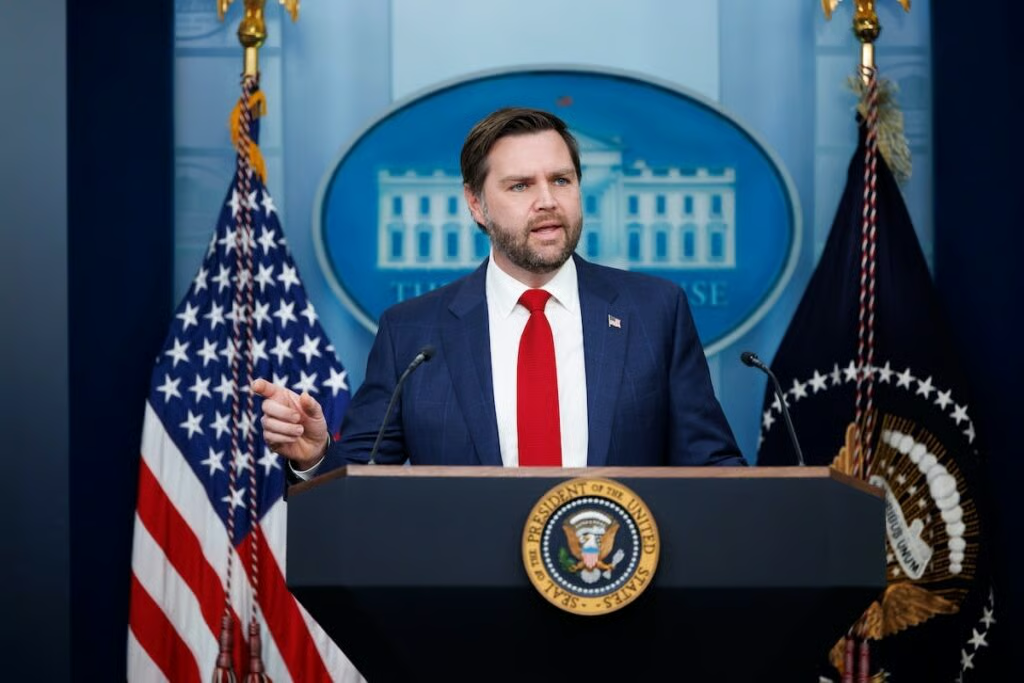
On the U.S. side, Vice President JD Vance put the onus on Iran to make the next move. In a TV appearance, he said the U.S. has already made significant offers and that "the ball is in the Iranian court." But he was clear about the non-negotiable point: any peace deal has to ensure Iran never obtains a nuclear weapon. That's the red line.
Trump's Hormuz Blockade In Action
While diplomats talk (or don't talk), the military situation is getting real. The U.S. military began a blockade of Iranian ports on Monday, following through on an announcement from President Donald Trump. It's a major escalation that's unsettling a key global shipping route.
Here's the weird market reaction, though: the move actually helped ease some fears, at least temporarily. Hopes that the blockade might push both sides back to the negotiating table were enough to push oil prices back below $100. At the time of writing, Brent crude was trading 0.60% lower at $98.76 per barrel. Sometimes the anticipation of a deal is more powerful than the reality of a blockade.






.jpeg)