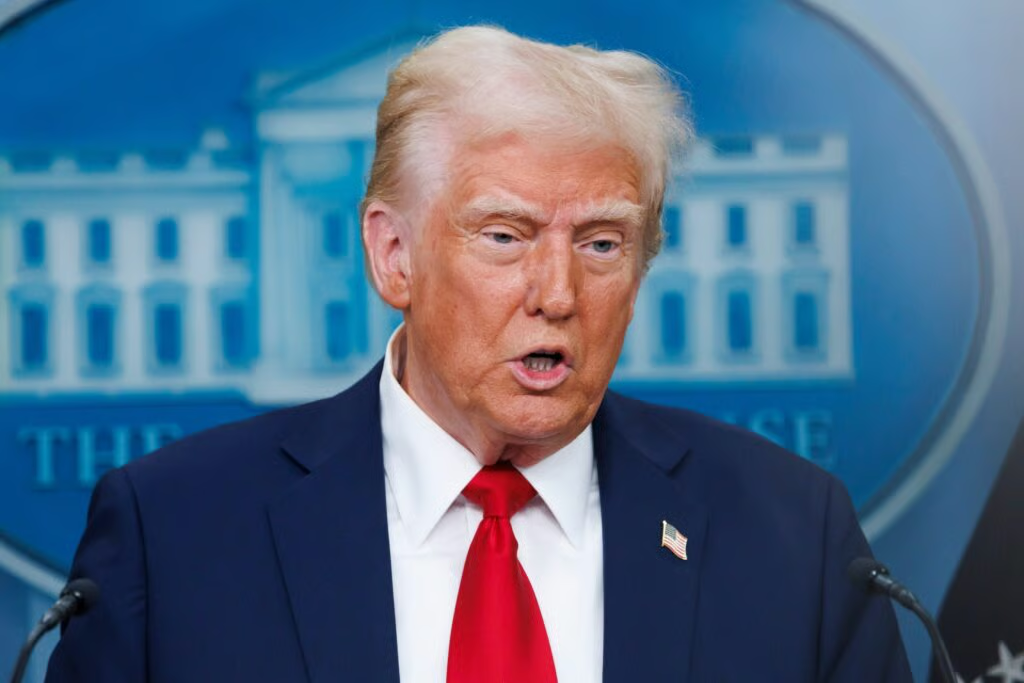
So here's a classic government story: someone uses some numbers to make a point, then it turns out the numbers were wrong. The Trump administration just conceded it used the wrong figures to help launch a Medicaid fraud investigation in New York, which raises some awkward questions about how these anti-waste campaigns get built and sold to the public. The timing is interesting because this same administration is pushing major payment changes elsewhere in healthcare, including a nice 2.48% boost for Medicare Advantage plans next year.
According to reports, the error centered on personal care services in New York's Medicaid program. Officials had cited numbers suggesting usage on a scale that would have been, well, extraordinary. The administration corrected itself after analysts pointed out the claims were implausible based on how the state actually reports and bills for those services.
What Actually Happened With Those Medicaid Numbers
The disputed statistic came from CMS Administrator Mehmet Oz, who had pointed to roughly 5 million people receiving personal care help in a state with about 6.8 million Medicaid enrollees. That would mean nearly three-quarters of Medicaid recipients were getting personal care services, which seemed... ambitious. Federal officials later said the actual count was about 450,000 people, or around 6% to 7% of enrollees. That's quite a difference.
CMS spokesperson Chris Krepich told outlets the agency had mixed up how New York applies billing codes and said the methodology was adjusted. Krepich also said the investigation is still underway and that CMS is reviewing New York's response to the letter that announced the probe.
New York officials weren't exactly subtle about their reaction. The state's health department called the early descriptions "a targeted attempt to obscure the facts." A spokesperson for Governor Kathy Hochul told reporters that the original CMS assertion was "patently false" and argued the state can pursue fraud enforcement without distorting the underlying data.
This New York approach is part of a wider enforcement push that has also involved California, Florida, Maine, and Minnesota. Vice President JD Vance is leading a federal task force focused on benefit-program fraud, and Minnesota has sued after the administration moved to pause $243 million in Medicaid funding tied to fraud concerns.
Meanwhile, Over in Medicare Advantage Land
While all this Medicaid number-checking was happening, CMS was making some big decisions about Medicare dollars that directly affect insurer revenue, member premiums, and benefit design. On Monday, CMS set the 2027 Medicare Advantage payment update at a net average 2.48%. That's a sharp turn from the 0.09% increase floated in January that had rattled markets.
Oz cast the finalized Medicare Advantage rates as centered on consumers, saying, "Medicare Advantage and Part D should work for the people who rely on them." He added, "These updates keep coverage affordable and ensure patients get real value from their plans."
The market liked what it heard. UnitedHealth Group Inc. (UNH) and CVS Health Corp. (CVS) each jumped more than 9% in after-hours trading on Monday. Humana Inc. (HUM) rose about 12%, while Elevance Health Inc. (ELV) gained nearly 6%.
But longer-term cost pressures remain a real issue. Annual Medicare premiums are projected to climb from about $2,440 per person to nearly $5,000 by 2035. Estimates attribute about $450 of that increase to Medicare Advantage overpayments alone.
Hospitals Are Feeling the Squeeze Too
This all comes as Medicaid cuts have significantly impacted hospitals nationwide, with reports indicating that 446 facilities are now at risk of closure or service reductions. According to billionaire investor Mark Cuban, the real issue lies not solely in government policy but in how hospitals manage their expenses. He notes that many facilities spend heavily on consultants and often overpay for essential supplies.
This financial strain, exacerbated by reduced Medicaid funding, highlights the broader challenges facing healthcare providers. As Cuban pointed out, the operational inefficiencies within hospitals are a crucial factor in their financial instability, potentially affecting access to care for millions of Americans in the long term, especially in underserved communities.
How They're Trying to Fix This Mess
CMS has also pointed to administrative changes aimed at trimming costs, including a rule finalized in March that is expected to save taxpayers $782 million a year by shifting away from fax and paper toward standardized electronic claims transactions. Full compliance under that rule is required by May 2026.
Back in New York, Oz drew criticism for other characterizations of eligibility standards for personal care services, including a suggestion that screening had become looser. Advocates countered that the state tightened requirements through a change that took effect in September, and said the cited example didn't appear in the state's standards.
Public anxiety about medical costs is pushing the politics around all these programs. A recent poll found 61% of adults saying they worry "a great deal" about healthcare affordability. That backdrop has helped elevate anti-fraud messaging, even as the New York correction fuels scrutiny of how the administration is assembling the numbers used to justify investigations.
So you've got incorrect numbers in one government program, big payment increases in another, hospitals struggling, and everyone worried about costs. It's healthcare policy as usual, just with some extra transparency about the numbers being wrong.