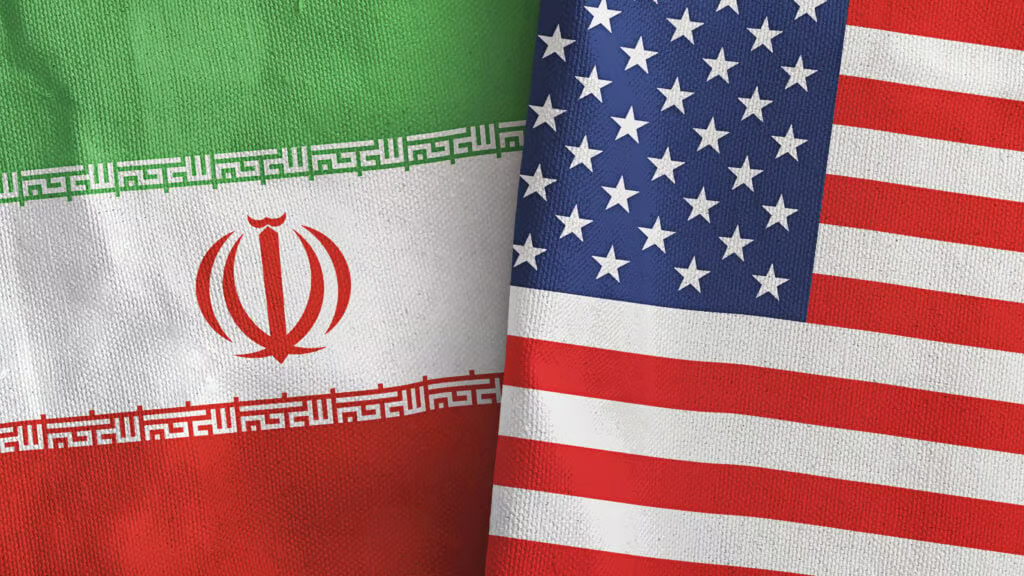
Here's a fun thing about the stock market: sometimes, a geopolitical shock is exactly what the historical calendar ordered. Global equities took off late Tuesday after a sudden two-week ceasefire between the U.S. and Iran gave investors a reason to buy—and it just so happened to line up perfectly with one of the market's most reliably bullish periods.
Think of it as the market getting a surprise gift during its birthday month.
The Calendar Was Already on the Bulls' Side
Before anyone even heard about a truce, the seasonal winds were blowing favorably. According to analysis by The Kobeissi Letter citing Bloomberg data, April is historically one of the strongest stretches for stocks. "The S&P 500 has gained +1.3% on average in April since 1928, the 2nd-best month of the year after July," the firm noted, adding that "seasonality favors the bulls this month."
Zoom out to a global view, and the picture gets even rosier. Over the last 25 years, the MSCI World Index has posted positive returns 75% of the time in April, averaging a 2.0% gain—the strongest performance of any month. A lot of that global momentum is really just U.S. stocks doing the heavy lifting, given they make up about 70% of that index.
An 80% Chance of Green
This seasonal optimism looks particularly potent coming off a rough March, where the S&P 500 dropped over 6%. Ryan Detrick, chief market strategist at Carson Group, pointed out that over the past 20 years, the S&P 500 has finished April higher 80% of the time, tying July as the most consistently positive month.
And here's the kicker: steep March sell-offs have often been the prelude to a major bounce. Historically, after March declines exceeding 3%, April has typically rebounded with an average increase of 5.92%. It's like the market takes a deep breath, shakes off the bad vibes, and decides to rally.
Futures Get a Head Start on History
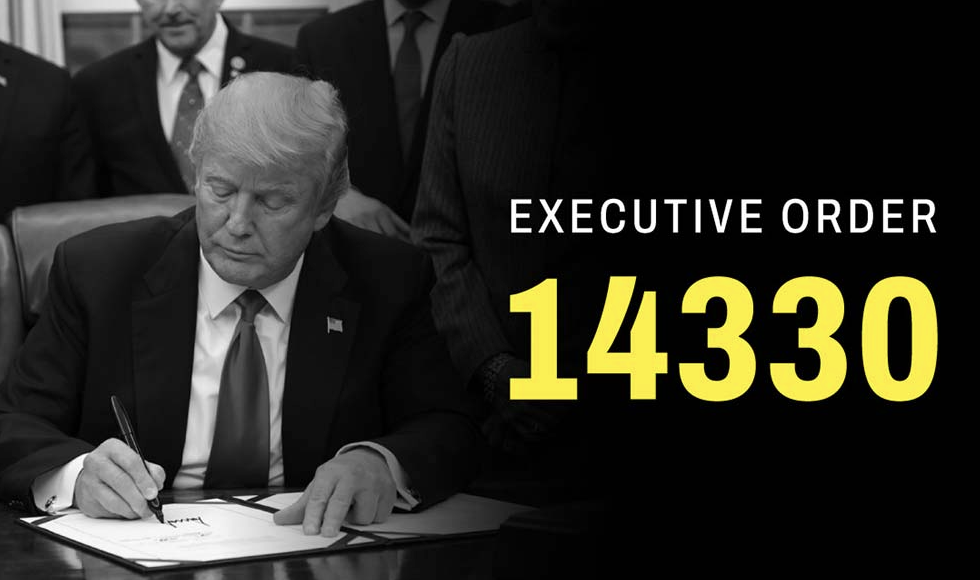
Then the news hit. S&P 500 futures climbed 2.35%, and the Dow Jones jumped 1100 points, a gain of 2.4%. That rally alone handed the indices an immediate head start on that historical average April gain of 1.3%. The catalyst? President Donald Trump agreed to suspend planned military strikes on Iran in exchange for safe passage through the Strait of Hormuz.
In a post on Truth Social, Trump announced the pause to allow time for negotiations, stating, "Almost all of the various points of past contention have been agreed to." He added that the "two-week period will allow the Agreement to be finalized and consummated."
Iranian Foreign Minister Seyed Abbas Araghchi confirmed conditional cooperation, noting, "If attacks against Iran are halted, our powerful armed forces will cease their defensive operations."
When geopolitical tensions ease, one market's relief is another market's panic. The sudden de-escalation sent energy prices into a tailspin; at the last check, the WTI Crude Oil futures plunged 15.30% to $95.67, and Brent Crude Oil futures declined by 14.03% to $93.94.
Where We Stand in 2026
This rally is a welcome development in what has been a down year so far. The S&P 500 index has declined 3.52% year-to-date. Similarly, the Nasdaq Composite index was down 5.24%, and the Dow Jones tumbled 3.72% YTD.
The major ETFs tracking these indices had a mixed but ultimately positive Tuesday ahead of the late surge. The SPDR S&P 500 ETF Trust (SPY) was up 0.044% at $659.22, while the Invesco QQQ Trust ETF (QQQ) advanced 0.015% to $588.59. Meanwhile, the Dow tracker, the State Street SPDR Dow Jones Industrial Average ETF Trust (DIA), fell 0.19% to close at $465.88.
So, the market got a double dose of good news: a geopolitical sigh of relief and a statistical tailwind. It's a reminder that in finance, sometimes the stars—and the seasonal charts—just align.







.jpeg)