So here's what happened in the markets on Wednesday: the old guard decided to have a moment. While everyone's been talking about AI and tech for what feels like forever, the Dow Jones Industrial Average—that collection of 30 big, often boring companies—quietly climbed to a record high. It was up 0.9% to 48,350 points, marking its fourth straight winning session and finally topping the peak it set back in late October.
What's driving it? It looks like a classic case of investor rotation. Money is flowing out of the red-hot, expensive tech trade and into what some call the "old economy." The big winners were financial heavyweights: Goldman Sachs (GS), JPMorgan Chase (JPM), and American Express (AXP) all hit fresh records. It's the kind of move that makes you wonder if people are starting to think, "Hey, maybe banks and credit card companies are still good businesses too."
Healthcare stocks also continued their strong run, with Eli Lilly (LLY) on pace for its tenth gain in eleven sessions. It's not the most exciting narrative, but steady outperformance in healthcare while tech wobbles tells its own story about where investors are seeking shelter and growth.
On the policy front, there were a couple of notable tidbits. Treasury Secretary Scott Bessent said the administration will unveil "substantial announcements" on tariffs in the coming days. That's the kind of vague-but-important statement that can move markets when the details finally drop. Separately, Atlanta Fed President Raphael Bostic announced he plans to retire when his term expires in February 2026. It's a distant event, but changes at the Fed are always worth noting for the long-term policy outlook.
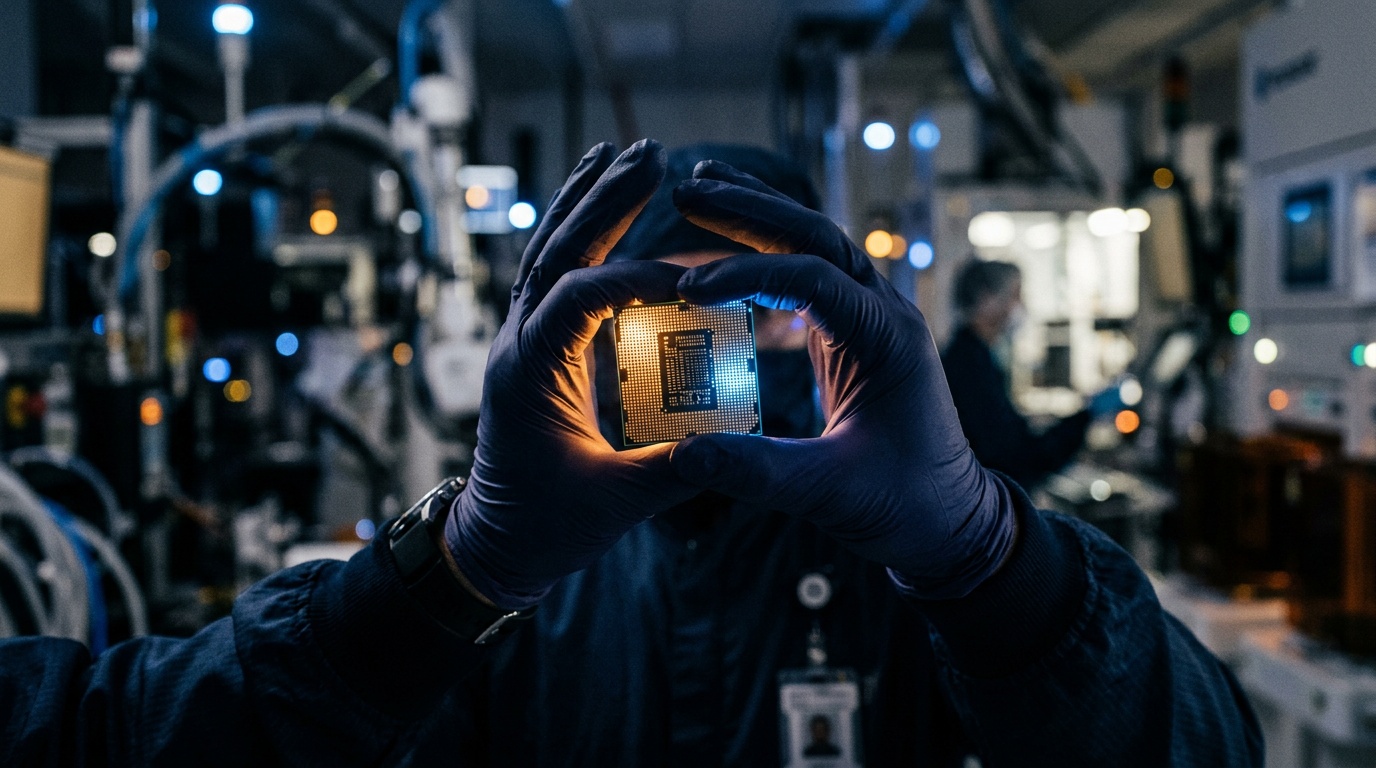
Now, for the day's rockstar: Advanced Micro Devices (AMD). While the broader tech sector was relatively quiet, AMD surged over 8%. Why? The chipmaker held its analyst day and decided to paint a very, very big picture. They now see total AI silicon revenue opportunities exceeding $1 trillion by 2030. Let that number sink in for a second. A trillion. They envision over $100 billion in annual data-center sales if they can snag a double-digit market share. It's an audacious forecast that basically says, "The AI gold rush is real, and we're bringing a bigger shovel." Investors loved the ambition.
In other earnings news, it was a mixed bag. Oklo Inc. (OKLO) rose 5% even after posting a wider-than-expected quarterly loss. Analysts seemed focused on the progress in the company's small-reactor projects rather than the bottom line this quarter. On the flip side, Circle Internet Group Inc. (CRCL), the company behind the USDC stablecoin, slumped more than 10% despite beating earnings expectations. The culprit? Higher-than-expected operating costs. It's a good reminder that beating estimates isn't always enough if your expenses are growing faster than investors hoped.
Over in the commodity pits, things got interesting. Gold climbed 1.8% and silver jumped 3.5%. The driver appears to be safe-haven demand, possibly linked to the ongoing record-long government shutdown in Washington and talks of a larger national debt to resolve it. When there's political and fiscal uncertainty, shiny metals often get a bid.
Crude oil, however, went the other way—hard. It slid more than 4% to $58 a barrel. The catalyst was a forecast shift from OPEC. The cartel now sees a third-quarter supply surplus of about 500,000 barrels per day, reversing its previous outlook for a deficit. The reasons? Rising U.S. output and higher production from OPEC members themselves. It's a simple story of more supply than expected meeting demand.
Crypto markets were relatively subdued. Bitcoin (BTC) dipped 1.3% to $101,600. A Bitcoin-linked stock, Strategy Inc., fell 3% to $224, heading for its lowest close in a year.