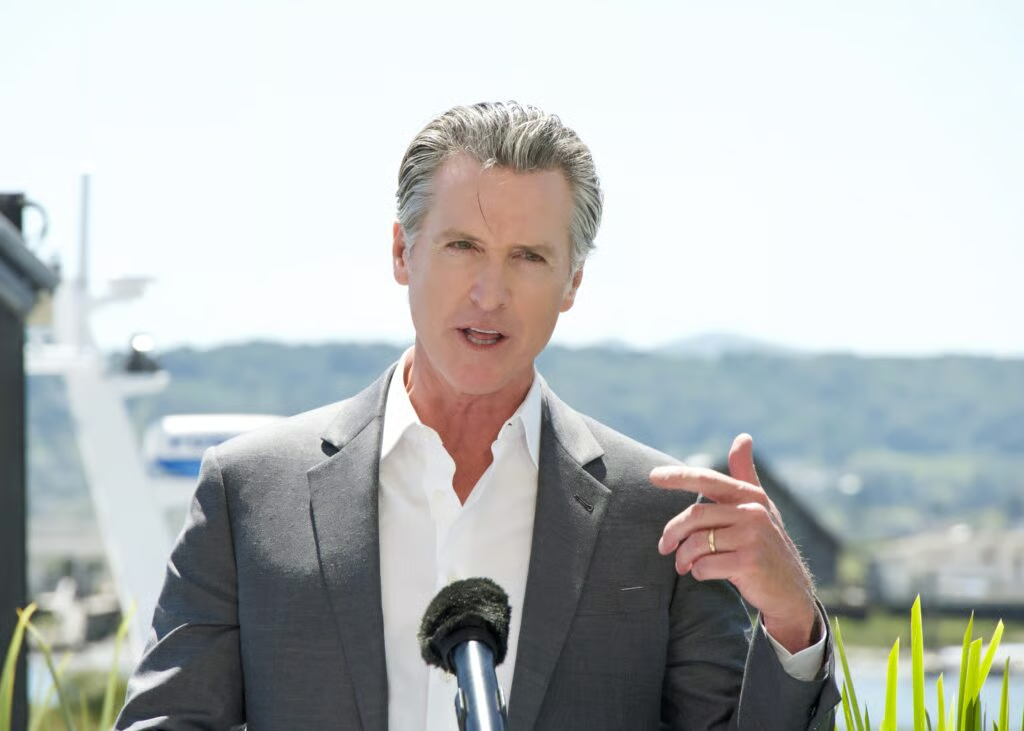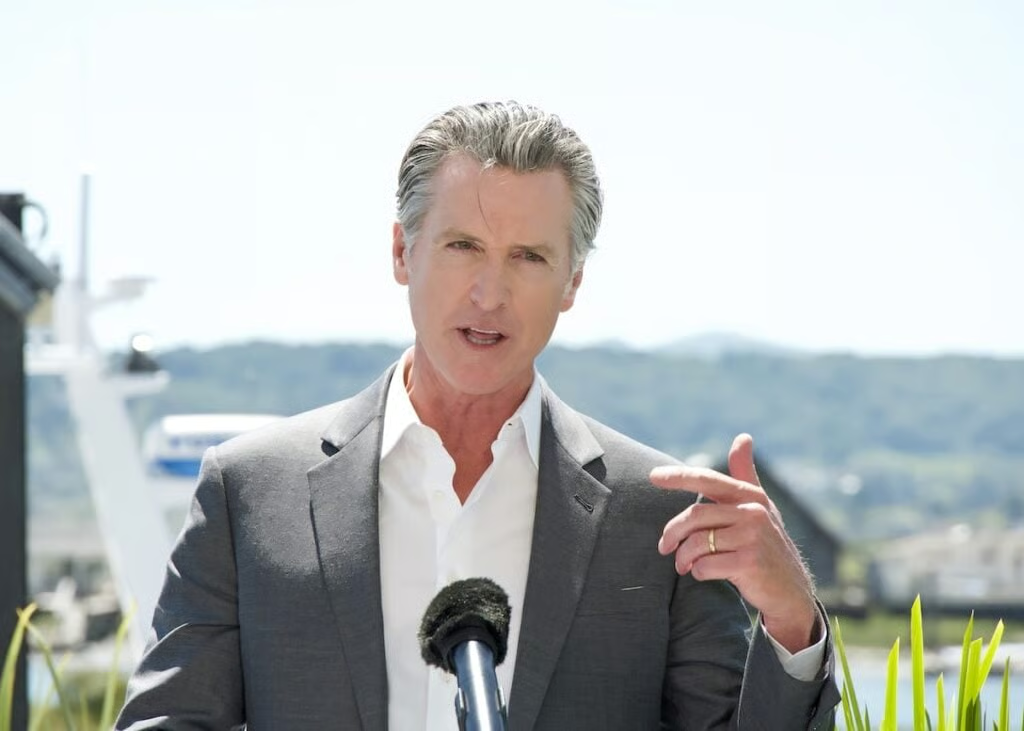
Here's a fun idea from California Governor Gavin Newsom: maybe the state should just stop sending money to Washington. You know, the place that runs the country.
In a social media post that reads like a breakup text with geopolitical consequences, the Democratic governor wrote, "Trump trashes California. California pays his war bills. Perhaps it's time we look into cutting you off, @realDonaldTrump???"
It's the latest volley in a long-running feud, but this one comes with a specific price tag attached: the economic cost of the Iran war. Newsom is essentially arguing that California foots the bill for a conflict he says Trump created, while simultaneously enduring the president's criticism. It's like paying for a dinner where the host keeps insulting you.
The governor's office put some numbers behind the bluster in a Tax Day statement. They claim California sent about $275 billion more to the federal government in fiscal 2024 than it got back. Earlier analyses using 2022 data had pegged the gap at a smaller, but still significant, $83 billion. Either way, California positions itself as the nation's biggest donor state—the friend who always picks up the check.
Now, the threat to "cut off" Washington is mostly rhetorical theater. States can't actually opt out of the federal tax system. But the sentiment points to a very real, very expensive fight already happening in courtrooms.
California has filed a series of lawsuits against the Trump administration, alleging that funding cuts and freezes are politically motivated and illegal. The litigation involves more than $600 million in public health grants, $1.2 billion tied to energy and infrastructure programs, and a broader $10 billion freeze affecting child care and family assistance. That's not chump change; it's a multi-billion-dollar standoff over who controls the purse strings.
Newsom ties this financial friction directly to the Iran conflict, calling it "a war of his own making" that's pushing up costs for Americans. The argument lands with particular force in California, where drivers are feeling the pinch more than anywhere else. The latest data from AAA shows the state's average regular-gas price sitting above $5.86 a gallon. When you're paying that much at the pump, you start wondering where all that tax money is going.
Here's the twist, though: for all its donor-state bravado, California is deeply hooked on federal dollars. The state's enacted budget for 2025-26 includes nearly $175 billion in federal funding. That's about 35.2% of total state spending. A huge chunk of that money flows into health and human services, especially Medi-Cal, which covers roughly 15 million low-income residents.
So the dynamic is a bit awkward. It's like saying, "I pay for everything!" while also acknowledging, "But I really need my allowance." The state may send more than it gets back on balance, but what it gets back is critical to keeping the lights on for millions of people.
Newsom's post is less a serious policy proposal and more a political grenade—a way to highlight what he sees as an unfair financial relationship and to blame the Trump administration for economic pain at the gas pump. It frames a complex fiscal relationship as a personal spat, complete with a social media tag. Whether it changes any minds in Washington is doubtful, but it certainly makes the accounting argument a lot more interesting.