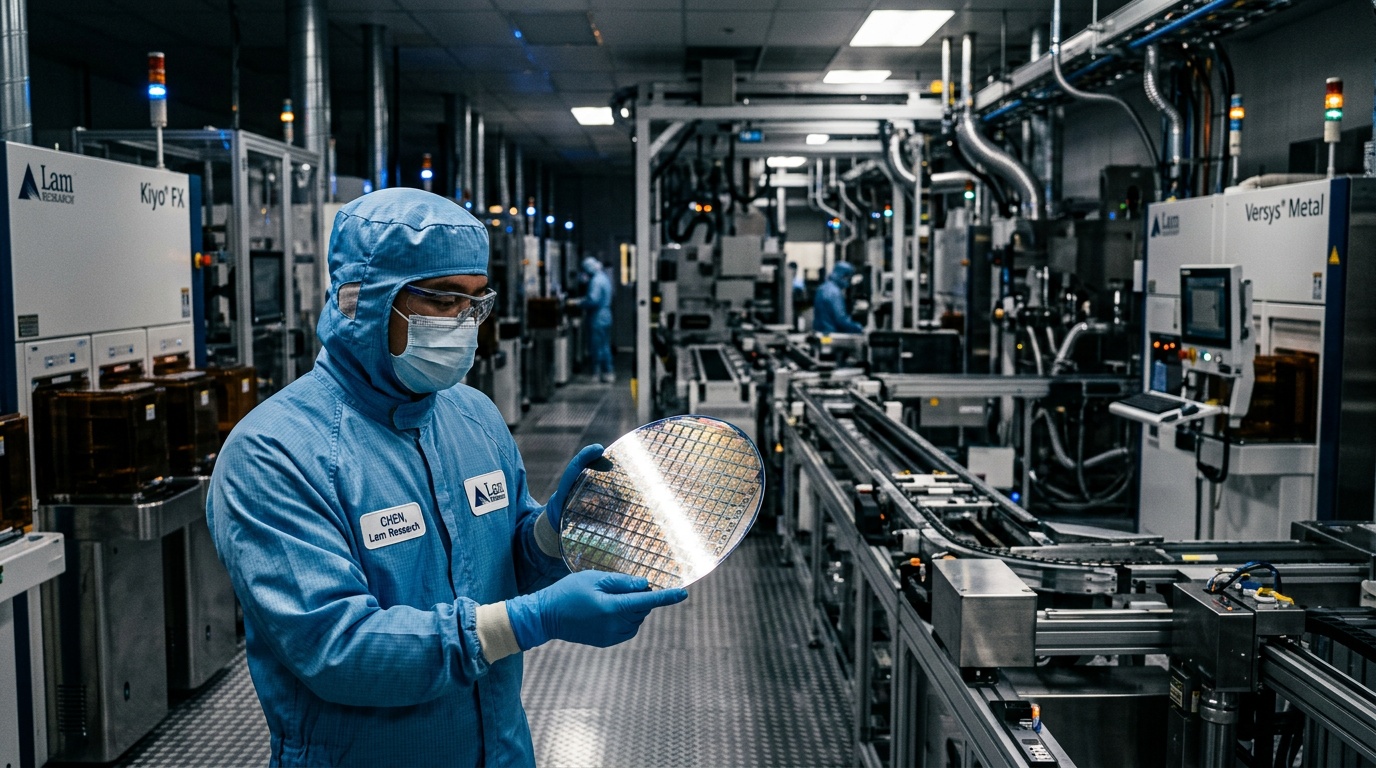
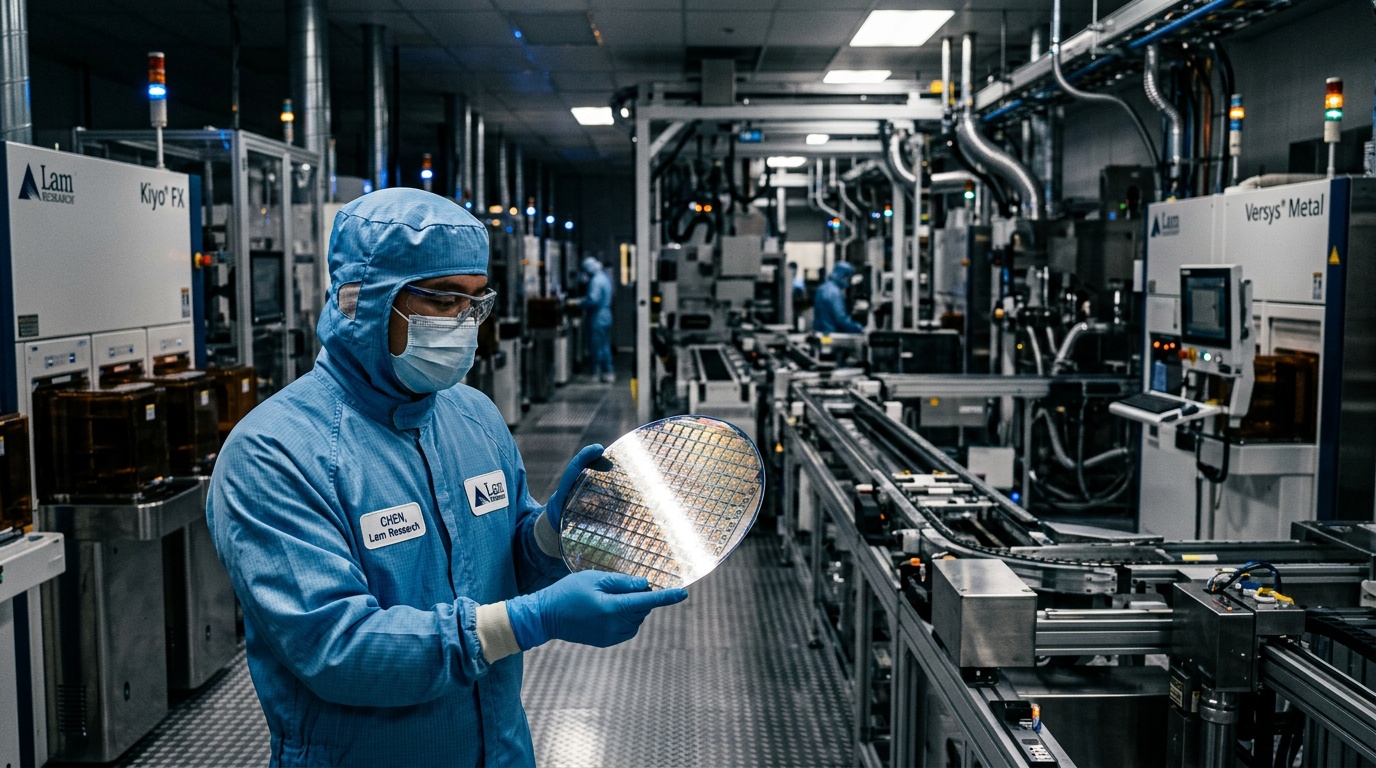
Lam Research Corp. (NASDAQ:LRCX) had a pretty good quarter. The semiconductor equipment maker beat Wall Street estimates on both earnings and revenue, and its operating margin hit a record 40.2%, up from 38.4% in the previous quarter. That is the first time the company has ever cleared the 40% mark.
So naturally, the stock fell. Shares were down 7.93% at $240.12 in premarket trading Thursday, according to market data. Because in this business, the quarter you just reported matters less than what you say about the quarter coming up.
And what Lam said about the quarter coming up was: supply chain stuff might get in the way.
Second-Quarter Outlook Reflects Supply Constraints
During Wednesday's earnings call, Chief Financial Officer Doug Bettinger warned that near-term supply chain constraints could delay some December-quarter shipments until March, weighing on the company's revenue outlook. He did not quantify the impact, which is a polite way of saying investors get to guess.
Lam expects December-quarter revenue of $8.2 billion to $9 billion, compared with the $8.53 billion consensus estimate. The company forecasts an operating margin of 40.5%, plus or minus one percentage point. It also expects adjusted earnings of $2.18 to $2.48 per share, compared with analysts' estimate of $2.31.
China accounted for 35% of September-quarter revenue, up from 26% in June. However, management expects China's contribution to decline significantly in December. That is a swing worth keeping an eye on.
Lam Sees Semiconductor Spending Surging Past $200 Billion
Here is where the story gets bigger than one quarter. Lam expects systems revenue to grow more than 40% in 2026, with global wafer fabrication equipment (WFE) spending reaching the mid-$150 billion range.
The company projects WFE spending will exceed $200 billion in 2027, driven primarily by DRAM demand, followed by advanced foundry logic and NAND investments.
Management expects Lam to outperform the broader WFE market for a third consecutive year in 2026. It also sees a multiyear investment cycle extending through 2028.
However, cleanroom capacity and supply-chain constraints could limit the industry's ability to meet rising demand in 2027. That is the flip side of a boom: the equipment makers can only ship what they can build.
AI and Memory Demand Fuel Equipment Growth
Lam's NAND revenue rose approximately 40% sequentially, driven by upgrades to 256-layer and more advanced chips, alongside early investment in 384-layer NAND.
Meanwhile, AI-driven demand for QLC, TLC and SLC NAND could increase manufacturing capacity requirements.
Memory accounted for a record 46% of systems revenue, with revenue from the segment rising 120% year over year. DRAM contributed 20% of systems revenue.
Foundry also accounted for a record 46% of systems revenue, supported by advanced chipmaking, packaging technologies and mature-node investment in China.
Together, foundry logic and DRAM generated about 80% of year-to-date systems revenue growth.
Advanced Chipmaking Technologies Open New Growth Opportunities
Lam highlighted growing demand for its advanced etch and deposition technologies as chipmakers adopt increasingly complex manufacturing processes.
Its Acara etch technology can reduce process variability by up to 50% and improve wafer output per fab footprint by as much as 50%.
Meanwhile, its Ether dry-resist platform demonstrated sub-10-nanometer resolution using High-NA EUV technology while reducing exposure dose by 10%.
Lam now expects Ether to generate approximately $2.5 billion in cumulative revenue by the end of the decade, $1 billion above its previous forecast.
The company also sees growth opportunities in backside power delivery and advanced materials through its Vector, Sabre, Flex and Halo platforms.
Lam has shipped panel-plating systems to more than 20 customers and expects its market share in panel-level packaging to surpass its position in wafer-level packaging.
LRCX Price Action: Lam Research shares were down 7.93% at $240.12 during premarket trading on Thursday, according to market data.