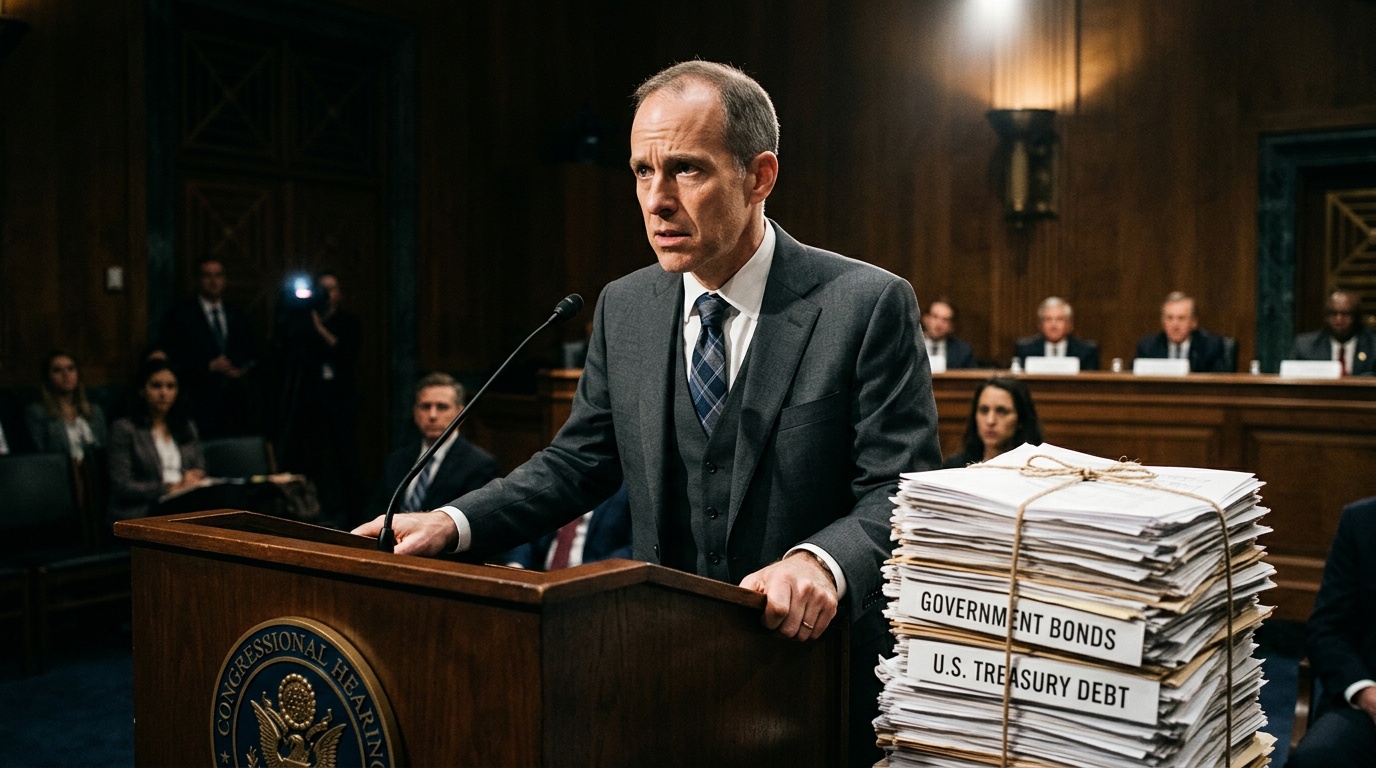
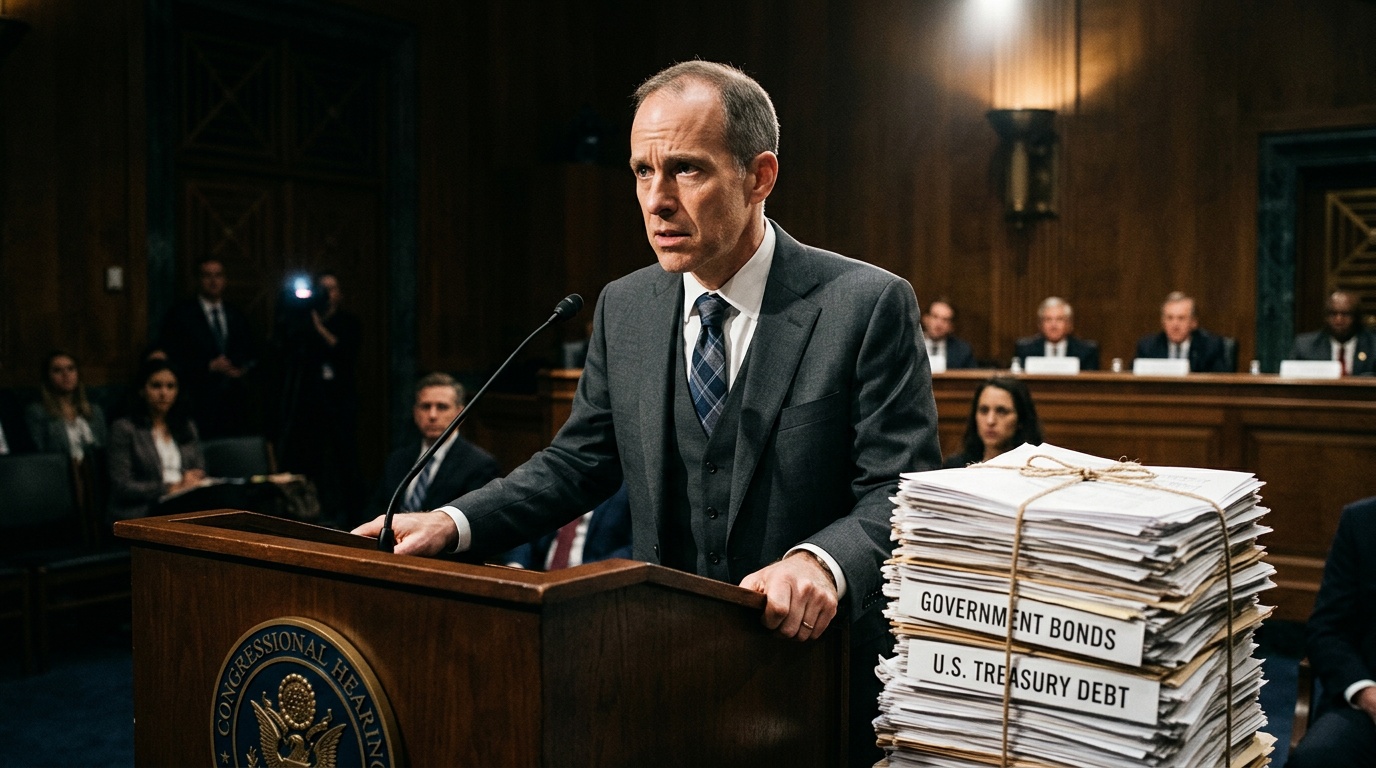
Economist Justin Wolfers said Monday that the U.S. is running its largest deficit outside a recession or war, and he's not mincing words about why. In an interview with MS Now, Wolfers laid out the situation with a bluntness that's rare even for the current fiscal climate.
"If you looked at the size of the deficit, you must say, well, the government must be responding to some terrible, terrible emergency right now, or they're being wildly irresponsible. And it's very much the latter," Wolfers said.
The numbers back him up. The U.S. ran a $1.992 trillion deficit in fiscal 2026, according to Treasury data, leaving the national debt at about $40.38 trillion. That's not a rounding error. It's a structural gap that has persisted for decades.
The 'Brilliant' Strategy
Wolfers didn't stop at the deficit figure. He described the underlying policy approach in terms that are hard to forget: Washington will "cut benefits for people who need them, cut taxes for people who do not, and borrow the difference from people who aren't old enough to vote."
He warned that cutbacks are coming to Medicare and food stamps. In other words, the safety net is being trimmed to make room for tax relief elsewhere. Whether you agree with the framing or not, the arithmetic is what it is.
The federal government has run a deficit every year since 2002. And since 2016, spending on Social Security, health care, and interest has outpaced the growth of federal revenue. That's a recipe for a debt spiral, and the kitchen is getting hot.
Interest Costs Now Top Defense
Here's a milestone that should make everyone pause: net interest totaled $1.052 trillion in fiscal 2026, more than the $965 billion spent on defense. The U.S. is now paying more to service its debt than to fund its military.
Moody's Analytics Chief Economist Mark Zandi said on Sunday that the deficit exceeds 6% of gross domestic product. He warned of a "vicious cycle" in which higher rates add to debt and interest payments, pushing rates higher still. It's the fiscal equivalent of a snowball rolling downhill, and nobody has found the brake.
Treasury Yields Hit Multidecade Highs
The bond market is already feeling the strain. U.S. Treasury yields touched multidecade highs earlier this month, with the 10-year Treasury yield climbing to 5.36% and the 30-year to 5.73%. At the time of writing, the 10-year was 5.119% and the 30-year was 5.455%.
For investors, the action in bond ETFs tells the story. The iShares 7-10 Year Treasury Bond ETF (IEF) closed 0.38% lower on Monday at $90.08 and was down 0.1% in pre-market trading on Tuesday. The iShares 20+ Year Treasury Bond ETF (TLT) closed 0.74% lower at $79.46 and is up 0.40% in premarket.
The 7-10 year bond ETF has a Momentum score in the 30th percentile with a negative price trend across the short, medium, and long term, according to market data rankings.
So where does that leave us? With a deficit that's larger than any non-crisis period in modern history, interest costs that dwarf defense spending, and yields that are testing levels not seen in decades. Wolfers' diagnosis of "wildly irresponsible" might sound like hyperbole, but the bond market has a way of making hyperbole look like understatement.