U.S. Secretary of State Marco Rubio is packing his bags for a tour of the world's largest oil refinery, and the timing is not subtle. With diesel prices climbing and midterm elections looming, Rubio will visit the Jamnagar facility owned by billionaire Mukesh Ambani as economic anxiety builds at home.
The trip runs October 17-22 through Uzbekistan and India, with stops in Samarkand, Mumbai and Jamnagar, according to a State Department release earlier this week. Notably absent from the itinerary: New Delhi. The department did not list a stop in the Indian capital.
The refinery is operated by Ambani's Reliance Industries Ltd., whose massive diesel production capacity has drawn attention as fuel prices keep climbing.
The U.S. Department of State said Rubio is expected to meet senior Indian officials and business leaders to "promote opportunities for commercial investment and economic cooperation."
On Thursday, Sergio Gor, the U.S. ambassador to India, told Indian media outlet NDTV that the Jamnagar visit reflects Reliance's "incredible" investment in a U.S. refinery project.
Reliance's US Refinery and Venezuela Oil Strategy
Reliance's American expansion was announced earlier this year when President Donald Trump unveiled a planned $300 billion refinery project in Brownsville, Texas, backed by the Indian energy giant. The proposed facility, developed by America First Refining, is expected to process about 60 million barrels of U.S. light shale oil annually. Construction was scheduled to begin during the second quarter of 2026.
Robert Kiyosaki, the entrepreneur and author of Rich Dad, Poor Dad, said Reliance Industries could be strategically positioned to benefit from Venezuela's vast oil reserves after the U.S. took control of the country's oil sector and China lost access to its crude following Nicolás Maduro's capture. He highlighted Reliance's Jamnagar refinery, which can process Venezuela's heavy, high-sulphur crude and handles more than 1.2 million barrels per day. Kiyosaki noted that Reliance imported Venezuelan oil before U.S. sanctions, suggesting India's positioning could be a calculated move rather than a coincidence.
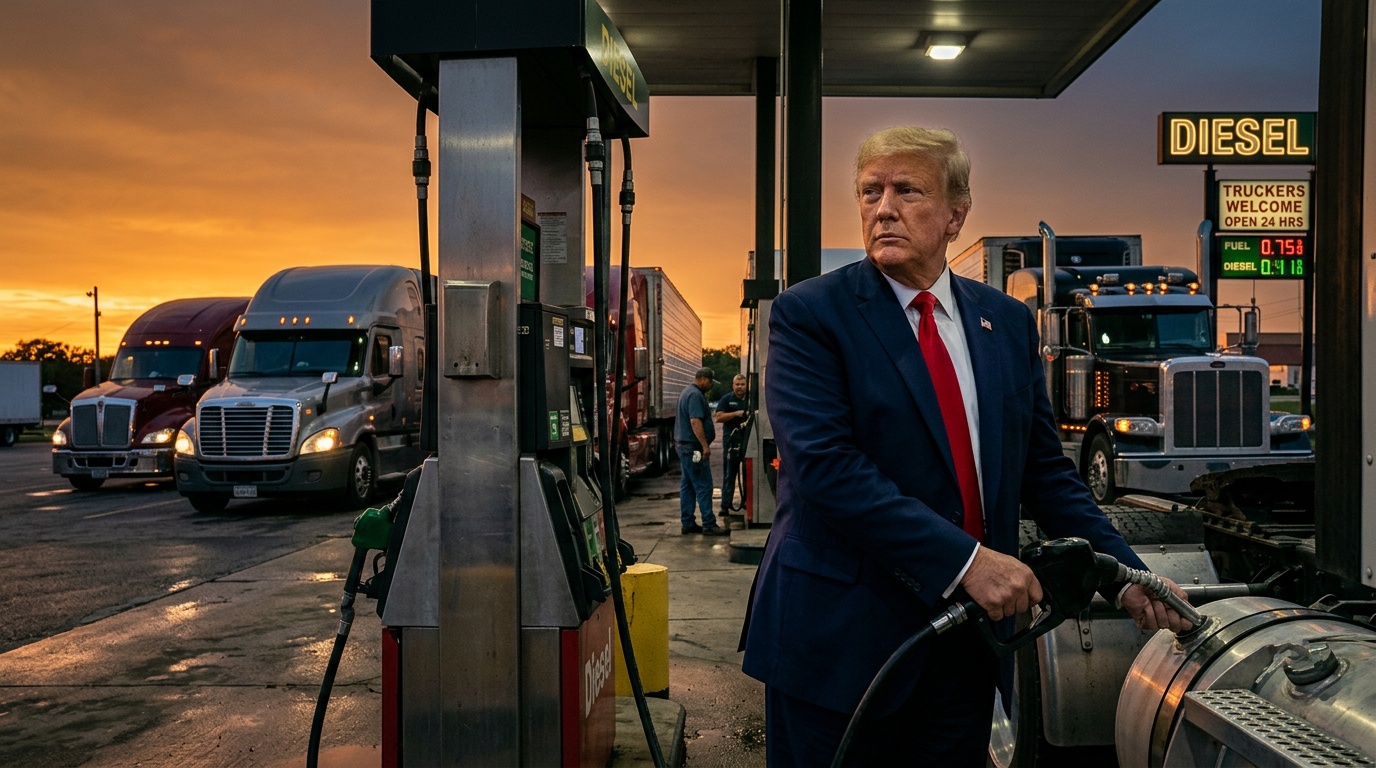
Meanwhile, diesel averaged $6.3261 a gallon on Thursday, according to AAA, up from $6.2785 a week earlier and $3.6491 a year ago. That is a painful number for anyone filling up a truck, and an even more painful one for politicians facing voters.
Musk-Ambani Dispute
Over the weekend, Elon Musk intensified his public dispute with Reliance Industries Chairman Mukesh Ambani, arguing that Starlink's affordable internet service could challenge Jio's dominance in India ahead of its parent company's IPO.
Musk accused Jio supporters on X of making contradictory claims about Starlink's competitive threat, saying the service would need affordable pricing to attract Indian customers. He added that allowing Starlink to compete would give consumers more choices, even if it put pressure on Jio's profits.
On Thursday, Reliance Industries said it welcomes competition in India's satellite communications market, including from Starlink, but stressed that all companies must comply with Indian laws and regulatory requirements.
Disclaimer: This content was partially produced with the help of AI tools and was reviewed and published by MarketDash editors.