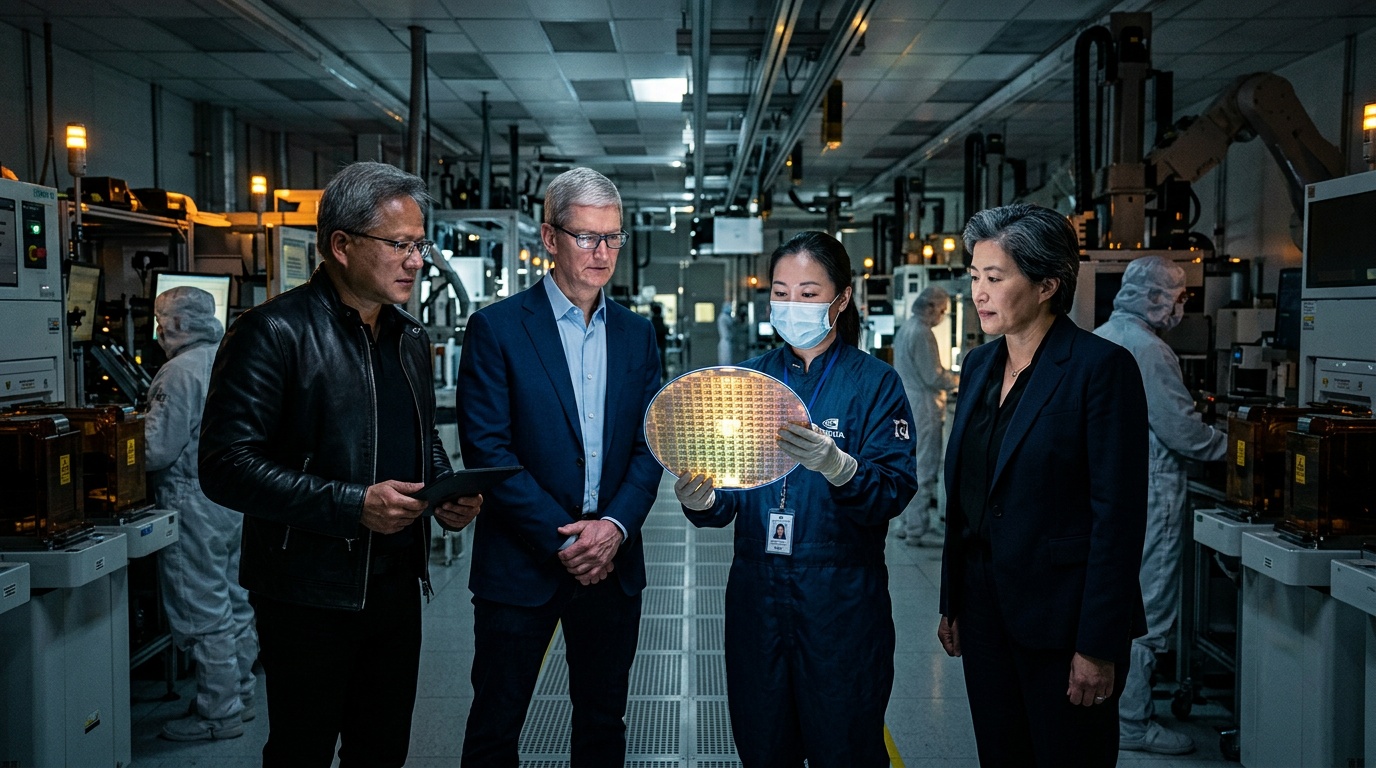
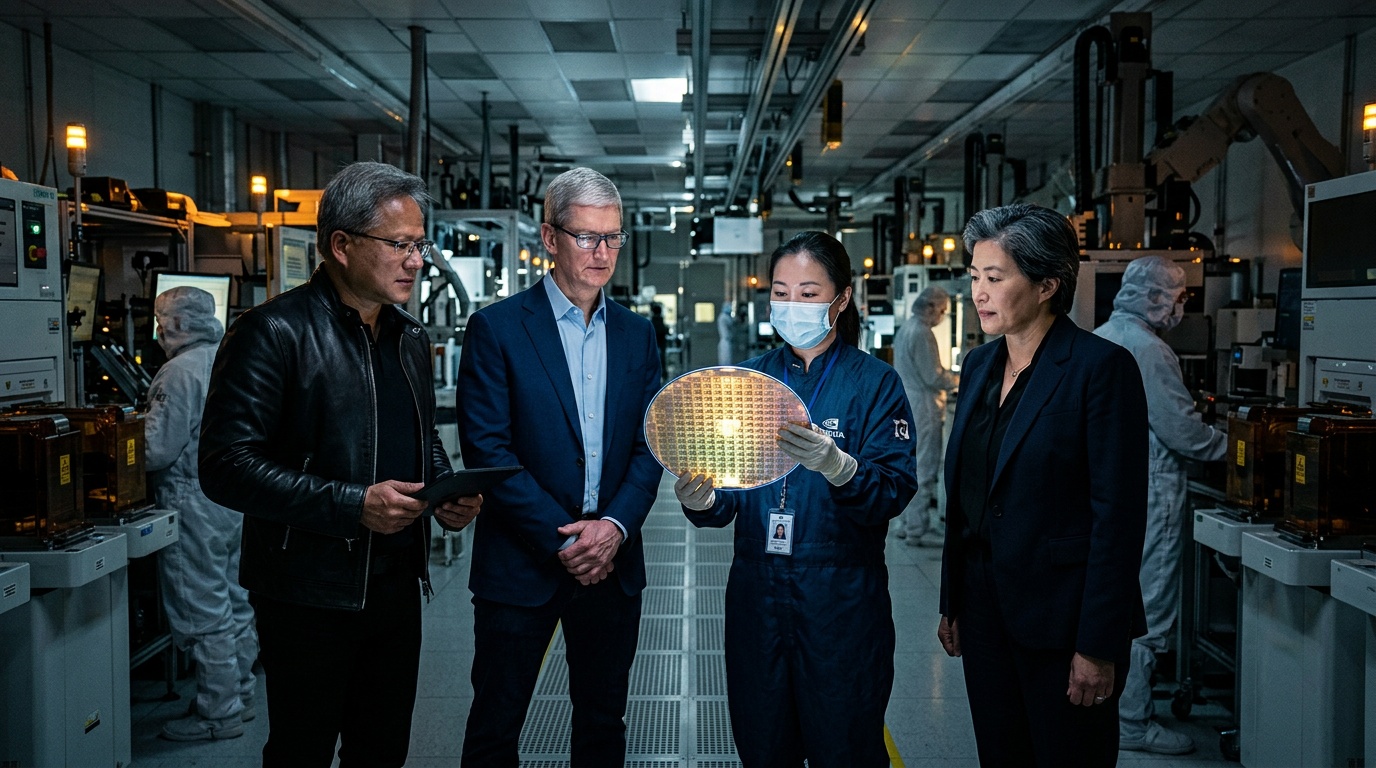
There's an old line about the California Gold Rush: the people who got rich weren't the miners, they were the folks selling shovels. In the AI boom, Taiwan Semiconductor Manufacturing Co. Ltd. (TSM) is the shovel store, and right now there's a line out the door.
The chipmaker sits at the center of the global artificial intelligence boom as major technology companies compete for limited chipmaking and advanced-packaging capacity. It's a nice position to be in, assuming you can keep the shelves stocked.
Taiwan Semiconductor is expanding production to meet long-term demand. But supply constraints remain a growing concern for customers racing to build AI infrastructure, and that tension is shaping the entire industry's near-term outlook.
Taiwan Semiconductor shares have gained nearly 40% in 2026, compared with a more than 60% increase in the PHLX Semiconductor Index. So even the shovel seller is underperforming the shovels themselves, which tells you something about how the market is pricing the broader supply chain.
Strong AI Demand Drives Quarterly Growth
Taiwan Semiconductor reported third-quarter revenue of $46.7 billion, up 16.2% sequentially and above the high end of its guidance. That's the kind of number that makes analysts put down their coffee and pay attention.
Gross margin fell 1.3 percentage points sequentially to 66.4%, partly reflecting the initial production ramp of its 2-nanometer technology. New nodes are expensive to get going, so a modest margin dip here is less a red flag and more the cost of doing future business.
Meanwhile, high-performance computing revenue jumped 22% sequentially, accounting for 68% of total sales. That's the AI business, and it's now the majority of what TSMC does.
Chips manufactured using 7-nanometer and more advanced processes represented 79% of wafer revenue, highlighting strong demand for leading-edge technology. The old stuff still sells, but the new stuff is where the money is.
Tech Giants Battle for Limited Chip Capacity
Competition for Taiwan Semiconductor's manufacturing capacity is intensifying as major technology companies seek to secure AI chip supplies. This isn't a polite queue. It's more like a Black Friday doorbuster, except the shoppers are trillion-dollar companies.
Mizuho Securities Managing Director Jordan Klein told CNBC on Thursday that competition is particularly fierce among major customers, including Broadcom, NVIDIA Corp. (NVDA), Apple Inc. (AAPL) and Advanced Micro Devices Inc. (AMD).
Taiwan Semiconductor North America President Sajiv Dalal said he receives at least 10 calls daily from customers seeking wafer capacity. Ten calls a day. That's not a sales pipeline, that's a hotline.
Klein said the company could increase capacity by 10% to 20% beyond earlier targets, potentially reaching 120,000 wafers per month by year-end. He expects NVIDIA and Apple to secure a significant share of the additional supply, which makes sense given they're the ones with the loudest voices and the biggest checkbooks.
Chip Shortages Threaten AI Expansion Plans
Limited manufacturing capacity could complicate the technology industry's aggressive AI investment plans. Everyone wants to build frontier models and massive data centers, but you can't build them out of vibes.
Klein warned that shortages of advanced logic chips could threaten ambitious revenue projections for frontier AI models and large-scale infrastructure projects. That's a polite way of saying some of these AI revenue forecasts might need a reality check.
Vlad Galabov, co-host of The AIDC Debate, said advanced logic chip shortages differ from memory constraints because these processors require customized designs and long-term production planning. You can't just crank out more of them on a whim. As a result, even major customers such as NVIDIA, Advanced Micro Devices and Apple face supply risks.
Taiwan Semiconductor's 10 largest customers accounted for 78% of its 2025 net revenue, according to CNBC. That's a concentration risk in both directions: TSMC depends on them, and they depend on TSMC.
Advanced Packaging Adds Another Bottleneck
Beyond wafer production, advanced packaging has emerged as another major constraint. If you thought the wafer shortage was the whole story, surprise, there's a sequel.
Galabov said NVIDIA has already reserved most of Taiwan Semiconductor's advanced chip-on-wafer-on-substrate, or CoWoS, packaging capacity. The company is working to double that capacity to meet growing demand for AI processors.
Meanwhile, Klein said Taiwan Semiconductor could accelerate production by installing additional manufacturing equipment rather than waiting for entirely new factories. That's the faster, cheaper move, and it's the one you'd expect a company with this much demand to make.
The company is also expanding operations in Taiwan, Japan and Arizona. It has committed to ASML Holding N.V. (ASML)'s $400 million High-NA EUV technology and is reportedly considering another manufacturing site in Texas. The geographic diversification is partly about capacity and partly about geopolitics, which is never far from the conversation in this industry.
Smaller Chipmakers Face Tough Competition
The capacity crunch is also making it harder for emerging chip designers to secure manufacturing agreements. When the line is long, the bouncer gets pickier.
Klein said Taiwan Semiconductor evaluates customers based on long-term demand forecasts, target markets and expected production requirements rather than immediate orders alone. In other words, showing up with a suitcase of cash isn't enough. You need a credible story.
Sid Sheth of dMatrix said the chipmaker remains highly selective and expects customers to provide credible demand projections. He emphasized that developing competitive products, building relationships and executing consistently are essential to securing production capacity. That's a high bar, and it's one that plenty of startups won't clear.
Intel and Samsung See an Opportunity
Taiwan Semiconductor's manufacturing constraints could create opportunities for rival chipmakers. When the market leader can't keep up, the competition gets a window.
Intel Corp. (INTC) and Samsung Electronics Co. Ltd. (SSNLF) could benefit as customers explore alternative manufacturing partners.
Klein said Intel CEO Lip-Bu Tan is working to strengthen manufacturing operations and attract external foundry customers. Potential customers could include Apple, NVIDIA and companies linked to Elon Musk, although such agreements remain speculative. Speculative is doing a lot of work in that sentence, but it's worth watching.
For now, strong AI demand continues to reinforce Taiwan Semiconductor's position in advanced chip manufacturing. However, limited wafer and packaging capacity remains a critical challenge for the broader AI industry. The shovel store is thriving, but it can only make so many shovels.
TSM Price Action: Taiwan Semiconductor shares fell 0.30% to $421 during premarket trading Friday, according to market data.