Economist Peter Schiff said that President Donald Trump's idea of suspending the federal gas tax could increase gasoline demand and prices rather than lower them.
"Not only will this push up gas prices by increasing demand for gas," Schiff said on X on Wednesday, "but the loss of tax revenue will lead to a larger budget deficit and higher inflation to finance it."
Schiff added that inflation would raise "the price of all goods and services."
In another post, he summarized his argument by writing, "Demand moves opposite to price," calling the principle "Econ 101."
Trump Weighs Gas Tax Suspension
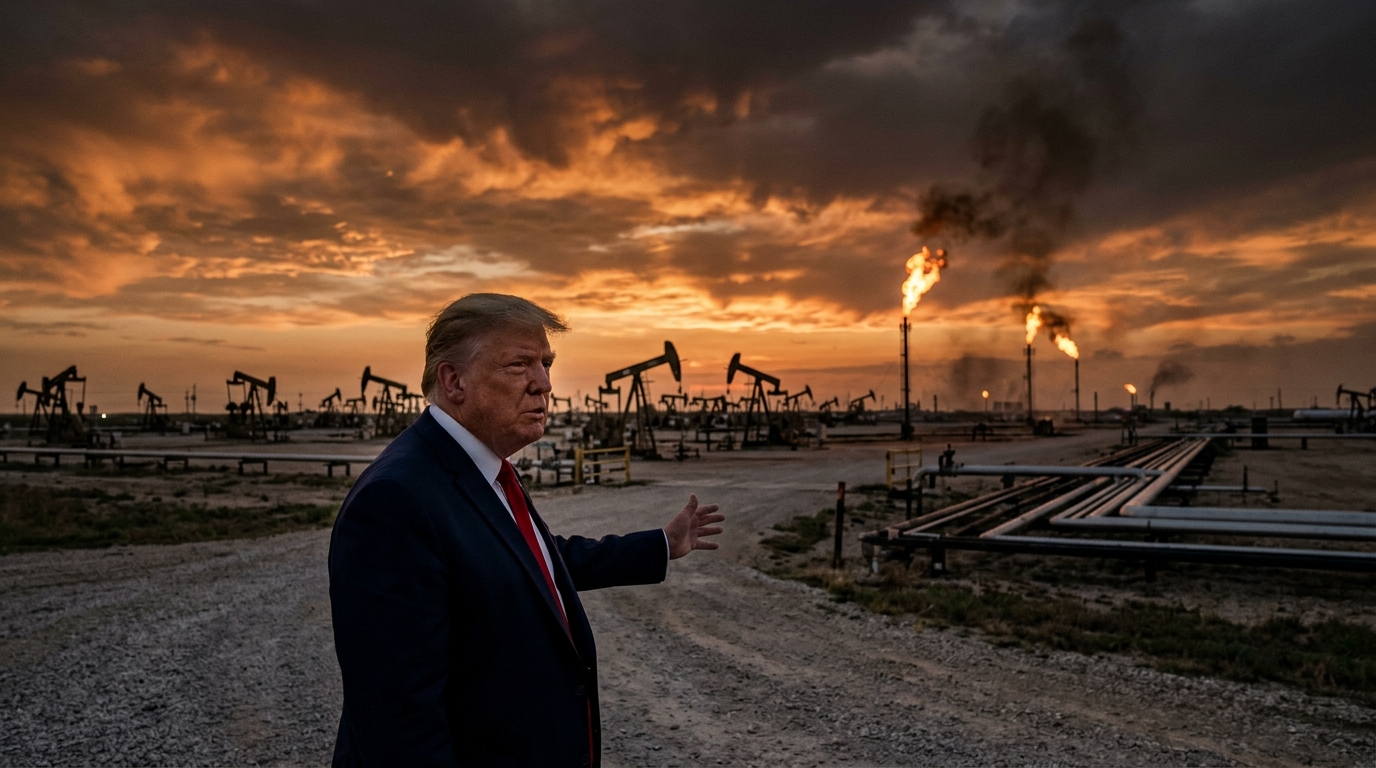
Trump said on Tuesday that he is considering suspending the federal gas tax ahead of the November midterm elections, but provided no further details.
According to AAA, the average gas price is $4.3612 per gallon, up nearly 40% from a year ago, while the average diesel price stands at $6.2847 per gallon, an increase of about 70.8% year over year.
The proposal follows Trump's Monday executive order allowing tax-exempt red-dyed diesel on highways. Trump said the measure would reduce costs for goods, including groceries. The order defers federal excise taxes on dyed diesel used on highways through Dec. 31, with no interest or penalties, while directing Treasury to explore eliminating the deferred taxes. On-road diesel normally carries a 24.4-cent-per-gallon federal tax, plus an average 35.5 cents in state taxes and fees, according to EIA data.
However, the American Trucking Associations said expanding dyed diesel would not increase fuel supply or ease the supply crunch driving prices higher, calling instead for reliable relief that lowers costs without adding compliance burdens.
Schiff Links Inflation To Deficit Spending
Earlier, Peter Schiff said that Trump's role in inflation and the affordability crisis stems from massive deficit spending during his first term amid COVID-19, rather than the Iran war. Schiff argued that the spending helped set the stage for the consumer-price surge during Joe Biden's presidency.
The Fed's preferred PCE inflation gauge held at 3.4% in August, while core PCE stood at 3.0%, well above the Fed's 2% target. Energy prices were a key driver, with energy goods and services rising 2.3% and gasoline and other energy goods climbing 4.4% on the month.
Meanwhile, the U.S. national debt has reached $40.20 trillion, equivalent to 126% of GDP, while the federal government has run a $1.97 trillion deficit so far in fiscal 2026, according to U.S. Treasury data.
Disclaimer: This content was partially produced with the help of AI tools and was reviewed and published by MarketDash editors.