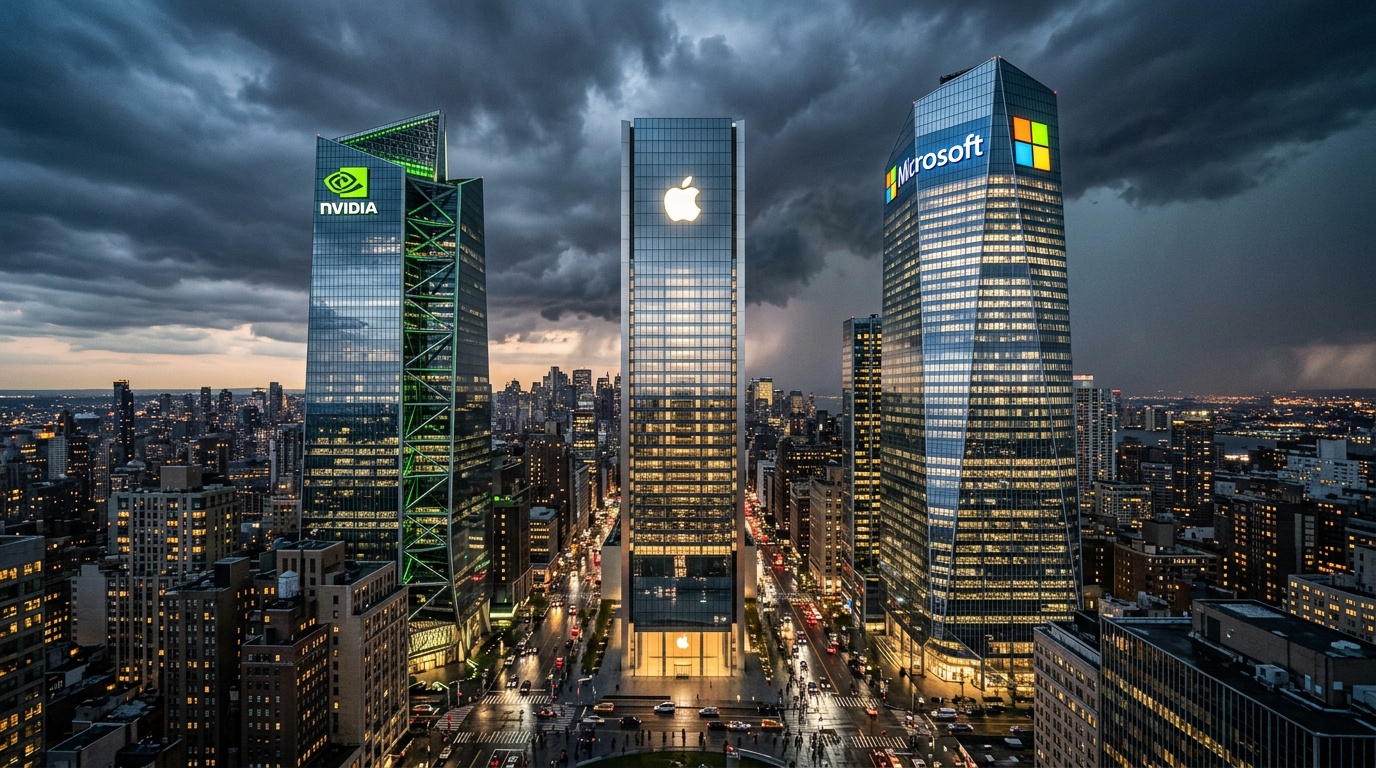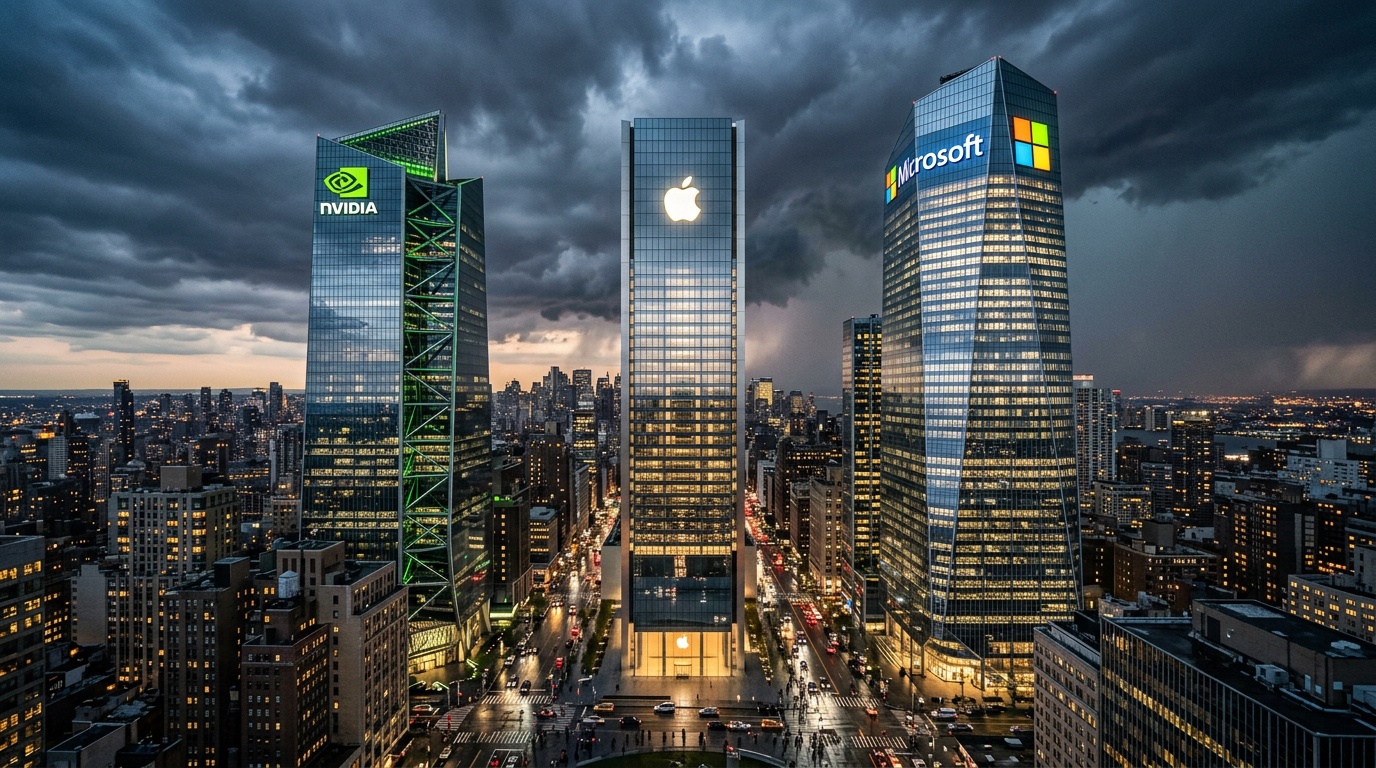
The U.S. stock market is becoming increasingly dependent on three mega-cap technology companies — Nvidia Corp. (NVDA), Apple Inc. (AAPL) and Microsoft Corp. (MSFT).
The trio now accounts for more than 21% of the S&P 500, according to Creative Planning data cited by Yahoo Finance, marking the highest concentration in just three stocks in the benchmark's history. By comparison, IBM (IBM), AT&T Inc (T) and ExxonMobil Holdings Corp (XOM) together represented 13.4% of the S&P 500 at their peak in the mid-1980s.
That concentration matters for ETF investors because the largest S&P 500 funds are market-cap weighted, meaning the biggest companies receive the largest allocations.
SPY, VOO Investors Have Significant Mega-Cap Exposure
The SPDR S&P 500 ETF Trust (SPY) has Nvidia at 8.63%, Apple at 7.25% and Microsoft at 5.82%. Together, the three accounted for roughly 21.7% of SPY.
The Vanguard S&P 500 ETF (VOO) showed a similar concentration, with Nvidia at 8.08%, Apple at 7.03% and Microsoft at 5.69%. That puts the combined exposure at about 20.8%.
This means investors buying broad-market ETFs are getting substantial exposure to the performance of just three companies, even though the funds hold hundreds of stocks.
QQQ Takes The Concentration A Step Further
The concentration is even more pronounced in the Invesco QQQ Trust (QQQ), which tracks the Nasdaq-100.
Nvidia represents 8.53% of QQQ, Apple 7.2% and Microsoft 5.78%. Combined, the three accounted for roughly 21.5% of the ETF.
The distinction is important: while QQQ offers exposure to 100 companies, its portfolio remains heavily tilted toward the largest technology and growth names.
For investors looking to reduce this mega-cap concentration, the Invesco S&P 500 Equal Weight ETF (RSP) takes a different approach, assigning roughly equal weights across S&P 500 constituents rather than allowing the largest companies to dominate the portfolio. RSP had 508 holdings.
With Nvidia, Apple and Microsoft driving a record share of the S&P 500, the growing question for ETF investors is no longer simply whether they own the broader market — but how much of that market is effectively riding on three stocks.