Advanced Micro Devices Inc. (AMD) is expanding beyond traditional chipmaking as it builds a broader AI ecosystem around processors, software, models and systems, while experts point to agentic AI and inference as new demand drivers for its CPUs and GPUs.
AMD stock gained almost 30% in September and almost 200% year-to-date, briefly pushing the company above a $1 trillion market value, fueled by artificial intelligence infrastructure demand.
Why AMD Is Spending $8.2 Billion On World Labs
AMD agreed to acquire World Labs for $8.2 billion in stock, gaining spatial-intelligence technology that can generate, reconstruct and simulate 3D environments for robotics, autonomous systems, simulation and other physical AI applications.
CEO Lisa Su said closer access to frontier-model research could help AMD anticipate future computing requirements and design its hardware, software and systems around them.
“The more you understand end to end, the better system you are going to build,” Su said. “That’s why we are acquiring World Labs.”
World Labs founder Fei-Fei Li will become AMD executive vice president and chief scientist. Li said the combination could “accelerate the flywheel between software and hardware development.”
The acquisition extends AMD’s broader AI expansion. The company previously acquired ZT Systems for $4.9 billion and Silo AI for $665 million, while also announcing a deal for specialized chip company Taalas.
AMD has also deepened ties with major AI customers. Its chip agreements with Meta Platforms Inc. (META) and OpenAI included potential equity arrangements, while AMD agreed to invest up to $5 billion in Anthropic, which committed to buying tens of billions of dollars of AMD data-center chips.
Cramer Sees Agentic AI Supporting Demand
CNBC’s Jim Cramer said the shift from AI training toward inference and AI agents could create another growth engine for AMD because those workloads require more CPU processing.
Cramer called AMD’s rise under Su an “incredible run” and said he sees no sign that it is going to stop anytime soon.
He still views NVIDIA Corp. (NVDA) as the leading AI-chip supplier but believes demand can support multiple vendors and said AMD’s products are more competitive than some investors recognize.
The company is also expanding its GPU business through large commitments from Meta and OpenAI, strengthening its position as AI spending broadens across CPUs, accelerators and complete computing systems.
AMD Stock Analysis
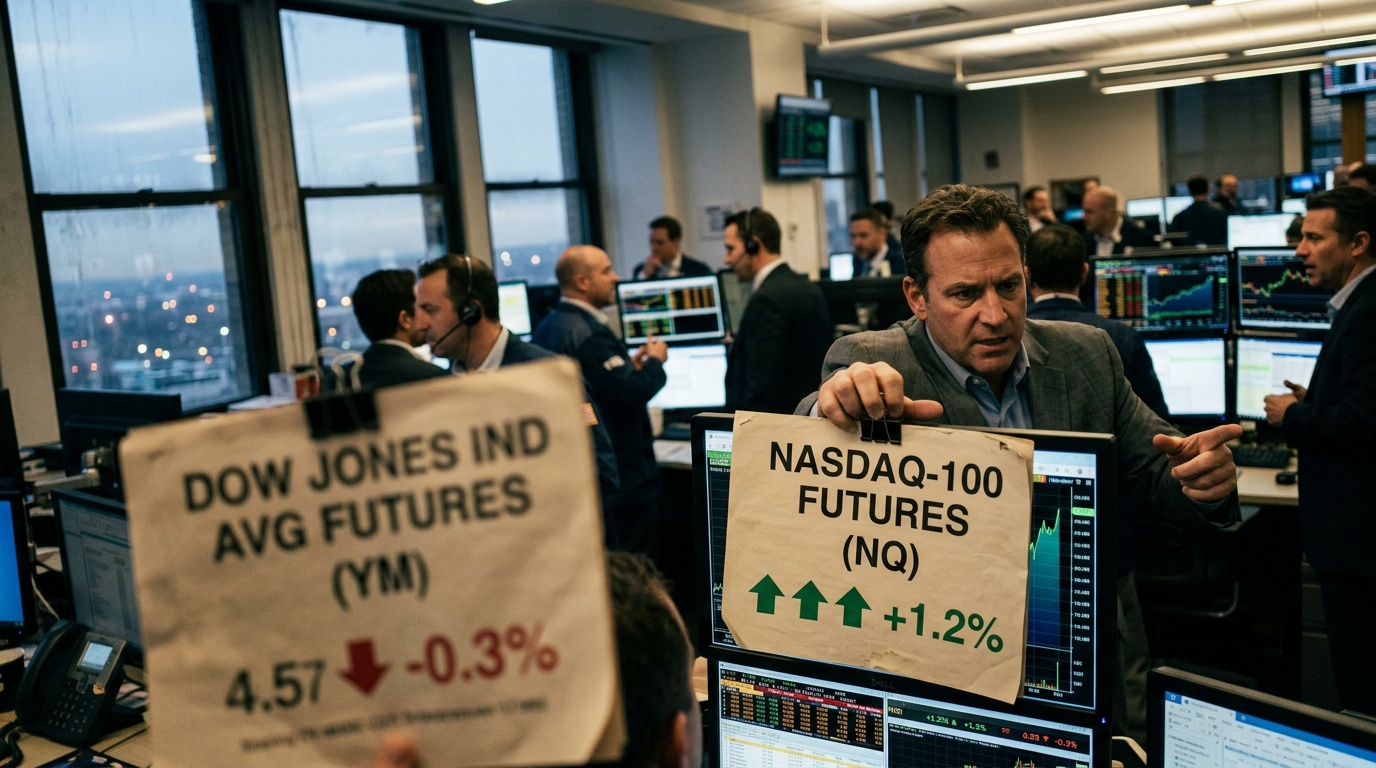
AMD stock rose more than 1% in Thursday premarket trading as investors continued to favor large-cap semiconductor stocks. Nasdaq futures gained 0.37%, while S&P 500 futures rose 0.11% before the opening bell.
The stock is benefiting from a firmer broader market and continued strength in semiconductor stocks.
AMD remains in a strong uptrend, trading well above its major moving averages. The stock is 12.1% above its 20-day SMA and 66.3% above its 200-day SMA.
Momentum is also positive, with MACD above its signal line. The stock was trading at $620.30, close to its 52-week high of $639. A breakout above that level could signal further upside, while support sits near $498.
Analyst Outlook
AMD trades at a price-to-earnings ratio of about 156.1, reflecting a premium valuation. Analysts have a Buy consensus rating on the stock, with an average price forecast of $618.84.
StoneX maintained a Buy rating and a $685 price forecast on Sept. 29. Rosenblatt maintained a Buy rating and a $700 price forecast the same day. Bank of America Securities maintained its Buy rating on Sept. 25 and raised its price forecast to $720.
AMD Top ETF Exposure
The stock is a major holding in several semiconductor and technology ETFs.
The iShares Semiconductor ETF (SOXX) has an 8.74% weighting in AMD. The Invesco AI and Next Gen Software ETF (IGPT) has an 8.51% weighting, while the First Trust Nasdaq Semiconductor ETF (FTXL) has a 6.79% weighting.
AMD’s sizable weight in these funds means large ETF inflows or outflows can also contribute to buying or selling pressure in the stock.
Price Action
AMD shares rose 1.4% to $620.30 in Thursday premarket trading, according to market data.